Sensitive Scalp Care: What to Use (and Avoid)
The short answer
Sensitive scalp care requires fragrance-free, gentle formulas that avoid known allergens and support the scalp.
What Is Sensitive Scalp?
Sensitive scalp is a condition characterized by the presence of subjective symptoms — pain, pricking, burning, itching, and trichodynia (a painful or burning sensation of the scalp and hair roots) — elicited by physical, chemical, hormonal, or emotional triggering factors. It may occur with or without visible erythema (scalp redness).
Dermatologists classify sensitive scalp into two categories:
- Primary sensitive scalp: Symptoms occur without a co-existing scalp skin disorder. The scalp barrier is altered, but no specific immune or allergic mechanism is identified.
- Secondary sensitive scalp: Symptoms are driven by or associated with a diagnosable scalp condition — seborrheic dermatitis, psoriasis, atopic dermatitis, or contact dermatitis. Effective management requires addressing the underlying condition.
Despite being dismissed by some as a subjective complaint, sensitive scalp is increasingly recognized in trichological and dermatological literature. A study of 317 patients presenting with hair loss found that 32% reported sensitive scalp — confirming the condition is common in clinical practice.
Symptoms of Sensitive Scalp
The clinical presentation varies but typically includes one or more of:
- Pruritus (itching): Present in approximately 27% of sensitive scalp patients as a primary symptom.
- Trichodynia: A burning, tingling, or painful sensation localized to the scalp or hair roots. Published research found trichodynia in 72.52% of sensitive scalp patients, making it the dominant symptom. It is significantly more common in individuals with concurrent telogen effluvium (excessive hair shedding).
- Burning or stinging: Particularly after product application or exposure to heat.
- Scalp tightness: Worsened by weather changes, hot or cold water, or certain shampoos.
- Erythema: Mild scalp redness may or may not be visible; the scalp may appear normal on exam.
- Dysesthesia: Abnormal scalp sensation without an obvious stimulus.
A key diagnostic challenge is that there are no specific trichoscopic or laboratory features that confirm sensitive scalp — diagnosis rests primarily on patient history, symptom pattern, and exclusion of other conditions.
Causes and Triggers
Exogenous (External) Triggers
Chemical triggers — hair care products: The most common exogenous triggers are ingredients in shampoos, conditioners, styling products, and hair treatments. Published scalp itch research identified the following as the most frequently implicated contact allergens:
- p-Phenylenediamine (PPD) — the primary sensitizer in permanent hair dyes; the most common cause of severe scalp contact dermatitis.
- Toluene-2,5-diamine — related compound in semi-permanent dyes.
- Cocamidopropyl betaine (CAPB) — a mild amphoteric surfactant used in many shampoos; a recognized contact allergen despite being perceived as gentle.
- Fragrances and perfumes — the EU lists 26 fragrance allergens requiring disclosure on cosmetics labels. Both synthetic fragrances and natural essential oils (including tea tree, lavender, and peppermint) can trigger scalp reactions.
- Preservatives — methylisothiazolinone (MI), methylchloroisothiazolinone (MCI/MI), and formaldehyde-releasing preservatives are common sensitizers.
- Nickel and rubber — from hair clips, pins, and elastic bands.
Physical triggers:
- High or low temperatures (hot hair dryers, cold air, wind)
- UV exposure
- Mechanical friction from tight hairstyles, elastic bands, or rough towel-drying
- Hard water (high mineral content may reduce shampoo rinsing efficiency and deposit irritants)
Endogenous (Internal) Triggers
Stress and emotional state: Stress is consistently among the strongest triggers. The mechanism involves the corticotropin-releasing hormone (CRH) axis: CRH receptors in scalp hair follicles, when activated by psychological stress, trigger mast cell degranulation, releasing histamine and neuropeptides that drive neurogenic inflammation and sensory symptoms.
Hormonal fluctuations: Symptoms often track the menstrual cycle (worsening in the premenstrual phase) and may change during pregnancy or perimenopause. Estrogen modulates skin barrier function and neuropeptide signaling in hair follicles.
Underlying scalp dysbiosis: Excess sebum and disrupted scalp microbiome have been associated with sensitive scalp symptoms; cosmetic products that destabilize the microbiome may amplify immunological or inflammatory responses.
How to Identify Your Triggers
A symptom diary is the most practical self-assessment tool:
- Record new product introductions — note each new shampoo, conditioner, dry shampoo, heat protectant, or hair treatment and whether symptoms changed within one to two days.
- Note environmental factors — temperature, humidity, indoor heating, seasonal changes.
- Track stress and hormonal events — period timing, life stressors, and sleep quality.
- Elimination protocol — strip back to the simplest possible routine (one fragrance-free, surfactant-minimal shampoo, no conditioner for one week) and observe. Reintroduce products one at a time.
If a specific contact allergen is suspected — particularly hair dye — patch testing by a dermatologist or allergist is the definitive method. A standard series of hair-product allergens is available and should be tested before resuming use of the suspected product.
What to Use: A Sensitive Scalp Routine
Shampoo Selection
The most impactful change for most sensitive scalp sufferers is switching to a fragrance-free, low-irritant shampoo formulated for sensitive scalps or sensitive skin. Key formulation principles:
- Fragrance-free (not just "unscented" — some unscented products contain masking fragrances): Look for "fragrance-free" explicitly, not "natural fragrance."
- No EU-listed fragrance allergens — linalool, limonene, cinnamal, eugenol, geraniol, and others appear in natural ingredient lists; check the INCI.
- Gentle surfactant system — sodium lauryl sulfate (SLS) is the most stripping common surfactant; gentler alternatives include sodium lauroyl sarcosinate, sodium cocoamphoacetate, or coco-glucoside. Cocamidopropyl betaine, despite its mild reputation, is a confirmed allergen — worth excluding in a sensitivity workup.
- Minimal preservative load — avoid methylisothiazolinone (MI), formaldehyde-releasers (DMDM hydantoin, imidazolidinyl urea).
- Short, recognizable ingredient list — fewer ingredients means fewer potential triggers and easier identification if a reaction occurs.
- pH in the 4.5–5.5 range — close to the scalp's natural acid mantle; maintains barrier integrity.
Washing Technique
- Water temperature: Lukewarm, not hot. Hot water is a direct physical trigger and strips lipids from the scalp barrier.
- Massage gently: Use fingertip pads, not fingernails — mechanical friction on a sensitive scalp can trigger neurogenic inflammation.
- Rinse thoroughly: Residue from even gentle shampoos is a common irritant source.
- Frequency: Match frequency to your scalp type (see scalp type guide) — overwashing a sensitive scalp compounds barrier disruption; underwashing a sensitive-oily scalp allows sebum-driven inflammation.
Conditioner and Scalp Products
- Apply conditioner from mid-lengths to ends only — the scalp environment does not need conditioning if the barrier is intact, and conditioner residue on a sensitive scalp is a common trigger.
- Scalp serums: If you use a scalp serum or tonic, choose fragrance-free formulas. Niacinamide (strengthens barrier, reduces redness), panthenol (humectant and barrier-supporting), and hyaluronic acid (hydration) are well-tolerated actives that do not disrupt the microbiome.
- Avoid scalp scrubs and aggressive physical exfoliants during a sensitivity flare — they break down an already compromised barrier.
Hair Styling Considerations
- Heat tools: Minimize direct scalp exposure to high heat; use a diffuser attachment rather than a direct nozzle if blow-drying.
- Tight hairstyles: Ponytails, braids, or extensions under constant tension can trigger or worsen trichodynia. Opt for loose styles during flares.
- Hair accessories: Choose fabric-covered elastics over metal-tipped or rubber bands; avoid nickel-containing clips if nickel sensitivity is suspected.
What to Avoid
Ingredient Red List for Sensitive Scalps
| Ingredient | Why to Avoid |
|---|---|
| Fragrance / parfum | Top allergen; triggers both contact dermatitis and neurogenic inflammation |
| p-Phenylenediamine (PPD) | Most common cause of severe scalp contact dermatitis from hair dye |
| Methylisothiazolinone (MI) | Potent preservative sensitizer; restricted in EU leave-on products |
| Cocamidopropyl betaine | Confirmed contact allergen despite mild label reputation |
| Formaldehyde-releasing preservatives | DMDM hydantoin, imidazolidinyl urea — sensitizers |
| Essential oils (undiluted) | Tea tree, peppermint, eucalyptus — potent scalp sensitizers |
| Alcohol denat. (at high concentrations) | Strips barrier; drying and irritating |
| Sodium lauryl sulfate (at high concentrations, daily use) | Strips scalp lipid barrier; amplifies sensitivity |
Behavioral Avoidances
- Stress — difficult to eliminate, but scalp symptoms can be a feedback signal to address stress management.
- Scratching — breaks barrier, introduces infection risk, and triggers the itch-scratch cycle.
- Starting multiple new products simultaneously — impossible to identify which is responsible if symptoms appear.
- Skipping patch tests before hair dye — essential if you have any history of scalp reactions.
Secondary Sensitive Scalp: Treating the Underlying Condition
If your sensitive scalp symptoms are accompanied by visible scalp change — flaking, oily scale, clearly defined plaques, hair loss — a secondary cause is likely:
| Underlying condition | Key distinguishing feature | Treatment direction |
|---|---|---|
| Seborrheic dermatitis | Greasy, yellowish flakes; oily scalp | Antifungal shampoo (ketoconazole, ZPT) |
| Psoriasis | Thick, silvery plaques; well-defined borders | Prescription topicals, phototherapy |
| Atopic dermatitis | Dry, intensely itchy; history of eczema | Emollient therapy, topical immunomodulators |
| Contact dermatitis | Localised reaction after new product | Identify and eliminate allergen; patch testing |
| Telogen effluvium | Diffuse shedding with trichodynia | Address underlying trigger (stress, nutrition) |
For seborrheic dermatitis and contact dermatitis specifically — the most common secondary causes — see dry scalp vs. dandruff and the full oily scalp care guide.
When to See a Dermatologist
See a board-certified dermatologist if:
- Symptoms have not improved after six to eight weeks of simplified, fragrance-free product use
- You develop visible scalp changes (defined plaques, weeping, crust, spreading redness)
- Trichodynia is accompanied by noticeable hair loss or widening part line
- You suspect hair dye contact allergy — patch testing is essential before re-exposure
- Symptoms are severe, persistent, or causing significant quality-of-life impact
A dermatologist may offer topical immunomodulators (pimecrolimus), hydration therapy with hyaluronic acid, or mesotherapy approaches for refractory cases, depending on the clinical presentation.
Products that fit: itchy, sensitive scalp
Picked by code from each product's full ingredient list.
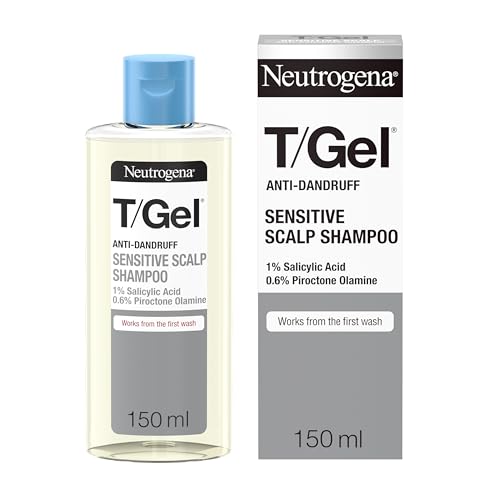
Neutrogena
T/Gel Anti Dandruff Shampoo
shampoo · 150 ml · 15 ingredients
- Fragrance-free
- No essential oils
- No MI/MCI
- With piroctone olamine
- With salicylic acid
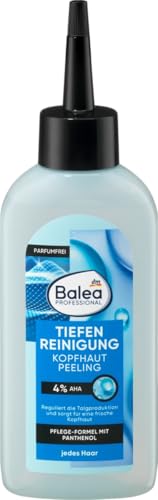
Balea
Professional Scalp Scrub Deep Cleansing
scalp treatment · 150 ml · 10 ingredients
- Fragrance-free
- No essential oils
- No MI/MCI
- With panthenol

OGX
ProGrowth + Peptide Scalp Serum
scalp treatment · 10 ml · 16 ingredients
- Fragrance-free
- No essential oils
- No MI/MCI
- With panthenol

Eucerin
Dermo Capillaire Anti-dandruff Shampoo
shampoo · 250 ml · 15 ingredients
- Fragrance-free
- No essential oils
- No MI/MCI
- With panthenol
Frequently asked questions
Is sensitive scalp a real dermatological condition in 2026?
Yes — sensitive scalp is recognized in the dermatological and trichological literature as a distinct condition. Published research including a 2022 epidemiological study in PubMed and a 2022 review on sensitive scalp diagnosis and management confirm it is clinically real, commonly encountered (affecting ~32% of patients presenting with hair disorders in one study), and associated with measurable scalp barrier alteration. It remains under-studied relative to its prevalence, but the clinical framework for diagnosis and management is established.
What is trichodynia and is it part of sensitive scalp?
Trichodynia is a burning, tingling, or painful sensation in the scalp and hair roots — the name comes from the Greek 'trichos' (hair) and 'odyne' (pain). It is the most prevalent symptom in sensitive scalp, present in approximately 72% of affected patients according to published research. Trichodynia is significantly more common in people with concurrent telogen effluvium (diffuse hair shedding), suggesting a link between hair follicle stress and scalp pain signaling. It is not the same as pain from tight hairstyles — it occurs even without mechanical tension.
Can 'natural' or 'organic' shampoos trigger sensitive scalp?
Yes — and this is a common misconception. Natural plant-derived ingredients can be potent contact allergens. Essential oils including peppermint, tea tree, lavender, eucalyptus, and citrus oils are all capable of triggering scalp contact dermatitis or neurogenic irritation. 'Natural' does not mean non-allergenic. Fragrance-free specifically (meaning no fragrant compounds, synthetic or natural) is the correct label claim to look for if fragrance sensitivity is a concern.
Does hard water worsen sensitive scalp?
Possibly — though the evidence is stronger for eczema than isolated scalp sensitivity. Hard water (high calcium and magnesium ion content) has been shown to increase skin irritation in atopic dermatitis patients and may reduce the efficacy of scalp cleansing by impairing surfactant rinsing. In areas with very hard water, a shower filter may reduce symptom burden, though individual responses vary and this has not been studied in large sensitive-scalp-specific trials.
Can sensitive scalp cause hair loss?
Directly, sensitive scalp does not cause permanent hair loss. However, the association with telogen effluvium is well-documented — the same physiological stressors that trigger telogen effluvium (physical or emotional stress, nutritional deficiency, hormonal change) also drive sensitive scalp and trichodynia. Persistent scratching can cause mechanical breakage. If you are experiencing both scalp sensitivity and visible hair loss or shedding, consult a dermatologist to evaluate for telogen effluvium, androgenetic alopecia, or other co-existing causes.
Sources
- 01Sensitive Scalp and Trichodynia: Epidemiology, Etiopathogenesis, Diagnosis, and Management — PubMed / Dermatology Reports, 2023-11-01. Trichodynia present in 72.52% of sensitive scalp patients; condition linked to telogen effluvium and hair loss; endogenous and exogenous triggers include stress, hormones, cosmetics, and shampoos.
- 02Sensitive Scalp: An Epidemiologic Study in Patients with Hair Loss — PubMed / Journal of Cosmetic Dermatology, 2022-10-01. 32% of 317 patients presenting with trichological disorders reported sensitive scalp; sensitive scalp significantly more prevalent in telogen effluvium patients.
- 03Sensitive Scalp: Diagnosis and Practical Management — PubMed / Journal of Dermatological Treatment, 2022-09-01. Sensitive scalp classification (primary vs. secondary); diagnosis based on anamnesis; triggers include stress, hormonal change, cosmetics; treatment options include pimecrolimus, hyaluronic acid hydration, and mesotherapy.
- 04Scalp Itch: A Systematic Review — PubMed Central / International Journal of Dermatology, 2018-09-01. CRH receptors in hair follicles trigger mast cell responses linking psychological stress to scalp neurogenic inflammation; most common scalp contact allergens are PPD (hair dye), cocamidopropyl betaine (shampoo surfactant), and fragrances.