Lip Shapes Guide: How to Enhance Every Lip Type with Makeup
The short answer
Identify your lip shape first, then use liner, shade.
Why Lip Shape Matters for Makeup
Most lip makeup tutorials assume one universal lip — symmetrical, with an obvious cupid's bow, roughly equal upper and lower volume. Most actual lips are none of those things. The same red lipstick applied to a pair of full lips and a pair of downturned thin lips produces two entirely different results, and the fix that makes one look great will actively work against the other.
Identifying your lip shape before you apply product takes less than a minute and fundamentally changes which techniques you reach for. This is not about correcting lips that need correcting — it is about understanding the geometry you are working with so every product choice is an enhancement rather than an accident.
How to Identify Your Lip Shape
Stand in natural light — not bathroom mirror lighting, which is usually overhead and flattening. Relax your face completely (a deliberate "neutral" often compresses the upper lip). Look at:
- Volume distribution: Is your upper lip fuller than your lower lip, equal, or thinner? Where does volume sit — center or even across the whole lip?
- Width vs. height: Are your lips wider from corner to corner than they are tall from the center of the upper to the base of the lower? Or roughly equal?
- Corner direction: Do your corners turn slightly downward, sit neutral, or turn upward?
- Cupid's bow definition: Is there a pronounced double peak on the upper lip, a gentle suggestion of one, or a relatively flat line?
- Overall symmetry: Is one side fuller, thinner, or differently shaped than the other?
This self-assessment maps to the nine shapes below.
The Nine Lip Shapes and How to Work with Each
1. Full Lips
Identification: Lips that appear visibly plump on both the upper and lower lip, often with good natural definition and volume distributed across the whole surface.
What works:
- Glossy or satin finishes enhance natural plumpness and add dimension with light reflection — full lips carry gloss beautifully without looking overdone.
- Bold, saturated colors — full lips are proportionally capable of supporting strong pigment without it overwhelming the face. Reds, berries, and deep plums all work.
- Liner at the natural border to define without adding more volume — match the liner exactly to your lipstick rather than going darker, which would add further definition that is unnecessary.
- Skip heavy overlining — the goal with full lips is to refine definition, not add volume that's already present.
What to avoid:
- Very light, pale, or frosted shades can make an already full lip look disproportionately large.
- Heavy dark liner significantly inside the lip line (used to minimize) can look contrived. If minimizing is the goal, a skin-matching liner at the very edge is more effective.
2. Thin Lips
Identification: Lips with limited vertical height and minimal natural volume; when you smile fully, the lips may largely disappear.
What works:
- Subtle overlining: Trace liner 0.5–1mm beyond the natural border at the center peaks of the upper lip and center arch of the lower lip. See the how-to-overline-lips guide for step-by-step technique.
- Light or bright shades: Lighter values advance visually — nude-pinks, peach-pinks, and warm roses make thin lips read as fuller. Counterintuitively, a very pale nude that matches skin tone makes thin lips nearly invisible; the sweet spot is a shade slightly brighter than bare lip.
- Gloss or satin finish over a matte liner base: the liner provides definition, the gloss adds light-catching volume. A dot of clear gloss at the very center of both lips — not applied edge-to-edge — is the most effective single technique for creating perceived fullness.
- Cupid's bow definition: Even if your cupid's bow is subtle, tracing its natural contour with liner adds the impression of structure that reads as fullness.
What to avoid:
- Dark matte shades are the least flattering finish for thin lips — they absorb light and flatten the visual volume. If you want to wear dark shades, add gloss over the top.
- Very thick or heavy liner strokes that sit visibly outside the lip border in a way that reads as heavy outlining rather than natural lip shape.
3. Wide Lips
Identification: Lips that extend horizontally — noticeably wider from corner to corner than they are tall from the center of the upper lip to the base of the lower.
What works:
- Brighter or lighter shades at the center: Concentrating lighter, brighter color at the center of both lips draws the eye inward and reduces focus on the outer width.
- Deeper shades at the outer corners: A slightly darker application toward the corners can visually minimize their width, similar to the contouring principle applied to other facial features.
- Height-adding techniques: Focus liner on building height at the cupid's bow — slightly raising the center of the upper lip liner — to create more vertical proportion relative to horizontal width.
- Gloss in the center only: A center-only gloss dab adds perceived height and depth without widening.
What to avoid:
- Glossy or highly reflective finishes applied to the full lip including corners — this maximizes the appearance of the entire lip surface and emphasizes width.
- Overlining toward the outer corners, which expands the width further.
4. Round Lips
Identification: Lips where the width from corner to corner roughly equals the height from upper border to lower border, with naturally rounded edges and a moderate cupid's bow.
What works:
- Define the cupid's bow with liner slightly darker than your natural lip tone — this gives structure and definition to the upper edge, which is the zone round lips can build on most effectively.
- Glossy or satin finishes catch light well on round lips and emphasize their natural dimension.
- Slightly darker corners to add gentle length without competing with the natural shape.
What to avoid:
- Heavy overlining that makes already-round lips appear to bulge without any central structure.
5. Heavy Upper Lip (Upper More Voluminous Than Lower)
Identification: The upper lip is noticeably fuller than the lower lip, creating a top-heavy appearance.
What works:
- Balance the lower lip with a slightly darker liner: Apply liner one shade deeper to the lower lip to give it more visual weight and definition.
- Lighter or brighter shades on the lower lip: Applying a lighter value to the lower lip optically advances it — making it appear more proportionate to the fuller upper.
- Minimize the upper lip subtly: Apply a natural-toned lipstick rather than a bold shade on the upper lip to avoid drawing further attention to existing fullness.
- Bronzer or contour below the lower lip border: A dusting of contour shade just below the lower lip line creates the optical illusion of a more projected lower lip.
What to avoid:
- Very bold, dark, or glossy shades on the upper lip while using pale/matte on the lower — this amplifies the imbalance rather than correcting it.
6. Heavy Lower Lip (Lower More Voluminous Than Upper)
Identification: The lower lip is noticeably fuller or more prominent than the upper lip, which can appear thin or recessed.
What works:
- Add definition to the upper lip: Liner slightly darker than the natural lip tone on the upper lip gives it visual weight.
- Subtle overlining of the upper lip: A 0.5mm extension at the cupid's bow and central upper border brings the upper lip forward visually.
- Lighter, volumizing gloss on the upper lip: Applying a volumizing or glossy formula only to the upper lip optically advances it to match the heavier lower.
- Lighter shades on the lower lip: A slightly lighter or more neutral shade on the lower lip pulls it visually backward, reducing the disproportion.
What to avoid:
- Bold or glossy formulas on the lower lip simultaneously with a pale matte on the upper — this exaggerates the imbalance.
7. Downturned Lips
Identification: The corners of the lips sit slightly lower than the center, giving the mouth a natural downward or neutral-melancholy set, even when the face is relaxed.
What works:
- Lift the outer corners with liner: Instead of following the natural downward curve of the lip corner exactly, trace the liner line on the upper lip so that the corner point sits fractionally higher than the anatomical corner. A 0.5–1mm lift at the corner is often enough to neutralize the downturn without looking unnatural.
- Conceal the natural corner: Apply a small amount of concealer to the actual downturned corner before liner — this neutralizes the skin's natural shadow and gives you a clean base to reroute the liner line.
- Bright, warm-toned shades: Pinks, corals, and warm nudes at the corners brighten the mouth area and create the visual impression of an upward curve.
- Gloss overall: A glossy finish catches overhead light and naturally makes the corners look lifted because the reflective surface reads as a rising plane.
What to avoid:
- Dark matte shades concentrated at the corners — these shade the corners into a shadow that emphasizes the downward direction.
- Following the natural downward lip line exactly, which cements the downturned appearance in the finished look.
8. Bow-Shaped Lips
Identification: A pronounced, well-defined double-peak cupid's bow on the upper lip — the shape that resembles an archery bow — paired with a wide, full lower lip.
What works:
- Define and celebrate the cupid's bow: Liner that precisely traces the peaks sharpens what is already a flattering and distinctive feature. This is the lip shape that allows the most elaborate cupid's bow definition without it looking constructed.
- Keep liner at or slightly inside the natural border — the natural shape is already strong and does not need enhancement through extension.
- Bold and classic shades: Red lipstick in particular is famous on bow-shaped lips — the defined upper arch creates a striking silhouette.
- Matte or satin finish to emphasize shape over volume.
What to avoid:
- Overlining the cupid's bow peaks dramatically — the natural peaks are already pronounced and further extension can make the upper lip look overcrowded.
- Deliberately softening the cupid's bow definition, which removes the feature that makes this lip shape distinctive.
9. Heart-Shaped Lips
Identification: A prominent, sharp cupid's bow with a fuller upper lip that tapers to a narrower or more pointed lower lip.
What works:
- Emphasize the upper lip fullness: Liner and color concentrated on the upper lip celebrates what the shape offers naturally.
- Balance the lower lip: A slightly lighter shade on the lower lip, or a touch of gloss at the center of the lower lip, optically rounds and widens it to balance the fuller upper.
- Classic reds and deep berries: Heart-shaped lips carry bold color on the upper lip particularly well, and the contrast between a strong upper and softer lower adds visual interest.
- Avoid overlining the lower lip significantly — bringing the lower lip width to match the upper changes what makes the heart shape distinctive.
Shade and Finish: The Universal Rules
Regardless of lip shape, these principles apply consistently:
| Effect Wanted | Shade | Finish |
|---|---|---|
| More volume / fullness | Lighter than natural lip, warm-toned | Gloss or satin |
| Less volume / reduce fullness | Darker than natural lip | Matte |
| More definition | Liner 1–2 shades deeper than lipstick | Any |
| More width | Liner at the corners or slightly outside | Any |
| More height (pout) | Overline center only; gloss at center | Gloss |
| Lift downturned corners | Liner fractionally above natural corner | Warm or bright tones |
| Balance asymmetry | Liner extended on the thinner side | Any |
The Role of Liner Across All Shapes
Lip liner is the most shape-responsive tool in lip makeup — more useful than shade selection or finish for addressing specific shape characteristics. It allows precise, targeted intervention at the exact points that need adjustment, leaves the rest of the lip unaffected, and is immediately correctable with a concealer brush if a stroke goes wrong.
For all shape-specific applications, begin liner work before applying any lipstick or gloss. The liner goes on a clean, prepped lip first — then color fills and refines. See lip-liner-guide for the complete liner application method.
Products that fit this guide
Picked by code from each product's full ingredient list.

Burt's Bees
Honey Lip Balm
lip balm · 4.25 g · 10 ingredients
- Fragrance-free
- No essential oils
- With vitamin e

Catrice
Care In Colours Lip Balm
lip balm · 3 g · 12 ingredients
- Fragrance-free
- No essential oils
- With shea butter
- With titanium dioxide
- With vitamin e
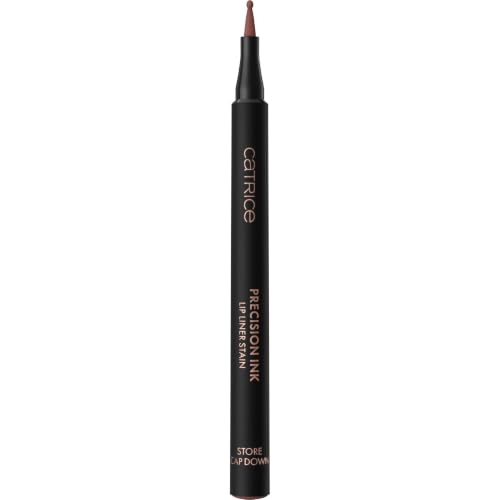
Catrice
Precision Ink Lip Liner Stain
lipstick · 1 ml · 16 ingredients
- Fragrance-free
- No essential oils
- With hyaluronic acid
- With glycerin

La Roche-Posay
Cicaplast Lip Balm
lip balm · 7.5 ml · 15 ingredients
- Fragrance-free
- No essential oils
- With panthenol
- With shea butter
Frequently asked questions
Are makeup techniques for lip shapes still relevant in 2026, or is this outdated advice?
Entirely current. The optical principles behind shade-advancing and shade-receding, the role of light-reflecting finishes in creating perceived volume, and the use of liner to redirect the visual boundary of the lip are unchanged and are standard professional technique. What has evolved is the shift away from heavily contoured, obviously overlined lips (associated with mid-2010s trends) toward subtler, more integrated shaping. The techniques in this guide are calibrated for natural-looking results, which is the current standard.
How do I tell if I have thin lips versus just a thin upper lip?
Assess each lip individually rather than evaluating the pair together. Thin lips (both upper and lower lack volume) are identified by limited vertical height on each individual lip when viewed separately — when you smile, both lips effectively disappear. A thin upper lip with a normal lower lip is a proportionality issue (heavy lower lip shape) rather than overall thinness. The techniques are different: thin lips benefit from overlining both, while a proportionality imbalance is corrected by building the recessed lip specifically.
Can I change the apparent shape of my lips significantly with makeup alone?
Yes, within limits. Makeup can reliably create the impression of 10–20% more volume, optically lift corners by 1–2mm visually, reduce or increase apparent width, and balance asymmetry noticeably. These are real, visible improvements in person. What makeup cannot do is fundamentally change the lip's proportional relationships — very thin lips will appear slightly fuller but not full; very wide lips can appear a little narrower but not narrow. For changes beyond what makeup achieves, lip filler with a board-certified practitioner is the clinical option, though that is outside the scope of this makeup guide.
What is the most universally flattering lip technique for any lip shape?
A small amount of gloss or a lighter, reflective shade applied only to the center of the lower lip (and optionally the center of the upper lip) is close to universally flattering. It creates a focal point that the eye interprets as volume and forward projection, works on full lips without overdoing them, and helps thin lips appear fuller without any overlining. Pair it with a liner that traces the natural border at the outer corners and you have a shape-appropriate technique that works for nearly every lip type.
How do I deal with naturally asymmetrical lips?
Almost all lips are asymmetrical to some degree — one side slightly fuller, one corner set differently, one peak of the cupid's bow higher than the other. The correction is always additive rather than subtractive: extend the thinner side with liner to match the fuller side, never restrict the fuller side inward (which looks obviously wrong and is harder to achieve cleanly). Draw the fuller side first following its natural border, then use that as your reference and extend the thinner side outward until both match when assessed in the mirror at arm's length.
Sources
- 01A Guide to Different Lip Shapes — Plus, Makeup Tips to Try — Makeup.com by L'Oréal. Nine-category lip shape identification system with specific liner and shade techniques for each: full lips benefit from gloss; thin lips benefit from subtle overlining with a slightly deeper shade; downturned lips benefit from corner-lifting liner; wide lips benefit from center-focused lighter shades.
- 029 Lip Shapes and the Best Makeup Looks for Each — Makeup.com by L'Oréal. Full lips: liner 1–2 shades deeper than natural, gloss finish. Heavy upper lip: darker liner on lower lip to balance. Thin lips: overline with slightly deeper liner. Wide lips: focus on cupid's bow definition. Downturned lips: liner to lift outer corners. Bow lips: emphasize cupid's bow with liner.
- 03Lipliner Pro Tips for Different Lip Shapes — Merle Norman — Merle Norman Cosmetics. Liner technique should be adapted per lip shape; overlining belongs at center peaks, not outer corners; lipstick finish (matte vs. gloss) works with shade selection to create optical volume or recession.