How Often Should You Clarify Your Hair? (By Scalp Type)
The short answer
Most scalp types benefit from clarifying shampoo once every one to four weeks.
What Is a Clarifying Shampoo?
A clarifying shampoo is a high-surfactant hair cleanser specifically formulated to remove residues that regular shampoos leave behind: polymer films from styling products (gels, mousse, dry shampoo, leave-in conditioners), silicone build-up from conditioning agents, excess sebum, and mineral deposits from hard water.
Regular shampoos are increasingly formulated with gentle, mild surfactants — sometimes labeled "sulfate-free" or "low-poo" — that are kind to color-treated or textured hair but may not fully cut through polymer-based product residue or heavy sebum accumulation. Clarifying shampoos typically use stronger anionic surfactants (sodium lauryl sulfate or similar) to accomplish a deeper strip.
Hair cosmetics research notes that styling-product polymer films accumulate over approximately seven days of non-clarifying washing, leaving hair looking dull, feeling heavy, and sitting flat. A weekly clarifying shampoo in high-product-use routines prevents this buildup from compounding.
Signs You Need to Clarify
- Hair feels heavy, limp, or coated despite recent washing
- Product is not absorbing or distributing the way it usually does
- Scalp feels oily or itchy within a day of washing
- Hair looks dull or has lost its usual shine or curl definition
- Scalp odor despite recent shampooing
- Build-up visible at the roots or as white residue on the scalp
Clarifying Frequency by Scalp and Hair Type
Oily Scalp + Heavy Product Use
Frequency: Weekly
Oily scalps produce sebum faster than the scalp microbiome can metabolize it cleanly — and if styling products are layered on top, polymer films trap sebum and create visible buildup within days. Weekly clarifying removes this accumulation before it hardens into adherent scale.
Research supports increased wash frequency for oily scalps: a study on wash frequency found that high-frequency washing significantly reduced scalp flaking, itch, and odor without damaging internal hair lipids or cuticle integrity.
Always follow clarifying with conditioner on the mid-lengths and ends. The scalp can handle weekly clarifying; the hair lengths need moisture replacement.
Normal Scalp + Moderate Product Use
Frequency: Every 2–3 weeks
A balanced scalp with moderate product use does not accumulate buildup at the rate that requires weekly heavy stripping. Every two to three weeks clears accumulated polymer residue before it significantly dulls the hair. Regular shampoo handles maintenance in between.
Dry Scalp or Minimal Product Use
Frequency: Monthly or less
Dry scalps produce less sebum — the protective lipid that clarifying removes along with product residue. Over-clarifying a dry scalp risks stripping its protective surface layer, worsening dryness, elevating TEWL, and potentially provoking a compensatory sebum surge. Monthly clarifying (or once every six to eight weeks) manages any slow-accumulating mineral or conditioner residue without over-stripping.
Color-Treated Hair
Frequency: Once every 4–6 weeks
Clarifying shampoos are effective at removing color molecules along with buildup — the same mechanism that strips product residue also lifts color from the cortex, particularly if the color is semi-permanent or tinted. Limit clarifying to once every four to six weeks to preserve color vibrancy. On clarifying days, use a color-depositing conditioner after washing to compensate.
Textured, Curly, or Coily Hair (CGM routines)
Frequency: Every 2–4 weeks
Highly textured or curly hair naturally struggles to retain moisture — its spiral or helical structure prevents sebum from traveling down the shaft easily, making the lengths perpetually drier than the scalp. Co-washing routines (conditioner-only washes) work well for mid-lengths and ends, but they allow fatty alcohol and silicone buildup to accumulate at the scalp.
For co-washing or low-poo routines, clarifying once every two to four weeks removes the conditioner and silicone buildup that impairs scalp health and prevents new product from absorbing properly. A sulfate-free clarifying shampoo (using milder surfactants like cocamidopropyl betaine or sodium cocoyl isethionate) can work here if a standard sulfate formula is too drying.
Hard Water Areas
Additional consideration: If your tap water is high in calcium and magnesium (hard water), mineral deposits accumulate on the scalp and hair shaft regardless of product use. A chelating or clarifying shampoo with EDTA (ethylenediaminetetraacetic acid) or citric acid specifically addresses mineral buildup. This may be needed as frequently as every two weeks in very hard water areas, independent of product use.
Does Clarifying Damage Hair?
This is a common concern, particularly for those with color-treated or textured hair. The evidence is largely reassuring when clarifying is used appropriately.
A peer-reviewed study on shampoo wash frequency found that:
- Higher wash frequency significantly reduced scalp flaking, itch, and odor
- Increased washing did not deplete protective internal hair lipids (lipid extraction measurements were not significantly different between high and low wash frequency groups)
- Cuticle integrity did not measurably worsen with frequent washing when conditioner was used
- There was no objective evidence of hair damage from frequent modern shampoo use
The key proviso is conditioner after every clarifying wash. Clarifying removes surface lipids from the hair shaft, increasing temporary friction and porosity. Conditioner — specifically a moisturizing or protein conditioner applied to mid-lengths and ends — restores the surface film and reduces the friction-mediated cuticle damage that would otherwise increase.
The same study also notes that findings are most robust for straight to slightly wavy hair textures; highly textured or chemically processed hair is more susceptible to moisture loss from repeated clarifying, which is why the lower frequencies above apply.
What to Look for in a Clarifying Shampoo
- For maximum buildup removal: Sodium lauryl sulfate (SLS) or sodium laureth sulfate (SLES) as the primary surfactant — these are the most effective at dissolving polymer residue and sebum.
- For color-treated or mildly sensitive scalps: Sulfate-free clarifying options using sodium cocoyl isethionate, cocamidopropyl betaine, or mild amphoteric blends — effective but gentler.
- For hard water: Look for EDTA, phytic acid, or citric acid to chelate mineral ions.
- For scalp buildup with dandruff: A clarifying shampoo combined with zinc pyrithione, ketoconazole, or salicylic acid addresses both buildup and the microbial component simultaneously.
Clarifying vs. Scalp Exfoliating: The Difference
A clarifying shampoo removes product and sebum from the surface through surfactant chemistry. A scalp scrub or chemical exfoliant (salicylic acid, AHA) removes dead skin cells and keratin buildup from the stratum corneum through mechanical disruption or acid dissolution.
For comprehensive scalp maintenance, both tools have a place — but they address different aspects of buildup:
| Tool | What It Removes | How Often |
|---|---|---|
| Clarifying shampoo | Product residue, excess sebum, mineral deposits | 1×/week to 1×/month |
| Scalp scrub | Dead skin cells, adherent keratin scale | 1×/week to 1×/2 weeks |
| Chemical exfoliant (salicylic acid) | Follicle keratin plugs, surface scale | 1–2×/week |
Using a scalp scrub and a clarifying shampoo on the same wash day is unnecessary and potentially drying; spread them across the week instead.
For full guidance on scalp exfoliation, see the scalp exfoliation guide. For the broader context of what causes buildup and how to address it, see the scalp buildup guide.
Step by step
- 1
Assess your clarifying needs before choosing a frequency
Check two things: how oily your scalp gets between washes, and how much styling product you use. Heavy product users (dry shampoo, gel, mousse, leave-in conditioner daily) need more frequent clarifying than people who use minimal product. Oily scalps also accumulate sebum faster. Use this to place yourself on the frequency spectrum before starting a routine.
- 2
Wet hair thoroughly with warm water
Saturate the scalp and hair fully before applying clarifying shampoo. Warm water helps soften and partially dissolve waxy product residue, making the surfactant's job easier. Do not apply clarifying shampoo to dry hair — it will not emulsify evenly and may concentrate product in patches.
- 3
Apply clarifying shampoo directly to the scalp, not the lengths
Clarifying shampoo is for the scalp, where sebum and product buildup originate. Apply a quarter-sized amount (or adjust for hair density) directly to the scalp. The shampoo will work its way down the hair shaft as you rinse, providing sufficient cleansing to the lengths without concentrated stripping.
- 4
Massage for 60–90 seconds with fingertip pads
Work the lather into the scalp thoroughly using circular finger-pad motions. A full 60–90 seconds of mechanical massage improves surfactant contact time with product residue and sebum. Focus on the nape (where product accumulates), the crown, and the hairline.
- 5
Rinse completely for at least 30 seconds
Clarifying shampoos leave no residue by design — complete rinsing is essential. Insufficient rinsing can leave surfactant on the scalp, causing irritation. Rinse until the water runs clear and you feel no slipperiness at the scalp.
- 6
Deep condition immediately after clarifying
Clarifying strips protective oils from the hair shaft along with buildup. Apply a rich moisturizing conditioner or deep conditioning mask to mid-lengths and ends, leave for three to five minutes (or per the product instructions), then rinse. Do not apply conditioner to the scalp itself immediately after clarifying — the scalp needs to rebalance its sebum without interference.
- 7
Return to your regular shampoo on subsequent washes
Clarifying shampoo is not an everyday product. After clarifying, revert to your regular, milder shampoo for all subsequent washes until your next clarifying session. Overuse of clarifying shampoo (more than twice weekly) strips protective scalp lipids, can trigger reactive sebum overproduction in oily scalps, and increases dryness and breakage risk in textured hair.
Products that fit: itchy, sensitive scalp
Picked by code from each product's full ingredient list.
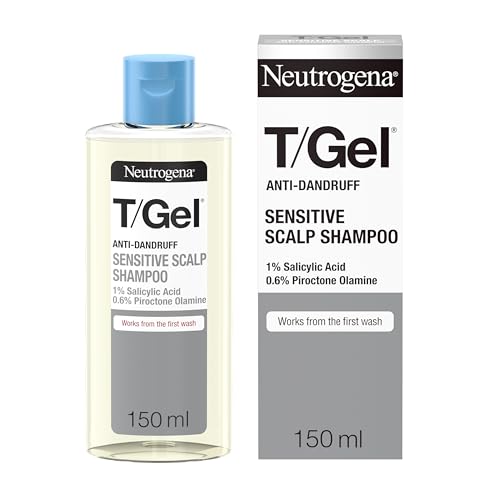
Neutrogena
T/Gel Anti Dandruff Shampoo
shampoo · 150 ml · 15 ingredients
- Fragrance-free
- No essential oils
- No MI/MCI
- With piroctone olamine
- With salicylic acid
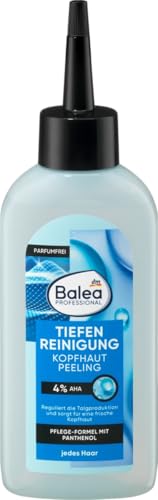
Balea
Professional Scalp Scrub Deep Cleansing
scalp treatment · 150 ml · 10 ingredients
- Fragrance-free
- No essential oils
- No MI/MCI
- With panthenol

OGX
ProGrowth + Peptide Scalp Serum
scalp treatment · 10 ml · 16 ingredients
- Fragrance-free
- No essential oils
- No MI/MCI
- With panthenol

Eucerin
Dermo Capillaire Anti-dandruff Shampoo
shampoo · 250 ml · 15 ingredients
- Fragrance-free
- No essential oils
- No MI/MCI
- With panthenol
Frequently asked questions
What happens if I never use a clarifying shampoo?
Without periodic clarifying, polymer-based product residue and silicone buildups accumulate on the scalp and hair shaft over time. Hair becomes progressively duller, heavier, and less responsive to conditioning and styling products — because new product cannot penetrate the accumulated film. Scalp buildup can worsen flaking and itch. If you use minimal product (just water and a mild shampoo), you may never need a clarifying shampoo — the question matters most for those using dry shampoo, leave-in conditioners, gels, or silicone-rich products regularly.
Can I use clarifying shampoo every wash?
For most scalp types, no. Daily or every-wash use of clarifying shampoo strips protective sebum and ceramides faster than the scalp replenishes them, leading to dryness, increased TEWL, irritation, and potentially reactive sebum overproduction in oily scalp types. The research exception is in populations with very high sebum production and straight hair types, where more frequent washing was not found to cause measurable damage — but even in those studies, clarifying shampoo specifically was not evaluated for daily use.
Is clarifying shampoo the same as a detox shampoo?
These terms are often used interchangeably in marketing. 'Detox' shampoos are clarifying shampoos by another name — they typically use strong surfactants to remove buildup and may include activated charcoal or clay as additional absorbents. There is nothing uniquely 'detoxifying' about them in a clinical sense; they work by the same surfactant-based mechanism as any clarifying shampoo.
Should I clarify before or after a hair mask?
Clarify before. The purpose of clarifying is to strip accumulated residue from the scalp and shaft so that treatment products can penetrate efficiently. A hair mask applied over buildup is partially blocked by the film. Clarifying first creates a clean surface for the mask to absorb into, improving the treatment's effectiveness. After clarifying and masking, return to your regular routine.
Does frequency of clarifying affect hair color?
Yes. Clarifying shampoos accelerate color fade, particularly for vibrant semi-permanent colors and lighter toned permanents. The sulfate surfactants that cut through buildup also lift color molecules from the cortex. Limit clarifying to once every four to six weeks if color-treated. Between clarifying sessions, use a color-safe or sulfate-free regular shampoo. On clarifying days, use a color-depositing or toning conditioner to offset the color loss.
Sources
- 01The Impact of Shampoo Wash Frequency on Scalp and Hair Conditions — PubMed Central / PMC8138261, 2021-05-01. Higher wash frequency significantly reduced scalp flaking, itch, and odor; did not deplete internal hair lipids; did not worsen cuticle integrity; improved hair quality perception — findings support regular washing without risk of structural hair damage when conditioner is used.
- 02Essentials of Hair Care Often Neglected: Hair Cleansing — PubMed Central / PMC3002407, 2010-11-01. Styling product polymer films accumulate on hair over approximately seven days; deep-cleaning clarifying shampoos are recommended weekly to remove this residue; exclusively co-washing routines need a clarifying (sulfate) shampoo every 15 days to prevent buildup.
- 03Shampoo and Conditioners: What a Dermatologist Should Know? — PubMed Central / PMC4458934, 2015-06-01. There is no upper limit of safe wash frequency provided regular conditioner is used; modern mild shampoos do not interfere with hair matrix mitosis; oily hair is best managed with strong detergents like lauryl sulfates; dry hair benefits from mild detergents and conditioning agents.
- 04Shampoos — DermNet — DermNet New Zealand. Clarifying shampoos are typically used once weekly to clear styling product buildup; stronger clarifying shampoo should not be used more than once or twice a week; co-washing exclusively needs a clarifying shampoo every 15 days.