Scalp Buildup: Causes, Signs & How to Remove It
The short answer
Scalp buildup is an accumulation of sebum, dead skin cells, sweat.
What Is Scalp Buildup?
Scalp buildup is the gradual accumulation of material on the scalp surface, within the hair follicle opening, and along the proximal hair shaft. It is not a single substance but a composite of several sources that combine and harden over time if not thoroughly cleansed.
The scalp is a uniquely sebaceous environment. Its sebaceous glands produce roughly 115 µg/cm² of sebum — substantially more than the face (approximately 25 µg/cm²) — delivered to the skin surface via a wicking action through the hair shaft. This lipid-rich output is protective in normal quantities, but excess sebum becomes the adhesive that binds dead skin cells, sweat residue, microbes, and product ingredients into a visible, sometimes crusty, layer.
The Four Types of Scalp Buildup
Understanding what is accumulating determines the right treatment.
1. Sebum Buildup
The most common type. Sebaceous glands in the pilosebaceous unit produce sebum continuously; androgens (particularly dihydrotestosterone, produced by 5-alpha-reductase in scalp glands) are the primary accelerator. When sebum output exceeds removal by washing, it accumulates near the roots, traps keratin flakes and microbes, and produces a greasy, sometimes malodorous film. People with oily scalp types or androgenetic tendencies are most affected.
2. Dead Skin Cell Buildup (Scale)
The scalp — like all skin — constantly sheds its outermost layer. Corneocytes desquamate in a regulated process coordinated by proteolytic enzymes. When the scalp microbiome is disrupted or sebum glues these cells together, they accumulate as visible white or yellowish flakes rather than shedding invisibly. This is the direct precursor to visible dandruff and is worsened by barrier dysfunction.
3. Product Buildup
Styling products — gels, mousses, leave-in conditioners, oils, and particularly silicone-containing conditioners — deposit polymer films on the hair shaft and scalp. Research on hair care cosmetics notes these films accumulate over approximately seven days, leaving hair looking dull and feeling harsh unless removed with a clarifying (sulfate-containing) shampoo. Dry shampoo, increasingly popular, contains starch or silica that absorbs sebum but contributes its own particulate residue if not washed out.
4. Sweat and Environmental Debris
Eccrine sweat (water, salts, urea, lactic acid) evaporates but leaves mineral and organic residue. Urban environments add particulate matter, pollution, and hard-water mineral deposits (calcium and magnesium salts from unfiltered tap water) that adhere to the scalp and hair. These are water-soluble but require mechanical or surfactant-assisted removal.
Signs and Symptoms
Scalp buildup presents across a spectrum of severity:
| Symptom | What It Suggests |
|---|---|
| Greasy roots within 24 hours of washing | Sebum overproduction; scalp barrier disrupted |
| White or yellowish flat flakes on scalp | Dead skin accumulation; possible early dandruff |
| Thick, adherent crusty patches | Significant keratin buildup; possible seborrheic dermatitis |
| Persistent itch without visible redness | Product residue or sebum clogging follicles |
| Dull, limp, heavy-feeling hair | Product polymer buildup on shaft |
| Scalp odor between washes | Microbial metabolism of accumulated sebum |
| Tender, raised bumps at follicle openings | Folliculitis secondary to blocked follicles |
What Causes Scalp Buildup?
Overactive Sebaceous Glands
Androgen-driven sebum overproduction is the most significant root cause. Sebum output peaks in adolescence, declines with age, and is elevated in those with hormonal imbalances (e.g., PCOS, high DHT levels). Stress, heat, and high humidity also temporarily increase sebum flow.
Infrequent Washing
When shampooing intervals are extended, sebum, dead cells, and product residue accumulate without adequate removal. Clinical data consistently show that increasing wash frequency reduces flaking and scalp odor across scalp types.
Heavy Styling Product Use
The more leave-in, layered, or silicone-rich the product routine, the more polymer film accumulates. Co-washing (conditioner-only washing) routines — common in curly and textured hair care — can effectively build up fatty alcohol and silicone residue if a clarifying shampoo is not used every two to four weeks.
Disrupted Scalp Microbiome
A balanced scalp microbiome dominated by Cutibacterium (formerly Propionibacterium acnes) and balanced Malassezia populations maintains a healthy sebum-metabolism cycle. When Malassezia species overpopulate — driven by excess sebum, stress, or altered immune response — they metabolize sebum into irritating fatty acids (including oleic acid) that trigger inflammation, abnormal desquamation, and visible buildup. Increased Staphylococcus epidermidis abundance is also associated with dandruff states.
Barrier Dysfunction
Scalp stratum corneum research demonstrates that dandruff-affected scalps have lower ceramide levels, elevated transepidermal water loss (TEWL), and higher permeability compared to healthy scalps. When the scalp barrier is impaired, corneocytes do not desquamate properly — they clump into visible flakes instead of shedding invisibly.
Hard Water
Calcium and magnesium ions in hard tap water bind to hair and scalp proteins, forming mineral deposits that dullen hair and can clog follicle openings over time.
Buildup vs. Dandruff vs. Scalp Conditions
Simple buildup and clinical scalp conditions share some signs but have key differences:
| Feature | Simple Buildup | Dandruff | Seborrheic Dermatitis | Scalp Psoriasis |
|---|---|---|---|---|
| Flake texture | Variable, often powdery | Small, white, dry | Large, oily, yellowish | Silvery-white, thick, adherent |
| Scalp appearance | Normal to oily | Normal | Red, inflamed patches | Well-demarcated red plaques |
| Itch | Mild to moderate | Moderate | Moderate to intense | Moderate to intense |
| Location | Whole scalp | Throughout | Hairline, ears, nasolabial folds | Often at hairline, crown, or behind ears |
| Treatment | Clarifying wash, scrub | Antifungal shampoo | Antifungal ± steroid | Topical steroids, tar, salicylic acid |
If flaking is accompanied by persistent redness, clearly demarcated plaques, or does not respond to a two-to-four-week trial of an over-the-counter medicated shampoo, see a dermatologist. The dandruff guide and seborrheic dermatitis guide cover those conditions in depth.
How to Remove Scalp Buildup
Step 1: Clarifying Shampoo
A sulfate-based (or strong surfactant) clarifying shampoo is the most effective first-line tool for product and sebum buildup. Anionic detergents such as sodium lauryl sulfate aggressively dissolve lipid-based and polymer-based residues. Frequency: weekly for oily scalps with heavy product use; once every two to four weeks for normal-to-dry scalps. Avoid using a clarifying shampoo after every wash — it strips protective lipids and can worsen dryness.
Step 2: Scalp Scrub (Physical Exfoliation)
Physical scrubs combine a mechanical exfoliant (sugar, sea salt, silica beads) with a surfactant base to lift adherent dead cells from the scalp. Clinical data on hydroxy-acid-based scalp scrubs (combining AHAs, BHAs, and PHAs) showed a 61.24% improvement in adherent scalp flaking within 15 days, alongside a 76.24% increase in scalp hydration. Use once a week on wet hair before shampooing — massage in small circular motions for one to two minutes, then rinse thoroughly.
Step 3: Chemical Exfoliation (Salicylic Acid)
Salicylic acid (a BHA) is lipophilic, meaning it penetrates the oily environment inside hair follicles to dissolve keratin plugs and break adhesion between corneocytes. It is the key keratolytic in most anti-dandruff shampoos and scalp serums. For buildup without clinical dandruff, a 1%–2% salicylic acid shampoo used once or twice a week effectively controls dead skin accumulation. See the dedicated salicylic acid scalp guide for full usage details.
Step 4: Scalp Serum or Pre-Wash Treatment
For stubborn or adherent buildup, applying a treatment oil or scalp serum (containing salicylic acid, glycolic acid, or tea tree oil) to the dry scalp 20–30 minutes before shampooing softens and loosens buildup before the wash. This "pre-poo" step improves mechanical removal.
Step 5: Modify Your Routine
- Space out dry shampoo use; never go more than three days without washing if you use dry shampoo daily.
- Switch to silicone-free conditioner and styling products if buildup recurs rapidly.
- Use filtered or softened water if hard water is a factor.
- For co-washing routines, add a sulfate clarifying shampoo at minimum once every two weeks.
Scalp Buildup and Hair Growth
Persistent, severe buildup does not directly cause hair loss, but it creates conditions that can impair follicle health over time. Excess sebum and accumulated debris can cause folliculitis (follicle inflammation), and Malassezia overgrowth driven by sebum excess is linked to seborrheic dermatitis — a condition associated with diffuse hair thinning if chronically untreated. Addressing scalp buildup is therefore part of a comprehensive scalp health conditions approach, not merely cosmetic.
For a full microbiome-level understanding of what drives the scalp environment, the scalp microbiome guide covers the bacterial and fungal ecology in detail.
When to See a Professional
Consult a dermatologist if:
- Flaking is thick, silvery, and sharply demarcated (possible scalp psoriasis).
- The scalp is persistently red, weeping, or crusting (possible seborrheic dermatitis, contact dermatitis, or scalp cellulitis).
- Significant hair shedding accompanies the buildup.
- Over-the-counter clarifying and exfoliation measures fail after four to six weeks.
- Tender, pus-filled bumps appear at the hairline or scalp (folliculitis).
Products that fit: itchy, sensitive scalp
Picked by code from each product's full ingredient list.
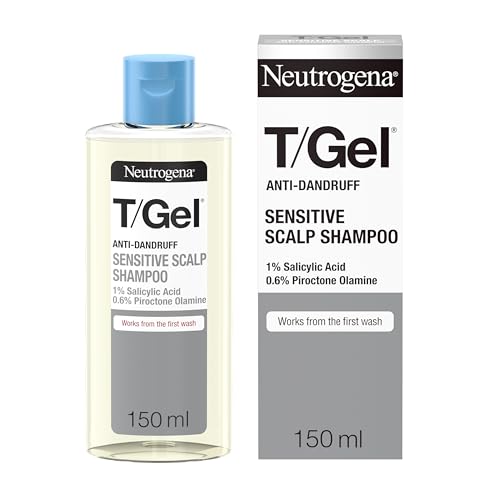
Neutrogena
T/Gel Anti Dandruff Shampoo
shampoo · 150 ml · 15 ingredients
- Fragrance-free
- No essential oils
- No MI/MCI
- With piroctone olamine
- With salicylic acid
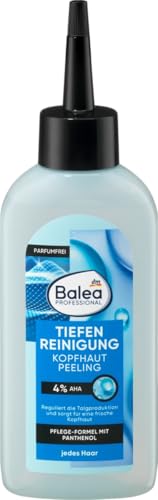
Balea
Professional Scalp Scrub Deep Cleansing
scalp treatment · 150 ml · 10 ingredients
- Fragrance-free
- No essential oils
- No MI/MCI
- With panthenol

OGX
ProGrowth + Peptide Scalp Serum
scalp treatment · 10 ml · 16 ingredients
- Fragrance-free
- No essential oils
- No MI/MCI
- With panthenol

Eucerin
Dermo Capillaire Anti-dandruff Shampoo
shampoo · 250 ml · 15 ingredients
- Fragrance-free
- No essential oils
- No MI/MCI
- With panthenol
Frequently asked questions
What does scalp buildup look like?
Simple scalp buildup appears as a white or yellowish waxy layer at the roots and scalp surface, sometimes forming soft flakes that differ from classic dandruff. Dandruff flakes are small and dry; seborrheic dermatitis flakes are larger, greasy, and yellowish; scalp psoriasis produces thick, silvery-white adherent scale. Product buildup makes hair feel heavy, look dull, and may leave a powdery residue. If you are unsure of the type, a dermatologist can distinguish them with dermoscopy.
Is scalp buildup causing my hair loss?
Simple buildup from sebum or products does not directly cause hair loss in most people. However, if buildup drives persistent scalp inflammation — as in chronic seborrheic dermatitis or folliculitis — the resulting inflammation around the follicle can contribute to diffuse shedding. Addressing buildup is sensible scalp hygiene but is not a hair-loss treatment on its own. If hair thinning accompanies scalp issues, a dermatologist can evaluate whether the two are linked.
How often should I use a clarifying shampoo for buildup?
For oily scalps with regular styling product use: once a week. For normal scalps with moderate product use: once every two to three weeks. For dry, color-treated, or low-porosity textured hair: once every four to six weeks to avoid stripping. Follow clarifying with a moisturizing conditioner, as clarifying shampoos remove protective lipids along with buildup.
Will apple cider vinegar rinse remove scalp buildup?
Apple cider vinegar (ACV) is mildly acidic (pH 2–3) and can help dissolve mineral deposits and lower scalp pH after alkaline shampoos, which some people find reduces flaking and improves cuticle smoothness. However, ACV rinses have no clinical evidence for removing sebum-based or polymer-based buildup. Dilute well (1 part ACV to 3–5 parts water) to avoid scalp irritation, and treat it as a complement to — not a replacement for — a proper clarifying shampoo.
Can scalp buildup clog hair follicles and stop hair growth?
Hair follicles have a wide enough opening that surface buildup does not mechanically block hair growth in the way a clogged pore might appear to. However, chronic folliculitis secondary to blocked follicles can damage follicle architecture over time, and the inflammation driven by Malassezia overgrowth in sebum-rich environments is associated with scalp health disruption. Routine cleansing keeps follicles clear and the environment inhospitable to pathological microbial overgrowth.
What ingredients are best for dissolving scalp buildup?
Salicylic acid (BHA, 1–2%) is the most evidence-backed keratolytic for scalp buildup — it is lipophilic and penetrates oily follicle environments to dissolve keratin adhesion. Glycolic acid (AHA) disrupts corneocyte adhesion at the scalp surface. Physical scrub particles (sugar, salt, silica) provide mechanical lift for stubborn scale. Sulfate surfactants (sodium lauryl sulfate) are unmatched for removing polymer-based product residue. Zinc pyrithione and selenium sulfide address the Malassezia component when microbial overgrowth is a factor.
Sources
- 01Physiology, Sebaceous Glands — StatPearls — NCBI Bookshelf / StatPearls. Sebaceous glands provide 90% of skin surface lipids; androgens (via 5-alpha-reductase) stimulate sebum production; sebum is delivered to the scalp surface via wicking through the hair shaft.
- 02An Assessment of the Safety, Efficacy, and Tolerability of a Novel Scalp Treatment Regimen Combining a Hydroxy Acid-Based Scrub and Copper Tripeptide Serum in the Management of Seborrheic Dermatitis in Adults — PubMed Central / PMC11501000, 2024-10-01. Hydroxy-acid scalp scrub (AHA/BHA/PHA) produced 61.24% improvement in adherent scalp flaking and 76.24% improvement in scalp hydration within 15 days; itchiness resolved in 93.10% of participants.
- 03Comparison of Healthy and Dandruff Scalp Microbiome Reveals the Role of Commensals in Scalp Health — PubMed Central / PMC6180232, 2018-10-08. Propionibacterium acnes is the dominant commensal in healthy scalps; Staphylococcus epidermidis abundance increases in dandruff; Malassezia species metabolize sebum into irritating oleic acid via lipase activity, triggering abnormal desquamation.
- 04Stratum Corneum Dysfunction in Dandruff — PubMed Central / PMC3494381, 2012-11-01. Dandruff scalps have depleted ceramide levels (50% of healthy scalp levels), elevated TEWL, and disorganized intercellular lipids consistent with weakened barrier function — setting up conditions for abnormal corneocyte clumping.
- 05Essentials of Hair Care Often Neglected: Hair Cleansing — PubMed Central / PMC3002407, 2010-11-01. Styling-product polymer films accumulate on the scalp and hair shaft over approximately seven days; deep-cleaning (clarifying) shampoos are recommended weekly to remove this residue.
- 06An Overview of the Diagnosis and Management of Seborrheic Dermatitis — PubMed Central / PMC9365318, 2022-08-01. Seborrheic dermatitis involves sebaceous gland activity, Malassezia colonization, and immune dysregulation; salicylic acid is an established keratolytic for reducing adherent scale in scalp seborrheic dermatitis.