Tinted Moisturizer vs BB vs CC Cream vs Foundation
The short answer
Tinted moisturizer gives the sheerest coverage; BB cream adds SPF and skincare; CC cream color-corrects.
The Base Makeup Spectrum
The category of "base makeup" spans a wide range, from translucent skin tints with barely any color to full-coverage liquid foundations. Tinted moisturizers, BB creams, CC creams, and foundations are four distinct product categories that sit along this spectrum — each designed with different priorities in coverage level, skincare functionality, and SPF delivery.
Understanding where each falls, and why, helps you pick the product that matches your actual goal.
Side-by-Side Comparison
| Product | Coverage | Typical SPF | Key Extra Function | Best For |
|---|---|---|---|---|
| Tinted moisturizer | Sheer | 15–30 (not always) | Hydration, skin-evening | No-makeup look, well-hydrated skin |
| BB cream | Light to medium | 15–50 | SPF, skincare actives | Daily minimal-effort base with some protection |
| CC cream | Light to medium | 15–50 | Color correction + coverage | Redness, uneven tone, sallowness |
| Foundation | Sheer to full | Variable (often none; some include) | Maximum coverage control | Precise coverage, shade match, longevity |
Tinted Moisturizer
What It Is
A tinted moisturizer is a standard hydrating moisturizer with a small dose of cosmetic pigments (iron oxides, titanium dioxide) added for a very light skin-evening effect. Pigment concentration is the lowest of any base category — the product is designed to hydrate first and tint second.
Coverage: Sheer. A tinted moisturizer will even out minor discoloration and give a slight glow or fresh appearance, but will not cover acne marks, post-inflammatory hyperpigmentation, or significant redness.
SPF: Often included, typically SPF 15–30. The same caveat applies as all SPF-in-cosmetics products: the labeled SPF is based on a standard application thickness that most people do not reach in practice.
Finish: Usually natural to dewy, reflecting the moisturizer base's emollient content.
Who It's For
Tinted moisturizer suits people who:
- Have generally even skin tone with minimal concerns
- Want hydration and a "your skin but better" effect, not coverage
- Prefer minimal makeup that feels like skincare
- Have dry to normal skin (the emollient base is not suited to oily skin without a mattifying agent)
Key Limitation
Sheer coverage means any moderate-to-significant pigmentation concern (redness, acne scars, PIH) will show through. For those concerns, a BB cream, CC cream, or foundation is a better tool.
BB Cream (Beauty Balm / Blemish Balm)
What It Is
BB cream was originally a single-product dressing for post-procedure skin in Germany in the 1960s, adopted and reformulated by Korean beauty brands in the 2000s into a mass-market "all-in-one" formula combining coverage, SPF, skincare actives, and primer function. The modern BB cream formula is an oil-in-water emulsion layered with:
- Pigments (iron oxides, titanium dioxide) for coverage
- Chemical and/or physical SPF filters
- Skincare actives: most commonly humectants (glycerin, hyaluronic acid) and skin-conditioning agents
Coverage: Light to medium. More opaque than a tinted moisturizer but less than full foundation. Many formulas are buildable to medium coverage with two layers.
SPF: Typically SPF 15–50. Critically, a study testing 21 commercially available BB creams found that 70% of products met their labeled SPF, but 30% had actual SPF values 2 to 10 times lower than stated. Photostability also varied significantly, with some products losing up to 60% of their photoprotective efficacy over a day's wear.
Iron oxide and visible light: BB creams containing iron oxide pigments — which most do — provide meaningful photoprotection against visible light-induced pigmentation, in addition to UV protection. This matters for people with melasma or hyperpigmentation-prone skin, where visible light (not only UV) can trigger melanin production.
Finish: Natural to luminous, depending on the formula.
Who It's For
BB cream suits people who:
- Want a quick one-product base routine (coverage + SPF + skincare)
- Need light to medium coverage and are not seeking full coverage
- Are happy with an "enhanced skin" rather than a polished or matte finish
Key Limitation
The one-size-fits-all formulation means BB creams often have a limited shade range (many brands offer only 3–5 shades, versus 30–50 in a foundation line). Shade matching can be difficult for very light, very deep, or olive skin tones.
CC Cream (Color Corrector / Color Control)
What It Is
CC cream builds on the BB cream concept by prioritizing color correction — the use of complementary pigments to neutralize specific color concerns before adding skin-evening tint. The "CC" stands for Color Corrector or Color Control depending on the brand.
Color correction theory: The formula uses pigments based on color-wheel complementary pairs:
- Green pigments neutralize redness (most CC creams include this)
- Peach/salmon pigments neutralize blue-gray undereye circles
- Lavender pigments neutralize yellow sallowness (less common in general CC creams, more common in "purple CC" products)
After the corrective base, CC cream adds a skin-tinted pigment layer in a similar range to BB cream.
Coverage: Light to medium — similar to BB cream, and similarly varies by formula and application quantity.
SPF: Most include SPF 15–50; same photostability and quantity caveats as BB cream apply.
Who It's For
CC cream is the right tool when your primary concern is uneven tone or redness rather than coverage of texture or specific spots. A CC cream can meaningfully reduce the visual intensity of diffuse redness (common in rosacea-type skin), overall sallowness, or blotchiness in a way a regular tinted moisturizer cannot.
CC Cream vs. BB Cream: The Practical Difference
| BB Cream | CC Cream | |
|---|---|---|
| Primary function | Coverage + SPF + skincare | Color correction + coverage + SPF |
| Corrective pigments | No (straight skin tint) | Yes (green, peach, lavender pigments) |
| Best for | Quick coverage, any skin concern | Redness, sallowness, blotchy tone |
| Coverage | Typically equivalent | Typically equivalent |
In practice, the line between BB and CC creams has blurred significantly as brands have reformulated. Many modern BB creams include corrective pigments, and many CC creams include the same skincare actives as BB creams. The label is now less reliable than reading the formula and purpose description.
Foundation
What It Is
Foundation is the highest-pigment-concentration base makeup product — an oil-in-water or water-in-oil emulsion (or anhydrous formula for powder and stick types) with enough iron oxide and titanium dioxide to deliver any coverage level from sheer to full. Unlike the hybrid categories above, foundation is designed first and foremost as a coverage product, with skincare functionality added secondarily in modern "serum foundation" or "skincare foundation" formats.
Coverage: Sheer to full — the widest range of any base category.
SPF: Variable. Some foundations include SPF (typically 15–30); many do not. When included, the same photostability and application quantity caveats apply. A dedicated sunscreen beneath the foundation is the reliable approach to daily sun protection.
Shade range: Foundation lines offer the widest shade selection of any base category — 30 to 50+ shades in leading brands — allowing precise matching to depth and undertone. See How to Find Your Foundation Shade for the full matching method.
Formula types: Liquid, powder, stick, serum, cushion — each with different skin-type compatibility. See Foundation Types Compared for a full breakdown.
Who It's For
Foundation is the right product when:
- Coverage precision matters (specific blemishes, post-inflammatory hyperpigmentation, visible redness that a CC cream does not fully neutralize)
- Exact shade matching is important
- Long wear time is a priority
- You need to control finish (matte, satin, dewy) precisely
Key Limitation
Foundation requires more product knowledge to use well: correct shade, undertone, formula type, and application technique all matter more than with a sheer BB or tinted moisturizer. The investment in learning the product is the trade-off for superior coverage control.
SPF Realities Across All Four Categories
The most commonly misunderstood aspect of BB creams, CC creams, and tinted moisturizers is the SPF they carry. The facts from peer-reviewed research:
- 30% of BB creams tested did not meet their labeled SPF — the real-world protection was 2 to 10 times lower than the label number.
- SPF is tested at 2 mg/cm² — most people apply these products at a fraction of that thickness in practice.
- Reapplication is not practical — these products are designed for single morning application, unlike dedicated sunscreens that specify reapplication every two hours in sun.
- Iron oxide adds real value — the iron oxide pigments in tinted products do provide meaningful protection against visible light-induced pigmentation (an important addition for melasma-prone and hyperpigmentation-prone skin).
- The AAD recommends SPF 30+ broad-spectrum as a minimum — a product that reaches 30+ in real-world application conditions is still superior to none.
Practical recommendation: Use a dedicated broad-spectrum SPF 30+ sunscreen as your primary photoprotection, then apply your base product (BB cream, CC cream, tinted moisturizer, or foundation) over it. Do not rely solely on SPF in cosmetics as your sun protection.
How to Choose
| Your Goal | Best Product |
|---|---|
| Barely-there, hydrating finish | Tinted moisturizer |
| Quick one-product base with SPF | BB cream |
| Reduce redness or uneven tone | CC cream |
| Precise shade match, controlled coverage | Foundation |
| Coverage for specific marks or hyperpigmentation | Full-coverage liquid foundation |
| Maximum SPF in base makeup | SPF 50 BB cream or CC cream (but layer over dedicated sunscreen) |
| Best for oily skin | Oil-free foundation (non-comedogenic); many BB/CC creams lack mattifying agents |
| Best for dry skin | Tinted moisturizer, cushion foundation, or BB cream with hyaluronic acid |
Products that fit this guide
Picked by code from each product's full ingredient list.

Balea
med Ultra Sensitive Face Serum
moisturizer · 30 ml · 20 ingredients
- Fragrance-free
- No essential oils
- With hyaluronic acid
- With glycerin
- With panthenol

Balea
Niacinamide Night Cream
moisturizer · 50 ml · 14 ingredients
- Fragrance-free
- No essential oils
- With niacinamide
- With glycerin
- With vitamin e

Catrice
Glam & Doll Curl Freeze Lash Sculpt Gel
moisturizer · 9.5 ml · 13 ingredients
- Fragrance-free
- No essential oils
- With glycerin
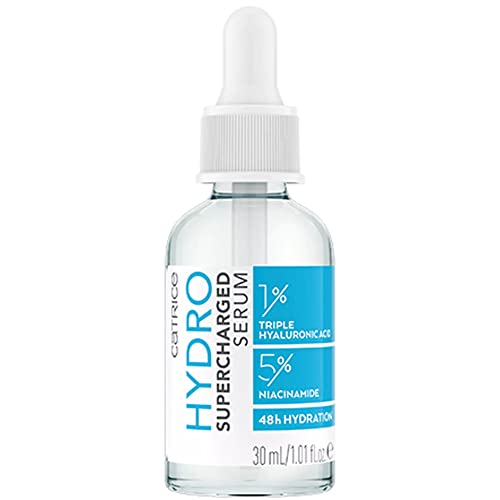
Catrice
Hydro Supercharged Serum
moisturizer · 30 ml · 11 ingredients
- Fragrance-free
- No essential oils
- With niacinamide
- With hyaluronic acid
Frequently asked questions
Is BB cream or CC cream still worth using in 2026 compared to just wearing foundation with SPF?
BB and CC creams remain relevant in 2026 as a convenient one-product morning routine for people who want a natural finish with light coverage and some SPF in a single step. The limitation is that their shade ranges are narrower than foundation, their SPF performance is variable (30% of tested BB creams underperform their label), and they cannot match the coverage precision of foundation. If you need precise shade matching or medium-to-full coverage, foundation over a dedicated SPF gives better results. BB and CC creams are the best choice when simplicity and speed matter more than coverage precision.
What is the real difference between BB and CC cream?
BB cream (beauty balm) is a coverage-and-SPF hybrid that adds skincare actives to an opaque tinted base. CC cream (color corrector) uses complementary-color pigments (especially green for redness neutralisation) before adding tinted coverage, making it more effective for diffuse redness, sallowness, or blotchy tone. In practice, the difference has narrowed: many modern BB creams include corrective pigments, and many CC creams include full skincare ingredient panels. Read the formula rather than relying on the label when comparing specific products.
Can I use a tinted moisturizer instead of sunscreen?
No — a tinted moisturizer should not replace dedicated sunscreen. Even when a tinted moisturizer includes SPF 30, the real-world protection delivered is lower than the label number because most people apply a thin cosmetic layer rather than the 2 mg/cm² thickness required for SPF testing. Additionally, tinted moisturizers are not reapplied every two hours during sun exposure, as dedicated sunscreens should be. Use a dedicated broad-spectrum SPF 30+ sunscreen beneath your tinted moisturizer.
Is BB or CC cream good for acne-prone skin?
Most BB and CC creams are not specifically formulated for acne-prone skin, and their emollient-rich bases can be comedogenic for some people. If you have acne-prone skin, look for BB or CC creams specifically labeled 'non-comedogenic' and 'oil-free,' or consider a lightweight non-comedogenic liquid foundation with SPF layered over a separate non-comedogenic sunscreen. The wider shade range in foundation also makes it easier to match the specific shades that work for acne-prone skin without the limited shade options of many BB/CC creams.
What does CC cream actually do for redness?
CC creams contain green-tinted pigments that work on color-wheel complementary theory: green neutralizes red. When the green-pigmented layer sits against reddened skin, the visual mixing cancels the red cast before the skin-toned coverage layer goes on top. The result is that diffuse redness — from rosacea, general flushing, or post-procedure redness — appears significantly reduced compared to applying a regular tinted moisturizer or BB cream. The effect is cosmetic (not therapeutic); the redness is visually neutralized, not treated.
Which base product is best for mature skin?
Mature skin typically has reduced sebum production and may have dry areas, fine lines, and texture concerns. For these reasons, full-coverage matte foundations that settle into lines are often the wrong choice. Better options include serum foundation (hydrating, natural finish), tinted moisturizer (hydrating, sheer), cushion foundation (dewy, portable), or a medium-coverage liquid foundation with a dewy or satin finish. CC cream can also be effective for the uneven tone and redness that often accompanies mature skin. Avoid heavy powder products, which can settle into lines.
Sources
- 01BB creams and their photoprotective effect — PubMed / Photodermatology, Photoimmunology & Photomedicine, 2014-09-01. 21 commercially available BB creams were tested; 70% met their labeled SPF but 30% had real-world SPF values 2–10× lower than stated; photostability varied from 5% to 60% loss of efficacy across the day.
- 02Impact of Iron-Oxide Containing Formulations Against Visible Light-Induced Skin Pigmentation in Skin of Color Individuals — PubMed / Journal of Drugs in Dermatology, 2020-08-01. Iron-oxide-containing formulations (including tinted cosmetics) significantly protect against visible light-induced pigmentation — protection not provided by UV-only mineral sunscreens.
- 03Comparison of Visible Light-Protective Tinted Sunscreen to Untinted Sunscreen to Protect Melasma Patients — PubMed Central / PMC, 2025-06-01. Tinted sunscreens containing iron oxides provide superior protection against visible-light-triggered hyperpigmentation in melasma patients compared to untinted broad-spectrum sunscreens.
- 04Are cosmetic products which include an SPF appropriate for daily use? — PubMed / Photodermatology, Photoimmunology & Photomedicine, 2009-10-01. SPF in cosmetics is based on 2 mg/cm² application which is rarely achieved in real use; seven of 35 SPF cosmetics tested did not comply with UVA legislation; photostability issues mean some products lose protection rapidly.
- 05Sunscreen FAQs — American Academy of Dermatology — American Academy of Dermatology (aad.org). AAD recommends broad-spectrum SPF 30+ for daily use; moisturizers and cosmetics containing SPF do not replace dedicated sunscreen because reapplication every two hours during sun exposure is necessary.