How to Find Your Skin Undertone: Warm, Cool, Neutral, Olive
The short answer
Check your inner-wrist veins in daylight: blue-purple means cool, green means warm, ambiguous means neutral.
What Is Skin Undertone?
Your skin has two layers of color: the surface tone (how light or dark you appear overall, determined primarily by melanin concentration) and the undertone (a secondary hue that lies beneath the surface and filters through). Undertone is what gives skin its warmth, pinkness, or muted quality.
Unlike your surface tone, which deepens with sun exposure and fades in winter, undertone does not change. It is a fixed characteristic of your skin's reflective and absorptive properties — primarily driven by the interaction of melanin, hemoglobin, and carotene within your skin layers.
Understanding your undertone unlocks the single most important insight in base makeup: why certain products harmonize with your skin while others clash.
The Four Undertone Categories
Warm Undertone
Appearance: Yellow, golden, peachy, or honey-toned beneath the surface. Skin may look "sun-kissed" even in winter.
Who has it: Common across a wide range of skin depths, from fair to deep. Many East Asian, South American, and South Asian skin tones sit in the warm category.
Foundation formula: Look for yellow-based, golden, or peachy-warm shades. Labels: "warm," "golden," "honey," "caramel," "sun."
Common complementary shades: Peach blush, warm bronzers, copper and gold highlighters, earthy eyeshadows.
Cool Undertone
Appearance: Pink, rosy, or bluish-red beneath the surface. Skin may look flushed or have a porcelain quality.
Who has it: Very common in Northern European and Celtic skin tones at the fair end of the depth scale, but also present at medium and deep depths.
Foundation formula: Look for pink-to-beige bases. Labels: "cool," "rose," "porcelain," "alabaster," "sand."
Common complementary shades: Berry-pink blush, cool-toned highlighters (silver, pearl), mauve and plum eyeshadows.
Neutral Undertone
Appearance: Neither strongly yellow nor strongly pink — a balanced, "true" beige quality.
Who has it: A fortunate category that can wear both warm and cool formulas, neutral undertones appear across all depth ranges.
Foundation formula: Look for balanced beige tones with no dominant pink or yellow cast. Labels: "neutral," "natural," "classic," "balanced."
Common complementary shades: Both warm and cool palettes tend to work — neutral undertone people have the widest versatile range.
Olive Undertone
Appearance: A muted green-gray cast beneath the surface. In certain light, olive skin can look slightly gray or dull. The effect is especially visible at the jawline and neck.
Who has it: Common in Mediterranean (Greek, Italian, Spanish), Middle Eastern, Latin, and some South and Southeast Asian skin tones. Present at light-medium through deep depths.
Why it is misunderstood: Olive is not simply a depth descriptor (it is not the same as "medium skin"). It is a distinct undertone category characterized by a green-gray secondary pigment that interacts poorly with both strongly warm (orange-pulling) and strongly cool (ashy-pulling) foundations.
Foundation formula: Look for yellow-with-green or golden-neutral bases. Labels: "olive," "golden-neutral," "warm-neutral." Avoid highly pink foundations and highly orange-warm foundations — both clash. See Foundation for Olive Skin for a complete breakdown.
Common complementary shades: Warm-neutral blushes (terracotta, soft peach-brown), gold highlighters, neutral-warm bronzers.
The Three Most Reliable At-Home Tests
No single test is infallible. Use all three and take the consensus.
Test 1: The Vein Test
Method: Look at the veins on the inside of your wrist in natural daylight — not artificial light. Move to a window or step outside.
Read your result:
- Veins appear blue or purple → Cool undertone
- Veins appear green → Warm undertone
- Veins appear blue-green or you cannot clearly tell → Neutral undertone
- Veins appear greenish-gray or muted → Possibly Olive undertone
Why it works: Vein color is determined by how deoxygenated hemoglobin absorbs and reflects light through the skin. Cooler-toned skin does not filter the blue-purple wavelengths; warmer-toned skin has a yellow layer that shifts the perception toward green.
Limitation: This test can be difficult to read accurately on very dark skin, where the depth of pigmentation absorbs more light across all wavelengths. In that case, weight the other tests more heavily.
Test 2: The White Paper Contrast Test
Method: Hold a plain white piece of printer paper next to your bare, unmade-up face in natural daylight. Look at the contrast between the paper and your skin.
Read your result:
- Your skin appears yellowish, golden, or peachy against the white → Warm
- Your skin appears pink, rosy, or slightly flushed against the white → Cool
- Your skin appears gray, olive, or muted against the white → Olive or Neutral
Why it works: White paper creates a neutral baseline, making the secondary hue of your skin much more visible. Research on skin tone assessment confirms that contrast against a white reference is one of the most effective methods for identifying undertone, because it eliminates the confounding effect of ambient color casts.
Test 3: The Jewelry Test
Method: Hold a piece of gold-toned jewelry against your skin, then a piece of silver-toned jewelry. Assess which makes your skin look brighter, cleaner, and more vibrant — not which you prefer aesthetically.
Read your result:
- Gold clearly flatters more → Warm undertone
- Silver clearly flatters more → Cool undertone
- Both look equally good → Neutral undertone
- Both look slightly off → Possibly Olive (olive undertones can find both gold and silver slightly jarring; bronze-tone metals often suit best)
Undertone and Foundation Matching
Undertone is the primary reason foundations "go wrong" even at the correct depth. Here is how each mismatch manifests:
| Mismatch | What You See |
|---|---|
| Too warm (orange-based) formula on a cool undertone | Foundation reads orange or muddy; obvious contrast against neck |
| Too cool (pink-based) formula on a warm undertone | Foundation reads pink, chalky, or unnatural |
| Too warm formula on olive skin | Clashes with the green cast; looks overly orange-brown |
| Too cool formula on olive skin | Makes skin look ashy, gray, or lifeless |
| Correct undertone formula | Foundation disappears; skin looks like better skin, not a mask |
Undertone Beyond Foundation: The Full Makeup Picture
Once you know your undertone, you can apply the same principle across your entire makeup wardrobe:
Blush
- Warm: Peach, coral, terracotta, warm pink
- Cool: Berry, rose, pink, mauve
- Neutral: Soft rose, warm-neutral pink — most blushes work
- Olive: Warm peach-brown, terracotta; avoid cool-toned pinks
Bronzer
- Warm: Most bronzers suit — look for golden or copper sheen
- Cool: Choose ashier or lighter bronzers; heavy orange bronzers can clash
- Olive: Warm-neutral bronzers with a brown-gold tone; avoid strong orange
Highlighter
- Warm: Gold, copper, peach
- Cool: Silver, pearl, icy pink, champagne
- Olive: Gold, bronze, warm champagne
Hair Color
- Warm: Golden blonde, honey, copper, warm brown, auburn
- Cool: Ash blonde, platinum, cool brown, espresso, blue-black
- Neutral: Most shades work; avoid extremes
- Olive: Golden or warm brown tones; ash can make skin look sallow
Common Undertone Myths
"Fair skin = cool undertone." False. Fair skin can be warm, cool, neutral, or olive. Depth and undertone are independent.
"Dark skin = warm undertone." False for the same reason. Deep skin tones span the full undertone spectrum, including cool and neutral.
"If I tan easily, I'm warm." Not necessarily. Tanning capacity is related to melanin production in response to UV, not to undertone. Someone with a cool undertone who tans easily will simply have a cooler-toned tan.
"Olive is just medium-depth skin." Olive is an undertone, not a depth. Olive can occur at light-medium, medium, or deep skin depths. It is characterized by the green-gray secondary cast, not the overall darkness of the skin.
"My undertone might be different on my face vs. my body." The surface tone varies by body area (face is often slightly darker from UV exposure), but undertone is consistent across the body.
Determining Undertone for Very Dark Skin Tones
The vein test and paper test can be harder to read accurately on Fitzpatrick Type V–VI skin, where higher melanin concentration absorbs more light across all wavelengths. In these cases:
- Weight the jewelry test most heavily — the visual contrast between metals and deep skin is usually clear.
- Look at the inside of the lower lip — this area has thin, vascular skin and often shows warm (reddish-brown) or cool (pink-purple) tones more clearly.
- Check the eye whites and palms — yellow-toned whites and palms suggest warm; pink-blue tones suggest cool.
- Test foundation in-store — with deep skin, swatching three or four foundation shades side by side on the jawline in daylight gives the clearest empirical answer.
Quick Reference: Undertone Cheat Sheet
| Undertone | Veins | vs. White Paper | Best Jewelry | Foundation Base |
|---|---|---|---|---|
| Warm | Green | Yellowish, golden | Gold | Yellow, peach, golden |
| Cool | Blue/purple | Pink, rosy | Silver | Pink, beige, porcelain |
| Neutral | Blue-green | Balanced | Both | True beige, balanced |
| Olive | Greenish-gray | Gray, muted | Bronze | Yellow-green, golden-neutral |
Once you know your undertone, pair it with your foundation shade matching process to lock in a base that disappears — and looks like your best skin.
Products that fit this guide
Picked by code from each product's full ingredient list.

Essence
CORRECT & CONCEAL under eye brightening concealer
concealer · 3.5 ml · 22 ingredients
- Fragrance-free
- No essential oils
- With glycerin
- With titanium dioxide
- With aloe vera

Essence
Silky Blur Hydrating Longwear Concealer
concealer · 10 ml · 26 ingredients
- Fragrance-free
- No essential oils
- With hyaluronic acid
- With glycerin
- With squalane
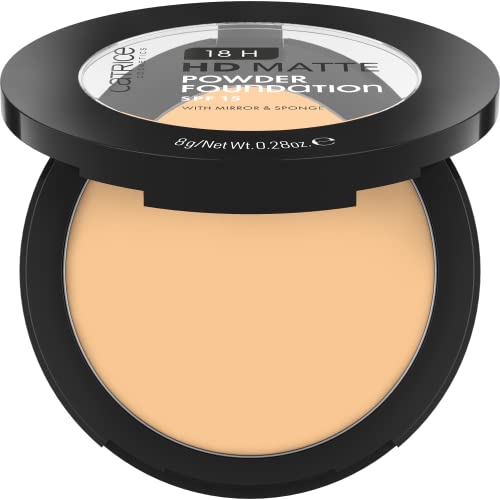
Catrice
18H HD Matte Powder Foundation
foundation · 8 g · 19 ingredients
- Fragrance-free
- No essential oils
- With titanium dioxide
- With dimethicone

Catrice
Cloud Tint Cushion Highlighter
foundation · 4 g · 19 ingredients
- Fragrance-free
- No essential oils
- With glycerin
- With titanium dioxide
- With vitamin e
Frequently asked questions
Is the vein test for undertone still considered accurate in 2026?
The vein test remains the most widely recommended quick assessment and is still the starting point cited by most professional makeup artists and dermatologists. Its limitation is accuracy on very dark skin tones, where melanin concentration can make vein color harder to read under any lighting. The consensus recommendation in 2026 is to use all three tests (vein, white paper, jewelry) and take the majority result, especially for dark or olive skin tones where a single test can be ambiguous.
What if all three tests give me different answers?
Conflicting test results most commonly indicate a neutral undertone — one that sits in the balanced center rather than pulling clearly warm or cool. The second most common explanation is olive undertone, which can read ambiguously on both the vein and paper tests. If tests disagree, try foundation shades that are labeled 'neutral' or 'golden-neutral' and assess on the jawline in daylight — that direct test is more reliable than indirect proxy methods.
Can my undertone change over time?
No. Undertone is a stable characteristic of your skin's optical properties — the way melanin, hemoglobin, and carotene interact to create your skin's secondary hue. It does not change with age, tanning, or skin conditions. What can appear to change is that your surface tone shifts (tanning deepens it; conditions like rosacea can add a temporary red cast), which can temporarily make an undertone harder to read. But the underlying undertone itself remains constant.
I'm olive-toned. Why do most 'warm' foundations still look wrong on me?
Olive undertone is genuinely different from warm undertone, despite both having a yellow component. Olive skin carries a green-gray cast that makes strongly yellow-warm foundations (which pull orange-peach) clash as much as strongly pink-cool ones. Olive skin needs a foundation with a yellow-green or golden-neutral base — not pure yellow-warm and not pink-cool. Brands that make olive-specific shades include Fenty Beauty (the Y-N series), NARS (the Syracuse-to-Macao range), and MAC (the NC45-NW35 crossover range).
Does undertone affect which concealer I should use?
Yes. Concealer follows the same undertone logic as foundation. A cool-undertoned concealer on warm skin will look pink and chalky; a warm-toned one on cool skin will look orange. For undereye concealer specifically, slight peachy-warm correction is often beneficial regardless of undertone, because the blue-purple of under-eye circles is neutralized by peach (warm) — but the overall shade should still match your skin's undertone to blend seamlessly.
Sources
- 01Skin Tone Estimation under Diverse Lighting Conditions — PubMed Central / PMC, 2024-05-01. Skin undertone is a distinct axis from skin depth; it is determined by the interaction of melanin, hemoglobin, and carotene; illumination source affects undertone perception, with daylight being the most accurate assessment environment.
- 02Updating the Fitzpatrick Classification: The Skin Color and Ethnicity Scale — PubMed / Dermatologic Surgery, 2023-07-01. Skin tone is determined by melanin concentration and is independent of undertone; the Fitzpatrick scale classifies depth (phototype), not undertone.
- 03Colorimetric Scale for Skin of Color: A Practical Classification Scale for Clinical Assessment — PubMed Central / PMC, 2023-11-01. Skin color classification requires two independent dimensions: depth (lightness-darkness) and hue (undertone); clinical and cosmetic matching must address both for accurate results.
- 04In vivo isolation of the effects of melanin from underlying hemodynamics across skin types using spatial frequency domain spectroscopy — PubMed Central / Journal of Biomedical Optics, 2016-06-01. Melanin and hemoglobin are the primary chromophores determining skin color and undertone; their wavelength-dependent absorption and reflection properties create the warm, cool, and neutral hue differences visible in skin.