Silicones in Hair Products: Harmful or Helpful?
The short answer
Silicones are effective hair conditioning polymers.
What Are Silicones?
Silicones are synthetic polymers built on a silicon-oxygen (Si–O) backbone with organic side chains — typically methyl groups in the simplest form. The foundational hair-care silicone is polydimethylsiloxane (PDMS), commercially called dimethicone. The family is large, ranging from lightweight volatile cyclic silicones (cyclopentasiloxane, abbreviated D5) to heavy, viscous non-volatile silicones (high-molecular-weight dimethicone, amodimethicone).
Silicones became mainstream in hair products in the 1980s and 1990s because they solved a persistent formulation problem: conditioning agents needed to survive rinsing and deposit on hair without making it greasy. Their unique combination of hydrophobicity, thermal stability, low surface tension, and film-forming properties made them unmatched conditioning delivery vehicles.
What Silicones Actually Do to Hair
The Physical Mechanism
Hair's outermost surface — the cuticle — is composed of overlapping, scale-like cells pointing toward the tip. Healthy hair cuticles lie flat and smooth; damaged hair (from heat, bleaching, chemical processing, or mechanical stress) has raised, chipped, or missing cuticle scales. This surface irregularity is the direct cause of frizz, tangling, and dullness.
Silicones address this by coating the cuticle. Dimethicone — the most common silicone — forms a thin, uniform film across the hair surface, filling cuticle defects, smoothing the surface geometry, and creating slip between individual fibers. A 2023 PMC review on hair care physicochemistry confirmed that film-forming conditioners like dimethicone "smooth the cuticle surface and reduce friction between hair shafts," resulting in "lower static electricity and reduced frizz."
The Documented Benefits
- Friction reduction: Lower inter-fiber friction reduces mechanical stress during detangling and brushing — a real benefit for breakage reduction.
- Humidity blocking: Silicones' hydrophobic nature creates a water-resistant film; for frizz-prone hair in humid climates, this reduces the moisture absorption that causes the cuticle to swell and "puff."
- Shine: A smooth, flat cuticle surface reflects light uniformly; silicone-coated hair looks shinier because the surface is more optically uniform.
- Thermal protection: Silicones can partially buffer the hair shaft from direct heat tool temperatures, though they are not a substitute for dedicated heat protectants at very high temperatures.
- Manageability: Reduced tangling and friction means less breakage during the grooming process.
Amodimethicone: The Smart Silicone
Amodimethicone deserves specific attention. Unlike basic dimethicone, it carries amine functional groups that give it a positive charge. Hair, particularly damaged hair, carries a net negative surface charge — meaning amodimethicone deposits preferentially on the highest-charge, highest-damage zones. The practical result: targeted conditioning where the hair needs it most, with less gratuitous buildup on healthy zones. A PMC review on hair care physicochemistry described this selective deposition as one of the key technological advances in silicone-based conditioning.
The Buildup Problem: Real, Not Mythological
The internet's anti-silicone argument isn't wrong — it just misidentifies the variable. The issue is not silicone chemistry per se; it's the match between silicone solubility and cleansing regimen.
Water-insoluble silicones — standard dimethicone, amodimethicone, cyclomethicone in leave-in products — bond hydrophobically to the hair shaft. Each application adds a layer; washing with a mild surfactant (or no shampoo) fails to break the hydrophobic bond. Over weeks or months, the deposit thickens until it:
- Feels heavy and waxy
- Prevents moisture or conditioning agents from penetrating the shaft
- Makes hair look dull rather than shiny (too thick a coating scatters rather than reflects light uniformly)
- Requires a clarifying wash with a sulfate-containing shampoo to reset
This is the origin of the CurlyGirl method's anti-silicone stance — which is coherent in context. The method pairs sulfate-free shampooing with silicone-free styling, because combining water-insoluble silicones with sulfate-free cleansers creates an unsustainable accumulation loop. The mistake is generalizing this pairing logic into a claim that silicones themselves are harmful.
Types of Silicones: A Practical Taxonomy
| Silicone | Solubility | Buildup Risk | Compatible With |
|---|---|---|---|
| Dimethicone | Water-insoluble | High without sulfate shampoo | Sulfate-containing cleansers |
| Amodimethicone | Water-insoluble (slightly cationic) | Moderate — selective deposition | Sulfate-containing or micellar cleansers |
| Cyclopentasiloxane (D5) | Water-insoluble volatile | Low (evaporates) | Most routines; rinse-off products |
| Dimethicone Copolyol | Water-soluble | Very low | Sulfate-free routines |
| PEG-12 Dimethicone | Water-soluble | Very low | Sulfate-free routines |
| Phenyl Trimethicone | Water-insoluble | Moderate | Sulfate-containing cleansers |
How to identify the type on a label:
- Any silicone ending in "-cone" or "-conol" without "copolyol" or "PEG" prefix = likely water-insoluble.
- "Copolyol" suffix (dimethicone copolyol) = water-soluble.
- "PEG-" prefix on any silicone = water-soluble.
- Cyclopentasiloxane (D5) or cyclomethicone in rinse-out products = volatile, evaporates, low buildup.
Are Silicones Harmful?
The scientific evidence is clear: silicones are safe cosmetic ingredients. Multiple peer-reviewed safety reviews have characterized silicones — particularly dimethicone — as non-irritating, hypoallergenic, non-comedogenic, and non-occlusive for skin and hair. A PMC comparison of silicone-free versus silicone-based emulsions confirmed that silicones present "no irritation, hypoallergenic, non-comedogenic, non-occlusive" properties. The EU Cosmetics Regulation and the FDA have both reviewed the safety of common cosmetic silicones without action.
The one environmental concern worth noting: cyclopentasiloxane (D5) has raised some regulatory scrutiny for environmental persistence in aquatic systems. The EU restricts D5 in rinse-off cosmetics above 0.1%. This is a regulatory-environmental concern, not a consumer-safety concern — for rinse-off products, exposure to human skin is brief. For leave-on products, D5 is volatile and evaporates; it does not accumulate on hair in the way non-volatile silicones do.
Silicones and Different Hair Types
Straight, Chemically Unprocessed Hair
Standard dimethicone-containing conditioners work well when paired with a routine that includes regular SLES-based shampooing. The cycle of conditioning (depositing dimethicone) and cleansing (removing it) is inherently managed.
Color-Treated or Chemically Processed Hair
Damaged, porous hair is particularly responsive to amodimethicone's selective deposition. These hair types benefit substantially from silicone conditioning while also requiring periodic clarifying to manage buildup. Using a sulfate-free shampoo for most washes plus a sulfate-containing clarifying shampoo once every 2–4 weeks is a workable protocol.
Curly and Coily Hair
This is the hair type most divided on silicones. Curly hair benefits from the frizz-blocking and moisture-sealing properties — but also experiences the most frustrating buildup because curly-hair routines often emphasize moisture retention and use multiple layered products. If your routine is entirely sulfate-free (co-washing or gentle-shampoo only), water-soluble silicones (dimethicone copolyol) or no silicones are the practical recommendation. If your routine includes occasional clarifying washes, water-insoluble silicones can be used.
Fine Hair
Fine hair tends to get weighed down by heavy silicone deposits faster than coarser hair types. Lightweight volatile silicones (cyclopentasiloxane in serums) work better for fine hair than thick dimethicone conditioners.
How to Manage Silicone Buildup
If you suspect buildup — hair feels heavy, looks dull, responds poorly to moisture or conditioning:
- Clarifying wash: Use a shampoo with SLES (or a dedicated clarifying shampoo) to break the hydrophobic silicone bond and remove deposits. One or two washes usually reset the hair.
- Reconsider your silicone-cleanser pairing: Switch to water-soluble silicones if you prefer a sulfate-free routine; switch to water-insoluble silicones if you're willing to use a stronger shampoo periodically.
- Build a sustainable cycle: Buildup is not a reason to avoid silicones permanently — it's a reason to plan your cleansing frequency around the product types you use.
The hair care glossary has definitions for every silicone type you're likely to encounter on a label.
The Bottom Line
Silicones are among the most well-studied and demonstrably effective conditioning ingredients in hair care. Their benefits — frizz control, friction reduction, shine, thermal buffering, and damage-targeted conditioning (amodimethicone) — are mechanistically sound and cosmetically real. Their drawbacks reduce to one issue: water-insoluble silicones require adequate cleansing to remove. Match your silicone type to your cleansing routine, include periodic clarifying washes if you use water-insoluble variants, and the ingredient category delivers on its promises.
Products that fit this guide
Picked by code from each product's full ingredient list.

Bioderma
Abcderm Smooth Shampoo
shampoo · 200 ml · 16 ingredients
- No essential oils
- With lactic acid
- With panthenol
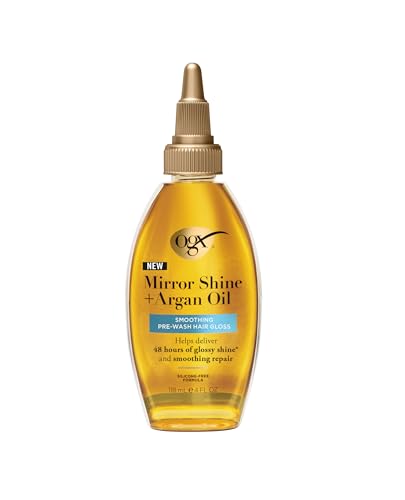
OGX
Mirror Shine + Argan Oil Pre-Wash Hair Gloss
hair oil · 118 ml · 8 ingredients
- No essential oils

Davines
Natural Tech Purifying Shampoo
shampoo · 250 ml · 21 ingredients
- No essential oils
- With glycerin
- With selenium sulfide

Eucerin
Dermo Capillaire Anti-dandruff Shampoo
shampoo · 250 ml · 15 ingredients
- Fragrance-free
- No essential oils
- With lactic acid
- With panthenol
- With urea
Frequently asked questions
Are silicones in hair products safe and what does current evidence show?
Yes — silicones are consistently characterized as safe in peer-reviewed cosmetic safety assessments and regulatory reviews. They are non-irritating, hypoallergenic, non-comedogenic, and non-occlusive. The relevant 2023 PMC review of hair care physicochemistry confirmed their safety profile. The one area of ongoing regulatory attention is cyclopentasiloxane (D5) in rinse-off products due to aquatic environmental persistence — the EU limits it above 0.1% in rinse-off cosmetics — but this is an environmental concern, not a consumer-safety finding.
Do silicones cause hair loss?
No evidence supports a causal link between topical silicone use and hair loss. The buildup concern is that thick silicone coatings can block moisture and condition penetration into the shaft, and very heavy scalp deposits from leave-in silicone products could theoretically interfere with scalp breathing — but no clinical evidence connects typical cosmetic silicone use to follicular damage or hair shedding. If you are experiencing hair loss, the cause is almost certainly hormonal, genetic, nutritional, or inflammatory — not your conditioner.
Can I use silicone products with a sulfate-free shampoo?
It depends on the silicone type. Water-soluble silicones (dimethicone copolyol, PEG-modified silicones) are compatible with sulfate-free cleansers — they rinse off with water and mild surfactants. Water-insoluble silicones (standard dimethicone, amodimethicone) are not: over weeks, they accumulate because sulfate-free surfactants cannot break the hydrophobic bond. If you want a sulfate-free routine, choose products formulated with water-soluble silicones or no silicones at all.
How do I know if my hair has silicone buildup?
Signs of buildup include: hair that feels increasingly heavy or waxy despite not being dirty; a progressive loss of shine despite conditioning; hair that no longer responds to moisture-adding products; and a 'coated' feeling that doesn't improve after a normal wash. A clarifying wash with a sulfate-containing shampoo will remove accumulated deposits — if your hair feels dramatically lighter and more responsive afterward, buildup was the issue.
What is the difference between dimethicone and dimethicone copolyol?
Dimethicone is a water-insoluble polydimethylsiloxane — it deposits on the hair and requires a sulfate-containing surfactant to remove. Dimethicone copolyol is an ethylene-oxide or propylene-oxide-modified version of dimethicone that has been made water-soluble. It conditions similarly in use but rinses cleanly with water and mild surfactants, making it the compatible choice for sulfate-free routines.
Sources
- 01On Hair Care Physicochemistry: From Structure and Degradation to Novel Biobased Conditioning Agents — PubMed Central / Polymers (MDPI), 2023-01-24. Dimethicone forms a thin film coating the hair surface, fills cuticle defects, smooths the surface, reduces friction, decreases static electricity, and reduces frizz; silicones are characterized as non-irritating, hypoallergenic, non-comedogenic, and non-occlusive.
- 02A comparison between silicone-free and silicone-based emulsions: Technological features and in vivo evaluation — PubMed Central / Journal of Cosmetic Dermatology, 2022-08-01. Silicones in cosmetic formulations are non-irritating, hypoallergenic, non-comedogenic, and non-occlusive; silicone-based emulsions demonstrated equivalent in vivo moisturization performance to silicone-free counterparts.
- 03Silicone oil emulsions: strategies to improve their stability and applications in hair care products — PubMed / International Journal of Cosmetic Science, 2014-02-01. Dimethicone acts as a hydrophobic polymer restoring hair hydrophobicity; new silicone polymers adhere to hair with unexpected durability; film-forming silicones reduce friction and impart shine.
- 04Shampoo and Conditioners: What a Dermatologist Should Know? — PubMed Central / Indian Dermatology Online Journal, 2015-01-01. Conditioning agents must survive rinsing and deposit on hair; silicones are a key category of conditioning polymers in rinse-out conditioners; cationic surfactants and silicones together improve softness and manageability of chemically damaged hair.