Hair Oils Guide: Coconut, Argan, Jojoba — What Each Does
The short answer
Coconut oil penetrates the hair shaft and reduces protein loss.
Why Hair Oil Composition Matters
Not all hair oils are created equal, and the differences are not marketing — they are physics and chemistry. Whether an oil benefits the hair primarily on the surface or inside the shaft depends on:
- Molecular size: smaller, more linear molecules fit between cuticle scales and into the cortex.
- Polarity: polar lipids interact with hair's keratin protein matrix; non-polar lipids remain on the surface.
- Degree of saturation: saturated fatty acids (like lauric acid in coconut oil) are more linear; polyunsaturated fatty acids (like linoleic acid) are kinked and bulkier.
- Fatty acid chain length: medium-chain (C12) is more penetrative than long-chain (C18+).
These factors explain why coconut oil performs radically differently from mineral oil or argan oil in controlled studies — and why the "all natural oils are equivalent" narrative is chemically incorrect.
Coconut Oil: The Penetrating Protector
Chemical Profile
Coconut oil is approximately 48% lauric acid (C12:0 — a medium-chain saturated fatty acid), with the remainder split among myristic (C14, ~18%), caprylic/capric acids (C8/C10, ~15% combined), and smaller amounts of palmitic and oleic acid. This unusual fatty acid distribution makes it the only plant-derived hair oil with confirmed cortex penetration capability.
The Penetration Evidence
A landmark study using secondary ion mass spectrometry (SIMS) tracked the movement of coconut oil versus mineral oil into human hair fibers. Coconut oil penetrated the cortex; mineral oil remained on the surface. A subsequent study using radiolabeled coconut oil confirmed penetration into the hair shaft and demonstrated a dose-response relationship — more oil, deeper penetration. A 2022 PMC study measuring oil penetration via hair porosity quantification confirmed coconut oil's ability to reduce hair porosity by filling internal structural defects.
Protein Loss Reduction
The single most clinically significant finding for coconut oil is its ability to reduce protein loss from hair. A 2003 study by Rele and Mohile — widely cited in cosmetic hair science — compared coconut oil, sunflower oil, and mineral oil as both pre-wash and post-wash treatments. Coconut oil was the only oil to reduce protein loss for both undamaged and damaged hair in both use contexts. Sunflower and mineral oils provided no protein protection.
This matters practically: every wash cycle causes some protein loss from the hair shaft (particularly with shampoo friction and surfactant interaction). Applying coconut oil before washing partially occupies the spaces where water and swelling forces would otherwise leach protein out. Post-wash, it continues to seal the cuticle and reduce further environmental protein depletion.
Best Use Cases for Coconut Oil
- Pre-wash oil treatment (15–30 minutes to overnight): the most effective way to use coconut oil for protein protection; apply to dry hair before shampooing.
- High-porosity, damaged, chemically processed, or bleached hair: benefits most from cortex-level filling and protein retention.
- Dry or coarse hair textures: handles the heavier texture without looking greasy.
Limitations
Coconut oil can feel heavy and may cause protein overload with excessive use on already-protein-sensitive hair. It solidifies below approximately 24°C (76°F) — melt it in your hands before application. Some people report a sensitivity or buildup feeling with daily use; weekly pre-wash treatment is typically sufficient.
Argan Oil: The Antioxidant Cuticle Conditioner
Chemical Profile
Argan oil (from Argania spinosa) is composed primarily of oleic acid (43–49%), linoleic acid (29–36%), and smaller amounts of palmitic and stearic acid. Its minor-component profile is exceptional: it contains high levels of tocopherols (vitamin E), polyphenols (particularly ferulic acid), squalene, and sterols. These minor components define its antioxidant and skin/hair conditioning properties.
Surface-Level Conditioning
Unlike coconut oil, argan oil's fatty acid profile — predominantly long-chain, with a high proportion of the kinked, polyunsaturated linoleic acid — means it does not penetrate the hair cortex. A 2024 PMC comprehensive review of plant-based cosmetic oils confirmed that argan oil conditions primarily at the cuticle surface level. However, surface conditioning is not a limitation for what argan oil does best:
- Shine enhancement: the oleic acid-rich surface film smooths the cuticle surface geometry, improving light reflectance.
- Friction reduction: the oil's lubricity reduces inter-fiber friction, improving detangleability and reducing mechanical breakage.
- Antioxidant protection: tocopherols and polyphenols protect the hair surface from UV-induced oxidative degradation and environmental oxidants (a meaningful protective benefit for color-treated or frequently heat-styled hair).
- Elasticity improvement: a clinical study on postmenopausal skin showed statistically significant improvements in gross and net elasticity with topical argan oil application; similar principles apply to hair fiber elasticity — the oil plasticizes the cuticle layer.
- Frizz control and humidity blocking: the oil film partially occludes the cuticle, reducing water vapor absorption in humid conditions.
Best Use Cases for Argan Oil
- Finishing oil for dry or frizzy hair: a few drops on damp or dry hair before styling for shine and frizz control.
- Color-treated hair: the antioxidant content (tocopherols, polyphenols) provides oxidative protection to color-treated hair; the surface conditioning reduces friction that chips colored cuticles.
- Medium to fine hair textures: argan oil's lighter feel compared to coconut oil makes it better suited to hair types that get weighed down.
- Heat styling prep: a thin coat of argan oil before hot tools buffers direct thermal insult to the cuticle.
Limitations
Argan oil's benefits are surface-level and temporary — they don't structurally repair the cortex. The antioxidant protection is real but modest. Authentic argan oil is labor-intensive to produce (manual extraction from Argania spinosa kernels in Morocco) and consequently expensive; many products labeled "argan oil" contain minimal amounts alongside cheaper carrier oils.
Jojoba Oil: The Sebum Mimic
Chemical Profile
Jojoba (Simmondsia chinensis) produces a wax ester — technically not a triglyceride oil but a liquid wax composed of C20–C22 fatty acids esterified with C20–C22 fatty alcohols. This structure is unique in the plant kingdom and unusually similar to human sebum (which also contains wax esters). Jojoba's primary components are eicosenoic acid (~66–71%), docosenoic acid (~14–20%), and oleic acid (~10–13%).
Properties and Hair Benefits
Stability: Jojoba wax esters do not oxidize or become rancid — a significant advantage over polyunsaturated oils like rosehip or evening primrose. This stability means jojoba doesn't degrade on the hair or scalp over time, unlike oils that can go rancid and cause scalp irritation.
Sebum simulation: because jojoba closely mimics the chemical structure of scalp sebum, it integrates more naturally into the scalp's existing lipid environment. PMC reviews note that jojoba promotes retention of skin moisture, maintains compatibility with skin sebum, and is non-comedogenic — making it suitable for scalp application without risking follicular occlusion.
Anti-inflammatory properties: jojoba has documented anti-inflammatory activity in published research. For a sensitized scalp — from excess washing, chemical processing, or underlying conditions — jojoba's soothing effect is a genuine secondary benefit.
Hair shaft conditioning: as a wax ester, jojoba coats the cuticle smoothly without the heaviness of high-viscosity oils like castor. It imparts a light conditioning feel, reduces static, and improves manageability without significant buildup.
Best Use Cases for Jojoba Oil
- Scalp care and dry scalp: the sebum-mimicking structure makes jojoba the most appropriate oil for direct scalp application — it conditions without blocking follicles.
- Fine hair types: the lightest of the three oils discussed here; doesn't weigh fine hair down.
- Leave-in conditioning: a small amount smoothed onto damp hair ends adds moisture-sealing and manageability without greasiness.
- Oxidatively unstable routine (if you also use highly unsaturated oils): jojoba's stability means it can extend the effective life of a blend containing more reactive oils.
Comparison: Coconut vs. Argan vs. Jojoba
| Property | Coconut Oil | Argan Oil | Jojoba Oil |
|---|---|---|---|
| Primary fatty acid | Lauric acid (C12, saturated) | Oleic acid (C18:1) | Eicosenoic acid (C20:1 wax ester) |
| Shaft penetration | Yes — cortex level | No — cuticle surface | No — cuticle surface |
| Protein loss reduction | Yes (clinically proven) | No evidence | No evidence |
| Antioxidant content | Low | High (tocopherols, polyphenols) | Moderate (tocopherols) |
| Oxidative stability | Moderate-high (saturated) | Moderate (polyunsaturated) | Very high (wax ester) |
| Hair type fit | Coarse, dry, high-porosity | Most types; especially fine-medium | Fine, oily scalp, sensitive |
| Best use timing | Pre-wash treatment | Finishing oil, heat prep | Scalp care, leave-in ends |
| Texture | Thick; solidifies below 24°C | Light-medium liquid | Light, silky |
Other Oils Worth Knowing
Castor Oil
High in ricinoleic acid (a hydroxy fatty acid, ~90%), castor oil is extremely viscous and provides a heavy occlusive coat. It does not penetrate the shaft. Often used on eyebrows and edges for perceived thickening (the thickness creates a visual density effect); evidence for growth stimulation is limited.
Mineral Oil
A refined petroleum derivative, not a plant oil. It is an effective surface occlusive and protein-loss reducer in some studies, but has no antioxidant content, no bioactive fatty acids, and no penetration into the cortex. Its very large molecular size confirms surface-only activity. Safe and stable but nutritionally inert.
Rosehip and Marula Oil
Rich in polyunsaturated fatty acids (especially linoleic and linolenic acid). Nutritionally dense but oxidatively unstable; prone to rancidity. Better suited to skin than hair unless used fresh and in cool storage conditions.
How to Choose and Use Hair Oil
Step 1: Identify your hair's porosity and damage level.
- High porosity (damaged, bleached, chemically processed, or very coily): use coconut oil as a pre-wash treatment.
- Low-medium porosity (healthy, less-processed): focus on surface oils (argan, jojoba) as finishing and scalp treatments.
Step 2: Match oil weight to hair density.
- Fine or low-density hair: argan or jojoba; avoid heavy coconut or castor oil as leave-in products.
- Coarse or high-density hair: coconut oil pre-wash; argan or jojoba for finishing.
Step 3: Decide on timing.
- Pre-wash treatment: coconut oil, 30 minutes to overnight before shampooing.
- Damp hair, post-wash: argan oil (2–4 drops, palms worked through damp lengths and ends).
- Dry hair, finishing: argan or jojoba (1–2 drops).
- Scalp care: jojoba (a few drops directly to scalp, massaged in; leave overnight or for 30 minutes before washing).
More detail on growth-focused oils — including rosemary oil versus minoxidil data — is on the rosemary oil hair growth page and the broader best ingredients for hair growth guide.
Products that fit this guide
Picked by code from each product's full ingredient list.
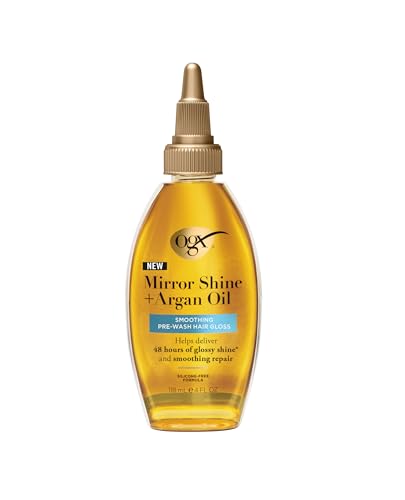
OGX
Mirror Shine + Argan Oil Pre-Wash Hair Gloss
hair oil · 118 ml · 8 ingredients
- No essential oils

Balea
Professional Hair Oil Dream Curls 1 x
hair oil · 100 ml · 23 ingredients
- No essential oils
- With vitamin e

OGX
Bond Protein Repair Sealing Hair Serum
hair oil · 50 ml · 25 ingredients
- No essential oils
- With glycerin
- With panthenol
- With keratin

Aussie
Reconstructor Hair Oil
hair oil · 100 ml · 12 ingredients
- No essential oils
Frequently asked questions
What does current evidence say about hair oils for growth in 2026?
The evidence for most oils as direct hair growth stimulants is limited to absent. Coconut oil's confirmed benefit is protein-loss reduction and structural protection of the existing shaft — not follicular stimulation. Rosemary oil is the notable exception with RCT data (see the dedicated rosemary oil page). Argan and jojoba provide conditioning and scalp benefits but have no robust clinical evidence for growth stimulation. If growth is the goal, the evidence points to minoxidil and rosemary oil as the strongest candidates — not coconut, argan, or jojoba.
Can I use coconut oil on my scalp?
Yes, though with caveats. Coconut oil is non-comedogenic for most people and provides conditioning and mild antimicrobial benefits (lauric acid has documented antimicrobial activity). However, a minority of people find coconut oil comedogenic or irritating on the scalp. Start with a small amount, apply before washing (not as a leave-in), and see how your scalp responds. Those with seborrheic dermatitis (dandruff) should note that coconut oil may feed *Malassezia* — the yeast implicated in seborrheic dermatitis — though evidence on this is mixed.
Is argan oil worth the price?
Authentic argan oil has well-documented antioxidant and cuticle-conditioning properties. Whether it justifies its cost compared to other surface-conditioning oils depends on your priorities: if color protection, oxidative shielding, and lightweight shine are your goals, argan oil is genuinely differentiated. However, many products marketed as 'argan oil' contain very small amounts in a base of cheaper oils — always check the ingredient list; argan oil should appear in the first several ingredients for the product to deliver meaningful benefit.
Which hair oil is best for curly or coily hair?
Curly and coily hair types are generally high-porosity and benefit from coconut oil as a pre-wash protein-protective treatment. Post-wash, argan or jojoba (light amounts) help seal the cuticle, define curls, and reduce frizz without weighing the curl pattern down. Many curl-routine practitioners use coconut oil pre-wash and a lighter finishing oil post-wash — this combines cortex protection with surface-level moisture sealing.
Can hair oils replace conditioner?
Not fully. Conditioners do more than oils: they contain cationic surfactants (like behentrimonium chloride or cetrimonium chloride) that electrostatically bind to the negatively charged hair surface, film-forming polymers, and humectants — providing lubrication, detangling, and moisture attraction that oils alone don't replicate. Oils can complement conditioners and reduce conditioner dependency in high-porosity hair, but they are not mechanistically equivalent. Think of oil as filling internal structural gaps; conditioner as coating the surface with a cationic film.
Sources
- 01Effect of mineral oil, sunflower oil, and coconut oil on prevention of hair damage — PubMed / Journal of Cosmetic Science, 2003-03-01. Coconut oil was the only oil to reduce protein loss for both undamaged and damaged hair used as pre-wash and post-wash treatment; sunflower and mineral oils showed no protein protection.
- 02Secondary ion mass spectrometric investigation of penetration of coconut and mineral oils into human hair fibers — PubMed / Journal of Cosmetic Science, 2001-07-01. SIMS analysis confirmed coconut oil penetrates the hair cortex while mineral oil remains on the surface; coconut oil's high lauric acid content enables cortex penetration.
- 03A Comprehensive Review of Plant-Based Cosmetic Oils (Virgin Coconut Oil, Olive Oil, Argan Oil, and Jojoba Oil) — PubMed Central / Cosmetics (MDPI), 2024-10-01. Argan oil contains oleic acid (43–49%), linoleic acid (29–36%), tocopherols, squalene, and polyphenols; it conditions at the cuticle surface and provides antioxidant hair protection; jojoba is a liquid wax ester with sebum-mimicking structure and documented anti-inflammatory properties.
- 04Benefit of coconut-based hair oil via hair porosity quantification — PubMed / International Journal of Cosmetic Science, 2022-08-01. Coconut oil application measurably reduces hair porosity by filling cortex structural defects, confirming cortex-level penetration and a direct structural benefit.
- 05Hair Oils: Indigenous Knowledge Revisited — PubMed Central / International Journal of Trichology, 2022-01-01. Comprehensive review of hair oil categories confirms coconut oil's penetrative capability and protein-protection mechanism; argan, jojoba, and castor oil provide surface-level conditioning; molecular size and polarity determine shaft penetration.
- 06Jojoba Oil: An Updated Comprehensive Review on Chemistry, Pharmaceutical Uses, and Toxicity — PubMed Central / Evidence-Based Complementary and Alternative Medicine, 2021-06-07. Jojoba is a liquid wax ester structurally similar to human sebum; it is non-comedogenic, oxidatively very stable, anti-inflammatory, and widely used in cosmetic hair and skin products.