Setting Spray vs Setting Powder: Which One Do You Need?
The short answer
Setting powder locks shine and controls oil.
The core difference: what each product actually does
Setting powder and setting spray both claim to make makeup last longer — but they achieve this through entirely different mechanisms, and understanding that difference is the whole decision.
Setting powder is a physical product: finely milled particles of silica, talc, or a talc-free mineral blend sit on the skin surface and do two things. First, they absorb sebum — oily skin's worst enemy for makeup longevity — before it can break down foundation. Second, the particles fill in the micro-gaps between foundation, concealer, and skin, pressing the makeup layers into tighter contact with each other and with the skin surface. The result is reduced shine, more matte coverage, and foundation that has less opportunity to slip or transfer.
Setting spray is a chemical product: a water or alcohol base carries film-forming polymers — most commonly polyvinylpyrrolidone (PVP), acrylates copolymer, or related synthetic polymers — across the face in a fine mist. Once the solvent evaporates (within seconds to a minute), those polymers coalesce into a thin, flexible film that physically bonds all the makeup layers together and to the skin. The result is a unified, skin-like finish, improved transfer resistance, and — in glycerin-containing formulas — a hydration benefit that keeps dry skin looking comfortable rather than tight.
Comparison at a glance
| Setting Powder | Setting Spray | |
|---|---|---|
| Primary mechanism | Physical absorption; oil blotting | Film-forming polymers bond layers |
| Best for | Oily, combination skin | Dry, normal, or dewy-finish preference |
| Finish | Matte to satin | Natural, dewy, or satin |
| Coverage | Can add slight coverage (tinted) or none (translucent) | Sheer — no coverage change |
| Dry-down time | Instant | 30–60 seconds to evaporate |
| Longevity benefit | Strong for oil control; reduces creasing in oily zones | Strong for all-over bonding; improves transfer resistance |
| Risk on dry/mature skin | Can look cakey, settle into lines | Generally flattering — adds glow |
| Can they be combined? | Yes — powder first, spray second | Yes — spray last, after all powder |
Setting powder: what you need to know
Types of setting powder
Loose powder is finely milled and offers the lightest, most buildable application. It is the professional standard for baking, full-coverage looks, and high-definition photography because the particle size is smaller and the application more even. It requires a fluffy brush or damp beauty sponge.
Pressed powder is loose powder compressed with a binder (often a silicone or wax). It is more portable and convenient for touch-ups, but the compressed particles tend to sit slightly heavier on skin.
Translucent powder is colorless (or nearly so) and suits all skin tones. It minimizes the risk of ashiness or color shift. For deeper skin tones, finely milled "translucent" powders can still leave a white cast under flash — checking the powder in natural and artificial light matters.
Tinted/banana powder has a yellow or warm tone that color-corrects purple under-eye shadows and brightens the midface. It is not truly translucent and can shift the overall foundation tone if used heavily across the full face.
Key ingredients
- Silica (silicon dioxide): Spherical silica particles are highly effective oil absorbers with a smooth, skin-blurring effect. They are the preferred ingredient in talc-free formulations and are considered safe for cosmetic use.
- Talc: A naturally occurring mineral that provides slip, blurring, and oil absorption. The FDA's 2023 surveillance testing of 50 talc-containing cosmetic products found no asbestos in any sample — consistent with their 2021 and 2022 results. In 2024, the European Chemicals Agency classified asbestos-free cosmetic talc as a Category 1B carcinogen based on perineal (not facial) use patterns; the FDA has not issued a formal restriction on face powder use. If you prefer to avoid talc, silica-based alternatives deliver equivalent performance.
- Mica: Adds a subtle luminosity; used in "baking" powders and powders marketed for highlighting.
When powder is the right choice
- Oily skin: Powder is indispensable. It keeps shine at bay throughout the day and prevents foundation from oxidising unevenly in sebum.
- Under-eye concealer setting: A light veil of powder presses concealer into the skin and prevents creasing in the fold.
- Full coverage or photographic looks: Powder evens the skin surface and eliminates the micro-movement that causes HD cameras to pick up imperfections.
- Contouring and baking: Pressed and loose powders are the tools for precise shadow and light work.
When powder is the wrong choice
- Dry or dehydrated skin: Powder draws moisture from the skin surface and settles into fine lines, making texture and dryness more visible rather than less.
- Mature skin: Fine lines, surface texture, and the natural flattening of facial volume are all accentuated by excess powder. Minimal or no powder — especially under the eyes — is standard professional advice for skin over 45.
- Minimal or "your-skin-but-better" looks: Heavy powder counters the natural finish of sheer foundations and tinted moisturizers.
Setting spray: what you need to know
How the chemistry works
Most setting sprays are primarily water with alcohol (often denatured alcohol / alcohol denat.) as a fast-evaporating carrier. The alcohol accelerates solvent evaporation so the film-forming polymers can coalesce quickly and the spray doesn't leave the face feeling damp. It also helps the mist disperse finely and evenly.
The film-forming polymers — PVP (polyvinylpyrrolidone), acrylates copolymer, or VP/VA copolymer — are the functional core. Once the solvent evaporates, these polymers cross-link and form a thin flexible film over the skin surface that physically bonds all underlying makeup layers together. This is why setting spray can extend wear even when applied over powder: it unifies and locks the entire finished look.
Many formulas also include glycerin, a proven humectant that draws water from the environment into the outer layers of skin. Research published in Food and Chemical Toxicology (PMC, 2022) confirmed glycerin's superior moisture-retention capacity — it binds water proportionally to its concentration, which is why glycerin-heavy setting sprays genuinely feel hydrating rather than just coating the skin. This makes glycerin-forward setting sprays especially useful on dry skin: they extend wear while simultaneously preventing the tight, uncomfortable feeling that occurs when alcohol evaporates.
Alcohol in setting spray: is it a concern?
The Cosmetic Ingredient Review (CIR) Expert Panel assessed denatured alcohol and concluded it is safe in cosmetics at concentrations between 0.05% and 12%. Setting sprays are applied in a fine mist and not left on the skin as a film product, so contact time and concentration are lower than in toners or astringents.
For sensitive or very dry skin: the brief stinging or tightness felt immediately after misting is from alcohol evaporation, not permanent barrier disruption. If your skin is highly reactive, choose an alcohol-free setting spray with a polymer base — these are widely available and equally effective at bonding makeup layers.
Finish types
- Matte setting spray: Contains higher concentrations of film formers or oil-controlling agents; suitable for very oily skin.
- Dewy/luminous setting spray: Higher glycerin content; suited to dry, normal, or combination skin.
- Natural/flexible hold: The most widely sold type; balanced finish that bridges the gap between matte and dewy.
How to apply setting spray correctly
Hold the bottle 8–10 inches from your face and mist in a T then X pattern (or a Z pattern) to ensure even coverage. Close your eyes and mouth. Allow 30–60 seconds for solvent to evaporate before touching your face. Applying spray when makeup is still completely wet can cause it to move; the ideal window is after all makeup is applied and lightly pressed but before it has fully dried to a hard film.
Do not rub or pat the face after misting — this disrupts the polymer film before it has set. Let it air-dry.
Using powder and spray together
These two products are designed to work in sequence, not competition.
The optimal order:
- Apply foundation and concealer as usual.
- Set with powder — either all over (oily skin) or only on the T-zone and under-eye area (dry/combination skin).
- Complete the rest of your makeup (eyeshadow, blush, bronzer, highlights).
- Finish with setting spray as the final step, spritzed over everything.
The spray's polymers encapsulate the full finished look — powder and all — in a unified film. This dramatically improves transfer resistance compared to powder alone and prevents the loose-powder look from becoming chalky as the day progresses.
Some artists use spray mid-routine as well — misting after concealer but before powder, then again as a final seal — but this is a professional technique most people don't need.
Which one do you need?
Use setting powder if: your skin is oily or combination and shine control is your priority. Focus application on the T-zone and areas that tend to break down first (around the nose, inner corners, chin).
Use setting spray if: your skin is dry or normal and you want a skin-like, unified finish without the visual weight of powder. Also ideal when you want to melt together a heavily blended look or lock in a specific finish (dewy, satin, or matte).
Use both if: you have oily skin and want maximum longevity, or you want professional-level transfer resistance for long events, hot weather, or photography. Powder controls oil; spray seals everything in.
Use neither if: your makeup routine is minimal (tinted SPF, mascara, brow gel) and your skin doesn't produce enough oil to break down makeup — at that point, a light-coverage base often wears fine on its own throughout a standard day.
Frequently overlooked factors
Climate matters. In humid environments, both products help — powder is especially valuable because humidity increases sebum production and makes oily skin worse. In dry climates, spray dominates: powder in dry air can make skin look parched within hours.
Makeup transfer isn't just about longevity. Transfer onto clothing, masks, or phone screens is primarily a film-bonding problem, not an oil-absorption problem. Setting spray is significantly more effective at reducing transfer than powder alone.
Touch-ups on the go. Pressed powder is the cleaner tool for midday touch-ups because it absorbs new oil and re-presses coverage. Reapplying setting spray midday is also effective if you want to refresh a dewy look without adding coverage.
Products that fit this guide
Picked by code from each product's full ingredient list.

Essence
CORRECT & CONCEAL under eye brightening concealer
concealer · 3.5 ml · 22 ingredients
- Fragrance-free
- No essential oils
- With glycerin
- With titanium dioxide
- With aloe vera

Essence
Silky Blur Hydrating Longwear Concealer
concealer · 10 ml · 26 ingredients
- Fragrance-free
- No essential oils
- With hyaluronic acid
- With glycerin
- With squalane
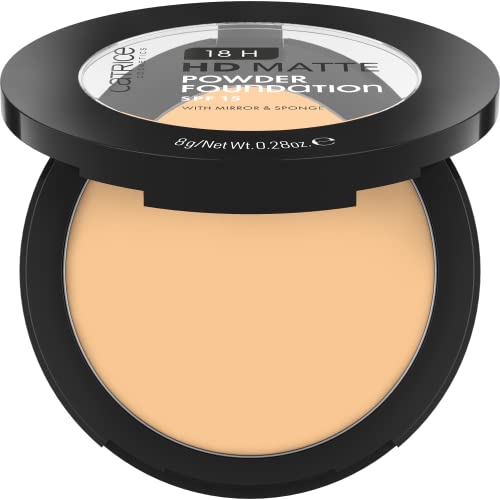
Catrice
18H HD Matte Powder Foundation
foundation · 8 g · 19 ingredients
- Fragrance-free
- No essential oils
- With titanium dioxide
- With dimethicone

Catrice
Cloud Tint Cushion Highlighter
foundation · 4 g · 19 ingredients
- Fragrance-free
- No essential oils
- With glycerin
- With titanium dioxide
- With vitamin e
Frequently asked questions
What does current evidence say about setting spray actually working?
The mechanism is well established in cosmetic chemistry: film-forming polymers (PVP, acrylates copolymer) deposited by the spray's solvent base create a physical cross-linked film that bonds makeup layers together once the carrier evaporates. This is the same polymer-film technology used in hair sprays and has decades of formulation science behind it. Independent wear tests and consumer data consistently show improved transfer resistance and extended wear with setting spray versus no finishing step, though formal randomised clinical trials specifically on makeup longevity are not typical in the academic literature — this is an area dominated by industry data.
Can I use setting spray without setting powder?
Yes, and for dry, normal, or mature skin it is often the better choice. Setting spray alone provides meaningful wear extension and transfer resistance through its polymer film. You don't need powder to get benefit from spray. The combination is valuable specifically when oil control is required alongside bonding, or when a very long-wear or transfer-proof result is the goal.
Does setting powder cause flashback in photos?
Translucent powders containing high concentrations of silica can reflect camera flash differently from the surrounding skin, creating a whitish cast in photographs — sometimes called 'flashback.' Finely milled formulas specifically labelled 'HD' or 'flash-friendly' are formulated with particles that refract light more evenly. If photographs are a concern, test your powder under flash before an event. Using setting spray instead of or after powder reduces this risk because the polymer film doesn't have the same reflective index as silica particles.
Is setting spray safe for acne-prone skin?
Most setting sprays are non-comedogenic and safe for acne-prone skin when used as directed. The brief alcohol content can actually be mildly antimicrobial, and the product is misted on rather than massaged in, so pore-clogging is less of a concern than with heavier occlusive products. That said, some people with reactive or acne-prone skin find that certain setting spray formulas (particularly those with heavier polymers or fragrances) cause congestion. If breakouts develop, check the ingredient list for known comedogens and try a fragrance-free, non-comedogenic formula. Curology's clinical team notes that non-comedogenic formulas with lighter polymer systems are the safer choice for acne-prone skin.
Should I use setting spray before or after powder?
After powder, as the final step in your routine. Applying spray before powder would make the powder stick inconsistently to the sticky polymer film rather than to your makeup, resulting in uneven coverage and a patchy look. The correct sequence: foundation → concealer → powder → rest of makeup → setting spray last.
Can setting spray replace primer?
No — primers and setting sprays serve different functions. Primer is applied to bare or moisturized skin before foundation; it fills in pores and texture, creates adhesion for foundation, and controls sebum at the base layer. Setting spray is applied after all makeup to seal the finished look. Some brands market 'priming sprays' that are used before foundation, but these are a different formulation category — using a traditional setting spray as a primer won't give you the pore-filling or adhesion benefits that a dedicated primer provides.
Sources
- 01Moisture retention of glycerin solutions with various concentrations: a comparative study — PubMed Central / Food and Chemical Toxicology, 2022-06-01. Glycerin is an excellent humectant and hygroscopic agent; moisture-retention capacity increases with glycerin concentration up to approximately 60–70 wt%, supporting its use as a hydrating ingredient in setting sprays for dry skin.
- 02FDA Releases Data on Agency's 2023 Testing of Talc-Containing Cosmetic Products for Asbestos — U.S. Food and Drug Administration (FDA), 2024-04-01. FDA's 2023 surveillance testing of 50 talc-containing cosmetic products detected asbestos in zero samples, consistent with 2021 and 2022 results; the agency continues to monitor talc safety.
- 03Alcohol Denat. Safety Assessment — Final Report of the Cosmetic Ingredient Review — International Journal of Toxicology / SAGE Journals, 2008-01-01. The CIR Expert Panel determined denatured alcohols are safe in cosmetics at concentrations from 0.05% to 12%; a 12% SD Alcohol 40-B spray did not induce photoallergy, dermal sensitization, or phototoxic response in human subjects.
- 04Polymer Matrices and Film-Formers in Cosmetics — Grand Ingredients / SpecialChem Cosmetics. PVP and acrylates copolymer are the dominant film-forming polymers in setting sprays; once the solvent evaporates they coalesce to form a flexible adhesive film that bonds makeup layers to skin, improving transfer resistance and wear.
- 05Non-comedogenic setting spray for acne-prone skin — Curology. Non-comedogenic, fragrance-free setting spray formulas are the safest choice for acne-prone skin; lighter polymer systems reduce the risk of pore congestion from setting sprays.