Retinol vs. Tretinoin: Which Is Right for You?
The short answer
Tretinoin is prescription-strength retinoic acid; retinol is an OTC precursor that converts in skin.
What Are Retinoids — and Where Do These Two Fit?
Retinoids are a family of vitamin A derivatives used topically to accelerate cell turnover, stimulate collagen, reduce pigmentation, and clear acne. Every retinoid on the market — from the gentlest OTC serum to the strongest prescription cream — is working toward the same endpoint: retinoic acid binding to nuclear receptors (RARs) in skin cells. The difference between retinol and tretinoin comes down to how many steps away from that endpoint each ingredient starts.
Tretinoin (also called all-trans retinoic acid, ATRA) is retinoic acid. When you apply it, it binds directly to retinoic acid receptors with no metabolic conversion required.
Retinol is a precursor. Once absorbed, keratinocytes must oxidise it to retinaldehyde, then to retinoic acid — a two-step enzymatic process that only a subset of skin cells perform at any given time. The result: only a fraction of applied retinol ever reaches its active form in the dermis.
How Potent Is the Difference?
Peer-reviewed analyses — a 2006 clinical overview in Clinical Interventions in Aging (PMC2699641) and a 2019 biochemistry review in Advances in Dermatology and Allergology (PMC6791161) — are consistent with retinol being roughly an order of magnitude less potent than tretinoin (commonly cited as ~10–20×). A 2020 double-blind RCT in Journal of Drugs in Dermatology (PMID 32574009) used a 10:1 ratio in clinical practice, matching 1.0% retinol serums against 0.1% tretinoin cream in a step-up study.
The safe framing: retinol is 10–20× less potent than tretinoin, because only a fraction of applied retinol undergoes full enzymatic conversion to retinoic acid at the site of action. The wider range reflects individual conversion variability, vehicle differences, and study methodology — not scientific disagreement on the fundamental mechanism.
Head-to-Head Comparison
| Dimension | Retinol (OTC) | Tretinoin (Rx) |
|---|---|---|
| Form | Retinoid precursor | Active retinoic acid |
| Conversion needed? | Yes — 2 enzymatic steps | No |
| Potency vs. tretinoin | 10–20× less potent | Reference standard |
| Prescription required? | No | Yes (US and UK) |
| Evidence for photoaging | Moderate — RCTs show collagen gains and wrinkle improvement | Strong — systematic review of RCTs shows consistent benefit from 1 month, sustained at 24 months |
| Evidence for acne | Limited | Strong — FDA-approved for acne vulgaris |
| Irritation | Low–moderate; less TEWL, erythema, and scaling | Moderate–high; erythema, peeling, burning, and dryness common in early weeks |
| Speed of visible results | Slower (weeks to months) | Faster (some studies note improvement at 4 weeks) |
| Cost | £10–£80 per product (widely available) | £15–£50 per tube, plus consultation cost |
| Pregnancy | Avoided (retinoid class risk) | Avoided; FDA Category C with teratogenicity evidence |
| Best for | Beginners, sensitive skin, maintenance | Acne, photoaging, anyone who can tolerate and access Rx |
The Evidence Behind Each
Tretinoin: The Clinical Benchmark
Tretinoin's evidence base is the deepest in topical dermatology. A 2022 systematic review of randomised controlled trials (PMC9112391) found that tretinoin "consistently" improved photoaging outcomes — wrinkles, mottled hyperpigmentation, sallowness, and lentigines — "as early as 1 month and lasting after 24 months." NIH StatPearls (NBK557478) notes FDA approval for both acne vulgaris and as an "adjunctive palliative treatment for signs of photoaging," including fine wrinkles, skin roughness, and mottled hyperpigmentation.
The downsides are real. The same systematic review found erythema, peeling, itching, burning, and dryness as the most common adverse events. Most are transient and improve after the first 4–12 weeks as the skin acclimatises. Starting low (0.025%) and increasing slowly is standard clinical practice.
Retinol: Meaningful, But Slower
Retinol is not a weak ingredient — it is a less direct route to the same destination. The 2006 Clinical Interventions in Aging review (PMC2699641) reported that retinol application reduced matrix metalloproteinase expression (enzymes that degrade collagen) and increased fibroblast growth and collagen synthesis; a 12-week study cited in the same review showed "significant improvement in fine wrinkles." Compared head-to-head, retinol "produces considerably less transepidermal water loss, erythema and scaling than retinoic acid" — making it the appropriate starting point for first-time retinoid users and those with reactive or sensitive skin.
The trade-off: slower results, lower peak efficacy ceiling, and less robust long-term RCT data than tretinoin.
Irritation: What to Expect From Each
Tretinoin causes what dermatologists call the "retinisation period" — typically 4–8 weeks of dryness, redness, peeling, and increased photosensitivity as the skin adjusts. It is not an allergic reaction; it is a sign the ingredient is working. Strategies to reduce it include: starting at 0.025%, applying every second or third night, buffering (applying a moisturizer first), and consistent SPF use the following morning.
Retinol causes a milder version of the same process. Most people tolerate OTC retinol at 0.1–0.3% with minimal disruption; 0.5–1% products can cause temporary sensitivity. The principle is the same: low, slow, and consistent.
Access and Cost
Tretinoin requires a prescription in both the US and UK. In the US, telehealth prescribers (Curology, Hims/Hers, Dermatica) have made access faster and cheaper than a traditional dermatology referral — often £20–£40/month including the consultation. In the UK, tretinoin is available via NHS prescribers and private dermatologists; some online pharmacies offer it with a synchronous pharmacist consultation.
Retinol is sold without a prescription at every pharmacy and beauty retailer. Quality varies significantly between formulations: encapsulation technology and airless packaging help preserve the active ingredient, which is inherently unstable when exposed to light and air.
Important: Tretinoin is a prescription medication. Before starting it, consult a licensed prescriber — a dermatologist, GP, or qualified nurse prescriber — who can confirm it is appropriate for your skin type, health history, and any medications you are taking.
Pregnancy and Safety
Both retinol and tretinoin are avoided during pregnancy. The American Academy of Dermatology states that "retinoids should not be used during pregnancy." Oral retinoids (isotretinoin, acitretin) are strongly teratogenic; while topical tretinoin has lower systemic absorption, NIH MotherToBaby (NBK582989) advises that "the safest approach may be to avoid use of tretinoin during pregnancy" given the teratogenicity of the retinoid class. The same precaution is applied to OTC retinol by convention, even though systemic absorption is lower still.
If you are pregnant, trying to conceive, or breastfeeding, discuss alternatives with your prescriber or midwife.
Who Should Use Which?
Start with retinol if you are:
- New to retinoids and want to build tolerance
- Working with sensitive, reactive, or rosacea-prone skin
- Not yet ready to see a prescriber
- Looking for a maintenance anti-aging routine without the retinisation period
Consider tretinoin if you:
- Have acne, significant photoaging, or stubborn hyperpigmentation that OTC products have not resolved
- Want the fastest evidence-validated results and are prepared to manage initial irritation
- Can access and afford a prescriber consultation
- Have already used retinol and want to progress to prescription-strength
The two are not mutually exclusive over a lifetime: many people start with retinol, build a tolerance foundation, and eventually move to tretinoin under medical guidance.
Products that fit: mature skin
Picked by code from each product's full ingredient list.

Paula's Choice
Clinical 0.3% Retinol & 2% Bakuchiol Treatment
retinol serum · 30 ml · 67 ingredients
- Fragrance-free
- No essential oils
- With retinoids
- With peptides
- With vitamin c

Medik8
r-Retinoate Intense
retinol serum · 50 ml · 68 ingredients
- No essential oils
- With retinoids
- With peptides
- With vitamin c

Anua
Peach 70 Niacinamide Serum
serum · 30 ml · 45 ingredients
- No essential oils
- With vitamin c
- With niacinamide
- With ceramides
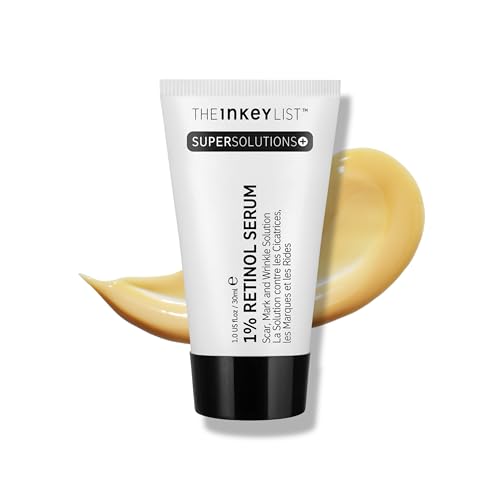
The Inkey List
Retinol Serum
retinol serum · 30 ml · 30 ingredients
- Fragrance-free
- No essential oils
- With retinoids
- With peptides
- With vitamin c
Frequently asked questions
Is tretinoin still the gold standard for anti-aging in 2026?
Yes. As of 2026, tretinoin remains the most clinically validated topical retinoid for photoaging. A 2022 systematic review of RCTs (PMC9112391) confirmed consistent improvements in wrinkles, pigmentation, and skin texture lasting up to 24 months. No OTC ingredient has surpassed it in head-to-head evidence. Newer prescription retinoids (trifarotene, tazarotene) target specific receptor subtypes but have narrower evidence bases for photoaging. Tretinoin's long track record, generic availability, and breadth of RCT data keep it at the top.
Can I use retinol and tretinoin at the same time?
There is no benefit and significant risk to layering both. Tretinoin is already the active endpoint that retinol converts toward; combining them dramatically increases irritation without adding efficacy. If you are transitioning from retinol to tretinoin, stop the retinol entirely and let your prescriber guide the switch.
How long does tretinoin take to work for acne versus wrinkles?
For acne, visible improvement is typically seen at 8–12 weeks, though some people notice changes sooner. For photoaging (wrinkles, pigmentation, texture), the 2022 systematic review found improvements as early as one month in some studies, with continued gains over 6–24 months. Expect a retinisation period of 4–8 weeks regardless of your indication.
Is 1% retinol as strong as tretinoin?
No — though they are closer than many people assume. A 2020 double-blind RCT (PMID 32574009) matched 1.0% retinol against 0.1% tretinoin (the highest available concentration) and found comparable efficacy at that specific pairing. But 1% retinol is an unusually high OTC concentration that many people cannot tolerate; 0.025–0.05% tretinoin — a typical starting prescription — still delivers faster and more predictable results in practice for most users.
Why is retinol used if tretinoin is more powerful?
Tretinoin requires a prescription, costs more when factoring in consultations, and causes more initial irritation. Retinol is accessible to anyone, well-tolerated by most skin types, and genuinely effective for maintenance anti-aging — the evidence shows real collagen and wrinkle benefits, just more slowly. For many people, retinol is the right long-term choice. The superior potency of tretinoin only matters if the benefits of speed and depth outweigh the access barriers and irritation trade-off for that specific person.
Can retinol or tretinoin be used around the eyes?
Both can be used carefully around the orbital area, but the skin there is thinner and more sensitive — use sparingly and avoid the immediate eyelid. Many dermatologists recommend starting with retinol rather than tretinoin around the eyes, and applying only every second or third night. Always check with your prescriber before applying tretinoin near the eyes.
Health information, not medical advice.
Beauty Comparison is an independent editorial publication. This page is researched and sourced to the authorities listed below, but it is general information — not a diagnosis or a substitute for personalised advice from a qualified doctor, dermatologist or pharmacist. If your symptoms are severe, spreading, painful, or not improving, see a healthcare professional.Sources
- 01Tretinoin — StatPearls — NCBI Bookshelf / National Library of Medicine, 2024-01-01. Tretinoin is all-trans retinoic acid; FDA-approved for acne vulgaris and photoaging (fine wrinkles, roughness, mottled hyperpigmentation); common adverse effects include erythema, pruritus, and skin irritation.
- 02Retinoid or Retinol? — American Academy of Dermatology (AAD), 2024-01-01. Tretinoin is prescription-only in the US; retinol is available OTC; retinoids should not be used during pregnancy.
- 03Retinoids: active molecules influencing skin structure formation in cosmetic and dermatological treatments — Advances in Dermatology and Allergology / PMC, 2019-10-01. Two-step oxidation converts retinol to active retinoic acid in target cells; retinoic acid is approximately 20 times more powerful than retinol; retinol is less irritating and well tolerated compared to retinoic acid.
- 04Retinoids in the treatment of skin aging: an overview of clinical efficacy and safety — Clinical Interventions in Aging / PMC, 2006-12-01. Retinol is 20 times less potent than tretinoin and requires conversion to retinoic acid in vivo; retinol application reduced MMP expression and increased collagen synthesis; retinol produces considerably less TEWL, erythema, and scaling than retinoic acid.
- 05Topical tretinoin for treating photoaging: A systematic review of randomized controlled trials — Journal of Cosmetic Dermatology / PMC, 2022-05-01. All RCTs consistently reported tretinoin improved photoaging (wrinkling, mottled hyperpigmentation, sallowness, lentigines) as early as 1 month and lasting after 24 months; most common adverse events were erythema, peeling, itching, burning/stinging, and dryness.
- 06Topical Tretinoin — MotherToBaby Fact Sheet — NCBI Bookshelf / MotherToBaby (National Library of Medicine), 2023-01-01. The safest approach is to avoid topical tretinoin during pregnancy given the teratogenicity of the retinoid class; lower systemic absorption than oral forms but avoidance recommended.
- 07A Double-Blind, Comparative Clinical Study of Newly Formulated Retinol Serums vs Tretinoin Cream in Escalating Doses — Journal of Drugs in Dermatology, 2020-06-01. 1.0% retinol serum matched 0.1% tretinoin cream in efficacy in a step-up double-blind RCT, operationalising a 10:1 potency ratio in clinical practice.