How to Start Retinol Without the Dreaded Purge
The short answer
Start at 0.25–0.3%, apply a pea-size amount once or twice a week at night.
What retinol actually does to your skin
Retinol is a vitamin A derivative that converts to retinoic acid inside skin cells. Retinoic acid speeds up cell turnover, stimulates collagen production, and prevents the formation of clogged pores. The American Academy of Dermatology recognizes topical retinoids as a front-line treatment for acne and one of the most evidence-supported over-the-counter anti-aging ingredients available.
The trade-off is that all that cellular activity comes with a break-in period. Your skin needs time to upregulate the enzymes that convert retinol to its active form, and in the meantime, the outer barrier can become temporarily compromised. That window — called retinization — typically lasts two to six weeks and causes dryness, flaking, and mild redness. It is not a purge, and it is not damage. It is adaptation.
Understanding the difference between normal retinization and genuine over-irritation is the whole game when you start.
Choosing your first retinol
The OTC retinol market has no standardized labeling requirement, so a percentage on a label is only a rough guide. That said, starting at 0.25–0.3% is well-supported: a 12-week double-blind clinical study published in the Journal of Drugs in Dermatology used a step-up protocol starting at 0.25%, then 0.5%, then 1.0%, and found this approach delivered both tolerability and efficacy — including measurable collagen improvement and epidermal thickening — with significantly less dryness than tretinoin.
Encapsulated retinol (time-release microspheres or lipid carriers) releases the active ingredient more slowly, which reduces initial irritation. If your skin is sensitive or dry, look for "encapsulated retinol," "retinol in a lipid matrix," or "retinol microspheres" on the label. The slower release does not meaningfully blunt long-term results.
Avoid starting at 0.5% or 1% unless you have used lower concentrations before. Retinol is not a product where more, faster is better.
Step-by-step: how to start
See the steps listed below for the full protocol. The reasoning behind each one:
Patch test first. Allergic reactions to retinol itself are uncommon, but reactions to carrier ingredients (fragrances, preservatives) are not. A 24–48-hour patch test on your inner arm rules out contact allergy before you apply anything to your face.
Apply to dry skin. Water on the skin disrupts the barrier temporarily. Applying retinol immediately after washing can drive it deeper and increase irritation. Wait 20–30 minutes, or pat your face dry and let it air for a minute before applying.
Use a pea-size amount. The Cleveland Clinic and AAD-affiliated dermatologists are consistent on this: a pea-size dot — roughly 0.1 ml — is enough for the entire face. Using more increases irritation with no added benefit.
Buffer with moisturizer (the sandwich method). Apply a plain, fragrance-free moisturizer before your retinol to reduce penetration speed. Or apply retinol first, then seal with moisturizer on top. Either order works; choose what your skin responds to. Research on physiologic lipid mixtures (ceramide + cholesterol) as co-applied ingredients confirms that barrier-supporting moisturizers measurably reduce retinol-induced erythema.
Ramp frequency slowly. Start one or two nights a week for the first four weeks. If your skin tolerates that well — minimal redness, no stinging that lingers — add a third night. Only move to nightly use after 8–12 weeks, and only if your skin is comfortable.
Protect with SPF every morning. Retinol increases photosensitivity. The AAD recommends a minimum of SPF 30, broad-spectrum, applied to all exposed skin every day while using retinoids. This is not optional.
What's normal vs. what's too much
Normal during retinization (weeks 1–6):
- Mild flaking and peeling
- Slight dryness or tightness
- Occasional mild redness the morning after application
Signs you have gone too far:
- Stinging or burning that lasts hours after application
- Consistent raw redness or weeping skin
- Worsening over weeks 3–6 rather than settling
If you have crossed into over-irritation, stop retinol for a full week. Rebuild your barrier with a simple routine: gentle cleanser, a ceramide-based moisturizer (morning and evening), and SPF. When the redness and sensitivity fully resolve, restart at a lower frequency — once a week, with the sandwich method — and go slower.
Realistic timeline
| Week | What to expect |
|---|---|
| 1–2 | Nothing visible; possible mild dryness |
| 3–6 | Retinization peak — flaking and dryness most likely here |
| 6–8 | Skin starts adapting; surface feels smoother |
| 10–12 | First visible improvements in texture and pore appearance |
| 6+ months | Meaningful changes in fine lines and tone |
The AAD notes that results from retinoids take several weeks before appearing and that skin may look worse before it looks better. That is not a failure state — it is the expected arc.
Who should be cautious
Retinol is not appropriate for everyone. The AAD advises against it if you have active rosacea, significant inflammatory skin conditions, or are pregnant (retinoids are teratogenic; avoid all forms during pregnancy and breastfeeding). People with darker skin tones should be especially careful about over-irritation, because barrier damage can trigger post-inflammatory hyperpigmentation — the opposite of what most people are trying to achieve.
If you have sensitive, reactive, or rosacea-prone skin, speak with a board-certified dermatologist before starting. A prescription adapalene or tretinoin, combined with professional monitoring, may be a better path.
Stacking retinol with other actives
Do not use retinol on the same night as AHAs (glycolic, lactic acid), BHAs (salicylic acid), or high-strength vitamin C. These all disturb the barrier in their own way; layering them with retinol in the same session multiplies irritation risk. On nights you use retinol, keep the rest of your routine simple: gentle cleanser, moisturizer, retinol. Save the exfoliants for off nights.
Niacinamide in the morning or in your moisturizer is fine — there is no pharmacological conflict, and it supports barrier function.
Step by step
- 1
Patch test
Apply a small amount of the retinol product to the inside of your arm. Wait 24–48 hours. If you see no redness, itching, or swelling, it is safe to apply to your face. This rules out contact allergy to carrier ingredients before committing to a full-face trial.
- 2
Start low — choose 0.25–0.3%
Select a product with 0.25–0.3% retinol. Encapsulated or time-release formulations reduce initial irritation. Clinical evidence supports this as the safest starting concentration before stepping up to 0.5% after several weeks of tolerance.
- 3
Apply correctly — dry skin, pea-size, PM only
Cleanse your face and wait 20–30 minutes until your skin is fully dry. Dispense a pea-size amount (roughly the size of a lentil) and spread it evenly across your face, avoiding the eye area, nostrils, and lips. Apply only at night — retinol degrades in UV light and increases sun sensitivity.
- 4
Buffer with moisturizer (the sandwich method)
To reduce irritation without blocking efficacy, apply a plain fragrance-free moisturizer first, wait a minute, then apply retinol. Alternatively, apply retinol then seal with moisturizer on top. Ceramide- or cholesterol-containing moisturizers are especially effective at reducing retinol-induced dryness and redness.
- 5
Ramp up frequency slowly over 8–12 weeks
Use retinol once or twice a week for the first four weeks. If your skin shows only mild, settling dryness (not stinging or persistent redness), add a third night in weeks 5–8. Aim for nightly use only after 8–12 weeks, and only if your skin is genuinely comfortable. Never accelerate the schedule to speed up results.
- 6
Protect with SPF 30+ every morning
Apply a broad-spectrum SPF 30 or higher every morning without exception while using retinol. Retinol accelerates cell turnover, making new skin more vulnerable to UV damage. Skipping sunscreen undoes a significant portion of retinol's anti-aging benefit.
- 7
Troubleshoot over-irritation and repair the barrier
If you develop persistent stinging, raw redness, or worsening symptoms past week 6, stop retinol for 7–10 days. Use only a gentle cleanser and a ceramide-rich moisturizer twice daily to restore the barrier. When irritation fully resolves, restart at once per week with the sandwich method and progress more slowly than before.
Products that fit: mature skin
Picked by code from each product's full ingredient list.

Paula's Choice
Clinical 0.3% Retinol & 2% Bakuchiol Treatment
retinol serum · 30 ml · 67 ingredients
- Fragrance-free
- No essential oils
- With retinoids
- With peptides
- With vitamin c

Medik8
r-Retinoate Intense
retinol serum · 50 ml · 68 ingredients
- No essential oils
- With retinoids
- With peptides
- With vitamin c

Anua
Peach 70 Niacinamide Serum
serum · 30 ml · 45 ingredients
- No essential oils
- With vitamin c
- With niacinamide
- With ceramides
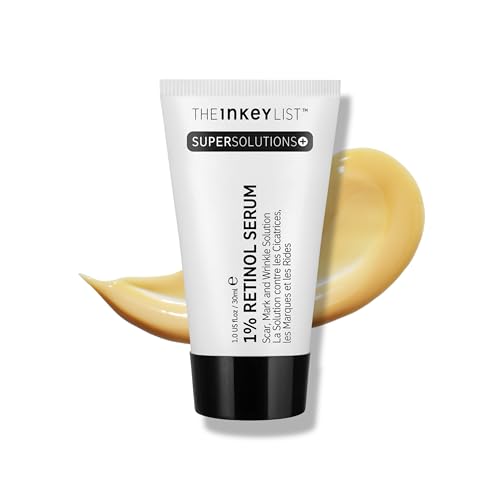
The Inkey List
Retinol Serum
retinol serum · 30 ml · 30 ingredients
- Fragrance-free
- No essential oils
- With retinoids
- With peptides
- With vitamin c
Frequently asked questions
Is a 0.25% retinol still effective, or is it too weak to do anything?
A 0.25% retinol is genuinely effective. A 12-week double-blind clinical study using an escalating protocol (0.25% → 0.5% → 1.0%) found that even at the starting concentration, retinol serum produced significant improvement in skin smoothness by week 4 and demonstrated newly formed collagen and greater epidermal thickening at the 12-week biopsy. Starting low does not mean sacrificing results — it means reaching your target concentration with your skin barrier intact.
What is the retinol purge, and is it the same as retinization?
These two terms are often used interchangeably, but they describe different things. Retinization is a predictable adaptation phase in the first 2–6 weeks: dryness, flaking, and mild redness as your skin adjusts to accelerated cell turnover. A 'purge' — a temporary worsening of acne caused by retinol clearing clogged pores — can occur separately and typically resolves within 6–8 weeks. Neither is a reason to stop if symptoms are mild and improving; both are reasons to stop if symptoms are severe or worsening.
Can I use retinol around my eyes?
The periorbital skin is thinner and more sensitive than the rest of the face. Dermatologists generally recommend keeping retinol away from the immediate eye area (lids and undereye) at first, or using a dedicated lower-strength eye retinol product. If you want to treat crow's feet, feather a tiny amount onto that area only after your skin has adapted well to retinol elsewhere, and stop if irritation develops.
Do I need to use retinol every night to see results?
No. Most dermatologists recommend building to nightly use over 8–12 weeks if your skin tolerates it, but meaningful results have been documented in clinical studies at every-other-day frequency. Using retinol three or four nights a week consistently and tolerating it well will outperform daily use that triggers irritation, barrier damage, and cycle-stopping breakdowns.
Can I use retinol with niacinamide?
Yes, these two are compatible and often complementary. Niacinamide supports barrier function and reduces redness, which can help offset retinol's irritation potential. Use niacinamide in your morning routine or in your evening moisturizer alongside retinol. There is no significant pharmacological conflict between them — the old claim that they form nicotinic acid together has not been supported in cosmetic-use concentrations.
What should I do if retinol makes my skin worse after six weeks?
Symptoms that worsen after six weeks — instead of gradually settling — signal over-irritation rather than normal retinization. Stop retinol entirely for 7–10 days. Simplify your routine to a gentle fragrance-free cleanser and a ceramide-rich moisturizer twice daily. Once your barrier has visibly recovered (no persistent redness, no stinging with water), restart at the lowest frequency (once per week) using the sandwich method. If the problem recurs, see a board-certified dermatologist to rule out an underlying sensitivity or to discuss a prescription-grade alternative with professional monitoring.
Sources
- 01Retinoid or retinol? — American Academy of Dermatology (AAD), 2023-01-01. Start with the lowest-intensity formulation, apply only at night, use every other night initially, and always use sun protection during the day.
- 02Retinol: Cream, Serum, What It Is, Benefits, How To Use — Cleveland Clinic, 2023-06-01. Apply a pea-size amount to dry skin; patch test first; use SPF 30+ daily; expect several weeks before visible improvement.
- 03A Double-Blind, Comparative Clinical Study of Newly Formulated Retinol Serums vs Tretinoin Cream in Escalating Doses: A Method for Rapid Retinization With Minimized Irritation — Journal of Drugs in Dermatology / PubMed, 2020-07-01. A step-up protocol of 0.25% → 0.5% → 1.0% retinol over 12 weeks produced collagen formation and epidermal thickening with significantly less dryness than tretinoin.
- 04Mitigation of retinol-induced skin irritation by physiologic lipids: Evidence from patch testing — PubMed / Journal of Cosmetic Dermatology, 2024-04-01. A physiologic lipid mixture (ceramide + cholesterol) and PLG measurably reduced retinol-induced erythema and inflammation compared to vehicle control.
- 05A Comprehensive Review of the Strategies to Reduce Retinoid-Induced Skin Irritation — PMC / National Center for Biotechnology Information, 2024-08-01. Encapsulation technologies (liposomes, nanoparticles, cyclodextrin complexes) reduce retinol irritation by controlling release rate without sacrificing efficacy.