Scalp Massage for Hair Growth: Does It Actually Work?
The short answer
Yes — controlled studies show scalp massage increases hair shaft thickness and may slow shedding.
The Question: Does Scalp Massage Actually Do Anything?
Scalp massage has existed in beauty routines across cultures for centuries, usually framed as relaxing or "stimulating circulation." For most of that history, the evidence was anecdotal. That changed when clinical researchers began measuring what scalp massage actually does to follicles at the cellular level — and the results were more substantive than most expected.
The short answer, as of 2026: yes, scalp massage has real biological effects on hair follicles, the mechanism is increasingly well understood, and the clinical data — while still limited — consistently points in a positive direction. It is not a replacement for FDA-approved hair loss treatments in cases of significant androgenetic alopecia, but as a tool for supporting scalp health and hair shaft quality, the evidence is credible enough to take seriously.
What the Research Actually Shows
The Key 2016 Study: Hair Thickness Increases with Daily Massage
The most-cited controlled study on scalp massage and hair growth was published in ePlasty (PMC4740347) by Koyama et al. in 2016. Nine healthy Japanese men received 4 minutes of standardized scalp massage daily for 24 weeks using a purpose-built scalp massage device.
Results:
- Hair shaft thickness increased from 0.085 mm (±0.003) at baseline to 0.092 mm (±0.001) at 24 weeks — a statistically significant structural change.
- Real-time RT-PCR analysis of stretched dermal papilla cells showed upregulation of hair-cycle–promoting genes (NOGGIN, BMP4, SMAD4, IL6ST) and downregulation of hair-loss–associated IL6.
This was the first controlled study to connect a daily scalp massage protocol to measurable changes in hair shaft morphology alongside a molecular explanation. The sample size was small (n=9), and the men were not experiencing hair loss — meaning these findings apply to general hair quality support rather than clinical alopecia reversal.
The 2019 Survey: Promising Signal in Androgenic Alopecia
A larger follow-up was published in Dermatology and Therapy (PMC6380978) by English and Barazeski in 2019. Rather than a controlled trial, this was a structured self-report survey of 340 self-identified androgenic alopecia (AGA) sufferers who adopted twice-daily 20-minute standardized scalp massages over a sustained period.
Key findings:
- 68.9% reported stabilization of hair loss or regrowth
- Perceived improvement appeared after an average of 36.3 hours of cumulative massage time
- Self-reported regrowth was more common in younger participants and those with earlier-stage AGA
The major limitation is obvious: self-reported outcomes, no control group. The study does not establish that massage reverses AGA — only that a large proportion of people with AGA who adopt sustained massage report subjective improvement. Whether this reflects genuine follicle reactivation, scalp health normalization, or placebo effect cannot be separated from these data alone.
The 2025 Mechanobiology Review: A Credible Mechanism
The molecular "why" behind scalp massage's effects has been significantly clarified by recent mechanobiology research. A 2025 comprehensive review in the Journal of Tissue Engineering (PMC12464413) by Nam et al. mapped the hair follicle mechano-activation pathway in detail:
- Mechanical stimulation of the scalp induces the release of growth factors IGF-1 and HGF from dermal papilla cells
- These growth factors activate hair follicle bulge stem cells — the reservoir population that drives new hair shaft production
- Hair stem cells are mechanosensitive: they proliferate in response to appropriate strain magnitude and duration
- The process involves WNT pathway activation and BMP-2 counterbalancing in a two-step mechanism
This 2025 review consolidates evidence from multiple in vitro and animal studies and confirms that the mechanical stimulation → stem cell activation → hair regrowth pathway is biologically plausible and consistent across model systems. It does not confirm that hand massage is sufficient to produce the required strain magnitudes at the follicle level in all scalp types — that specific question awaits larger human trials.
How Scalp Massage Works: The Mechanism
The most current model of how scalp massage benefits hair combines several pathways:
1. Mechanical Stretch of Dermal Papilla Cells
The dermal papilla is a cluster of specialized mesenchymal cells at the base of each hair follicle. These cells are the master regulators of the hair cycle — they determine whether a follicle enters anagen (growth phase) or telogen (resting phase). Dermal papilla cells are mechanosensitive: they respond to physical deformation.
When scalp massage creates stretch forces at the follicle base, dermal papilla cells upregulate growth-promoting gene expression. The Koyama study's RT-PCR data showed this conclusively: stretched dermal papilla cells increased NOGGIN (a BMP inhibitor that promotes anagen) and BMP4, and decreased IL6 (which promotes follicle miniaturization in AGA).
2. Growth Factor Release (IGF-1 and HGF)
Mechanical stimulation triggers dermal papilla cells to release insulin-like growth factor 1 (IGF-1) and hepatocyte growth factor (HGF), both of which signal to hair follicle stem cells in the bulge region to proliferate and begin a new growth cycle. This is the growth factor cascade that the 2025 Nam et al. review describes in detail.
3. Improved Local Circulation
Massage increases local blood flow — a mechanism that is physiologically plausible but less precisely studied in the context of scalp and hair. Improved scalp perfusion increases oxygen and nutrient delivery to the follicle, and there is some evidence that follicle hypoxia contributes to AGA progression. However, this circulatory mechanism has less direct evidence than the mechanical stretch pathway.
4. Reduction in Scalp Tension (Mechanical Theory of AGA)
A separate hypothesis — the "mechanical theory of androgenetic alopecia" — proposes that chronic tension in the galea aponeurotica (the fibrous layer beneath the scalp) compresses follicles and restricts blood flow, contributing to the characteristic crown-forward pattern of male AGA. Regular scalp massage may reduce this chronic tension. This theory remains contested and is not mainstream dermatological consensus, but it has proponents and some supporting anatomy-based arguments.
What Scalp Massage Cannot Do
Scalp massage is not a treatment for follicles that have undergone permanent fibrous regression. In advanced androgenetic alopecia, follicles eventually replace their lower follicle structure with a fibrous tract — a process that precludes any further hair production, regardless of stimulation. Once this fibrosis is complete (typically visible as shiny, slick scalp with no vellus hair), mechanical stimulation cannot restore follicle function.
This is why scalp massage is most relevant for:
- General scalp and hair health maintenance (where it clearly supports existing follicle function)
- Early-stage thinning where follicles are miniaturized but not permanently regressed
- Supplementing — not replacing — evidence-based hair loss treatments (minoxidil, finasteride, or other prescription options) in AGA
Scalp massage is also not a treatment for:
- Alopecia areata (autoimmune hair loss)
- Scarring alopecias (lichen planopilaris, CCCA, frontal fibrosing alopecia)
- Telogen effluvium from acute illness or nutritional deficiency (which typically resolves with the underlying cause)
Scalp Massage Technique: How to Do It Correctly
Not all scalp massage is equivalent. The research protocols use specific pressure, duration, and coverage — casual scalp scratching is not the same as the standardized massage used in clinical studies.
The 4-Minute Daily Protocol (Based on Koyama 2016)
- Position: Seated or lying down. Bring both hands to the scalp.
- Contact: Use the pads of all ten fingers — never nails. Nails create microabrasions.
- Pressure: Firm but comfortable downward pressure into the scalp. The goal is to create stretch on the tissue beneath your fingertips, not just surface friction.
- Movement: Small, deliberate circles (roughly 1–2 cm diameter). Move systematically across the scalp in sections:
- Temples (L and R)
- Sides above ears
- Crown (top of head)
- Back of head
- Nape
- Duration: 4 minutes minimum for the 2016 protocol results; the 2019 survey used 20 minutes twice daily for AGA-targeted outcomes.
- Frequency: Daily for maintenance; twice daily if targeting hair density.
- Dry or with oil: Both are valid. Jojoba or squalane oil can reduce friction and double as a scalp treatment. The mechanical effect is the active variable, not the medium.
Scalp Massage Tools
The Koyama study used a purpose-built device. Handheld silicone scalp massagers with textured nubs can replicate the pressure distribution of fingertip massage and reduce hand fatigue during longer sessions. Choose tools with silicone or soft rubber tips — avoid hard plastic bristles that can damage the hair shaft or scalp. Vibrating scalp massagers have some mechanosensory research support but have not been studied as rigorously as manual massage in controlled hair growth trials.
Scalp Massage vs. Other Hair Growth Interventions
| Intervention | Evidence Level | Mechanism | Best For |
|---|---|---|---|
| Minoxidil (2–5%) | Strong (FDA-approved) | Prolongs anagen, vasodilates | AGA — both sexes |
| Finasteride (oral) | Strong (prescription) | 5α-reductase inhibition | Male AGA |
| Scalp massage | Preliminary–moderate | Mechano-activation, IGF-1/HGF | General hair health, early thinning |
| Ketoconazole shampoo | Moderate | Antifungal, mild anti-androgen | Dandruff-related shedding, AGA adjunct |
| Low-level laser therapy | Limited–moderate | Photobiomodulation | AGA adjunct |
| PRP (platelet-rich plasma) | Moderate | Growth factor delivery | AGA adjunct (clinic) |
Scalp massage is the only intervention on this list that is free, risk-free, and can be performed daily with zero contraindications for healthy individuals. That makes it a logical adjunct to any hair health or hair loss protocol — not as a standalone treatment for significant alopecia, but as a consistent, low-effort, biologically grounded practice.
How to Integrate Scalp Massage Into Your Routine
- Best timing: During or after shampooing (the shampoo lather reduces friction), or before bed on dry hair.
- Combine with a scalp serum: Apply a hair growth–supportive serum (caffeine, niacinamide, or a peptide formulation) to the scalp, then massage — this distributes the product and may enhance follicle penetration via the mechanical component.
- Consistency matters more than duration: Four minutes daily outperforms 20 minutes twice a week. The cumulative mechanical stimulus appears to drive the biological response.
- Pair with your overall scalp care routine: Massage is most effective when the scalp is already in good health — free of excess inflammation, buildup, and Malassezia overgrowth.
The Bottom Line
The evidence is not at the level of an RCT-confirmed pharmaceutical — but scalp massage is not a myth, either. Two published studies with measured outcomes, a 2025 mechanobiology review confirming a credible molecular mechanism, and zero known risks make scalp massage one of the most justifiable daily additions to a hair health routine. Four minutes a day, done consistently, has reproducible biological effects on the follicles beneath your fingertips.
If you have significant hair loss, see a dermatologist. Use scalp massage as a complement to evidence-based treatment, not a replacement for diagnosis.
Products that fit: itchy, sensitive scalp
Picked by code from each product's full ingredient list.
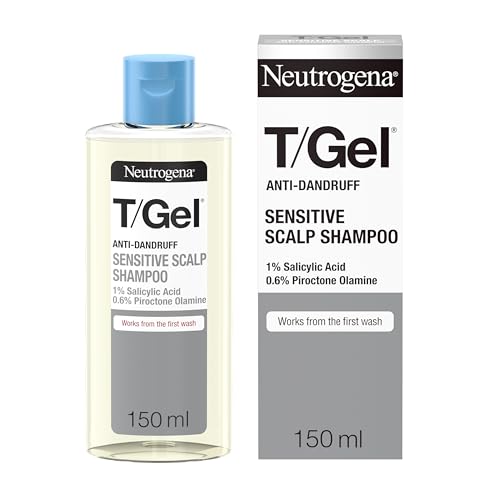
Neutrogena
T/Gel Anti Dandruff Shampoo
shampoo · 150 ml · 15 ingredients
- Fragrance-free
- No essential oils
- No MI/MCI
- With piroctone olamine
- With salicylic acid
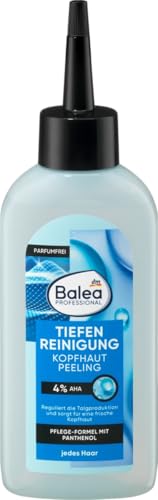
Balea
Professional Scalp Scrub Deep Cleansing
scalp treatment · 150 ml · 10 ingredients
- Fragrance-free
- No essential oils
- No MI/MCI
- With panthenol

OGX
ProGrowth + Peptide Scalp Serum
scalp treatment · 10 ml · 16 ingredients
- Fragrance-free
- No essential oils
- No MI/MCI
- With panthenol

Eucerin
Dermo Capillaire Anti-dandruff Shampoo
shampoo · 250 ml · 15 ingredients
- Fragrance-free
- No essential oils
- No MI/MCI
- With panthenol
Frequently asked questions
What does the current evidence (2025–2026) say about scalp massage for hair growth?
The evidence is encouraging but not yet definitive for clinical hair loss treatment. The 2016 Koyama controlled study remains the primary evidence for measurable hair shaft thickness increases with daily 4-minute massage. A 2025 review in the Journal of Tissue Engineering (PMC12464413) confirmed the molecular mechanism — mechanical stretch induces IGF-1 and HGF release from dermal papilla cells, activating hair follicle stem cells. Larger randomized controlled trials in humans are still lacking. Current consensus: scalp massage plausibly supports follicle health and hair shaft quality on active follicles, but should not replace evidence-based treatments for androgenetic alopecia.
How long do I need to massage my scalp before seeing results?
The Koyama 2016 study measured hair shaft thickness changes at 24 weeks of daily 4-minute massage. The 2019 English survey found perceived stabilization or regrowth after a cumulative average of 36.3 hours of total massage time — which, at 20 minutes twice daily, is about 54 days. Patience is essential. Scalp massage is not a fast intervention: the hair cycle operates on a timeline of weeks to months, and any structural changes at the follicle level take time to manifest as visible hair changes.
Is scalp massage effective for androgenetic alopecia (male or female pattern hair loss)?
The evidence is preliminary. The 2019 survey found 68.9% of self-identified AGA sufferers who performed twice-daily 20-minute massage reported stabilization or regrowth — but this was self-reported data without a control group. The mechanobiological evidence suggests massage may slow follicle miniaturization via mechano-activation of dermal papilla, but no RCT has confirmed that massage alone reverses established AGA. For AGA, minoxidil and (for men) finasteride remain the evidence-based standard of care; scalp massage is a reasonable adjunct, not a replacement.
Does the type of scalp massager matter — fingers vs. a tool?
The Koyama 2016 study used a purpose-built device, but the key variable appears to be the mechanical stretch applied to the scalp tissue — not the specific tool. Finger pads are effective and have the advantage of proprioceptive feedback (you can feel the pressure and adjust). Silicone scalp massagers with soft nubs are a reasonable alternative that reduces hand fatigue for longer sessions. Avoid hard plastic or wire bristle tools that risk scalp abrasion or hair breakage.
Can scalp massage cause hair loss by increasing shedding?
There is no clinical evidence that proper scalp massage causes hair loss or increases shedding. Some people notice more hairs on their hands after massaging, but this is typically telogen hairs (resting-phase hairs ready to fall naturally) being dislodged earlier than they would be in daily combing — not hairs being prematurely removed from active follicles. If you notice a significant sustained increase in shedding, that should be investigated by a dermatologist as a separate issue, not attributed to massage.
Sources
- 01Standardized Scalp Massage Results in Increased Hair Thickness by Inducing Stretching Forces on Dermal Papilla Cells in the Subcutaneous Tissue — PubMed Central / ePlasty, 2016-01-01. 4 minutes of daily scalp massage over 24 weeks increased hair shaft thickness from 0.085 mm to 0.092 mm; RT-PCR showed upregulation of NOGGIN, BMP4, SMAD4, IL6ST and downregulation of IL6 in stretched dermal papilla cells.
- 02Self-Assessments of Standardized Scalp Massages for Androgenic Alopecia: Survey Results — PubMed Central / Dermatology and Therapy, 2019-01-01. In a survey of 340 AGA sufferers performing twice-daily 20-min standardized scalp massage, 68.9% reported hair loss stabilization or regrowth; perceived results appeared after approximately 36.3 cumulative hours of massage.
- 03Hair regeneration: Mechano-activation and related therapeutic approaches — PubMed Central / Journal of Tissue Engineering, 2025-01-01. Mechanical stimulation of the scalp induces release of IGF-1 and HGF from dermal papilla cells, which activate hair follicle bulge stem cells; hair stem cells are mechanosensitive and proliferate in response to appropriate strain — confirms molecular basis for scalp massage supporting hair growth.
- 04Scalp Condition Impacts Hair Growth and Retention via Oxidative Stress — PubMed Central / International Journal of Trichology, 2019-01-01. Scalp inflammatory conditions impair pre-emergent hair cuticle and accelerate shedding; scalp health is upstream of hair quality — contextualizes why scalp massage (which reduces tension and supports follicle health) benefits hair.