How Your Menstrual Cycle Affects Your Skin Week by Week
The short answer
Your skin changes measurably across the menstrual cycle as estrogen peaks at ovulation then falls.
The Hormonal Architecture of the Menstrual Cycle
A typical menstrual cycle runs 21–35 days (28 days being the textbook average). Four hormones drive its progression and determine skin physiology at each stage:
- Estrogen (estradiol): Rises through the follicular phase, peaks sharply at ovulation, then falls in the luteal phase to a secondary, lower peak before declining before menstruation
- Progesterone: Low in the follicular phase; rises significantly in the luteal phase after ovulation; falls before menstruation
- LH (luteinizing hormone): Surges at ovulation to trigger egg release
- FSH (follicle-stimulating hormone): Rises in the early follicular phase to stimulate follicle development; falls after the LH surge
Each of these hormones has receptors in skin cells. Estrogen receptors (ERα and ERβ) are present in keratinocytes, fibroblasts, melanocytes, and sebaceous glands. Progesterone receptors are expressed in keratinocytes and fibroblasts. The monthly oscillation of these hormones produces a predictable rhythm of skin changes that, once understood, can be worked with — not simply endured.
Phase 1: The Follicular Phase (Days 1–14)
The follicular phase begins on day 1 of menstruation and runs until ovulation. During this phase, FSH stimulates ovarian follicles to develop, and estrogen levels rise progressively as the dominant follicle grows.
What Happens to the Skin
Improved texture and clarity: Rising estrogen stimulates fibroblasts to produce collagen and supports epidermal cell renewal. Most women notice a gradual improvement in skin quality through the follicular phase — skin appears clearer, more luminous, and smoother than it did in the days before menstruation.
Better tolerability for active ingredients: The skin barrier is most robust in the follicular phase, when estrogen is supporting epidermal lipid synthesis and keratinocyte integrity. This is the optimal window for introducing or intensifying retinoids, AHAs, or other actives that the skin might find more irritating at other cycle points.
Sebum at its lowest: Progesterone — the primary driver of sebaceous gland activity — is low in the follicular phase. Sebum production is at its nadir in the week after menstruation begins. Women who struggle with oily skin or acne often find their skin is least problematic during this phase.
Gradual improvement in hydration: Estrogen promotes glycosaminoglycan (hyaluronic acid) synthesis in the dermis, supporting the skin's water-holding capacity. As estrogen rises through the follicular phase, moisture retention tends to improve.
Skincare Adjustments for the Follicular Phase
- Ideal time to use exfoliating acids (glycolic, lactic, salicylic) — skin is most tolerant and turnover is accelerating
- Good window to start or increase concentration of retinoids if you have been holding back
- Lighter moisturizer typically sufficient — skin's own lipid production is adequate
Phase 2: Ovulation (Around Day 14)
The LH surge triggers ovulation at approximately day 14 in a 28-day cycle. Estrogen reaches its highest concentration of the entire cycle in the 24–48 hours surrounding ovulation.
What Happens to the Skin
Peak elasticity: A clinical scoping review found a statistically significant increase in skin elasticity at ovulation compared to the follicular phase and menstruation. This reflects maximum collagen support from peak estrogen.
Skin at its structural best: Collagen synthesis, epidermal cell turnover, and dermal hydration are all at or near their peak. Most women — across various subjective assessments — report their skin looking and feeling at its best around ovulation.
Increased subcutaneous blood flow: LH and peak estrogen drive increased cutaneous vasodilation, contributing to the natural "glow" that is genuinely measurable in skin color analysis studies.
Brief sebum peak: There is a modest surge in sebum output around ovulation, though this is less pronounced than the luteal phase peak.
Skincare Adjustments for Ovulation
- No special adjustment required — skin is at its most resilient
- Good time for any skincare procedure you have been postponing; recovery will be at its fastest
- If taking photographs for "before" skincare comparison purposes, ovulation provides the most favorable baseline
Phase 3: The Luteal Phase (Days 15–28)
After ovulation, the empty follicle becomes the corpus luteum, which secretes progesterone. Progesterone rises sharply through the luteal phase, peaks around day 21, then falls before menstruation if pregnancy has not occurred. Estrogen has a secondary, lower peak in the early luteal phase before also declining.
This is where most hormonally driven skin challenges originate.
What Happens to the Skin
Elevated skin temperature: A statistically significant increase in basal skin temperature — approximately 0.3–0.6°C higher than the follicular phase — is well documented in the luteal phase. This is driven by progesterone's thermogenic effect. The resulting warmth can trigger or worsen conditions sensitive to heat, including rosacea and some eczema presentations.
Increased dermal blood flow: A statistically significant increase in skin blood flow is documented during the mid-luteal phase compared to the follicular phase. This contributes to the flushed, congested appearance many women notice in the week before their period.
Increased sweating rate: Progesterone elevates the sweating rate in the luteal phase — both thermoregulatory and eccrine gland activity increase.
Sebum peak — the root of pre-menstrual acne: Sebum production is highest between days 16–20 of the cycle. Progesterone stimulates sebaceous glands directly; the resulting increase in oil production, combined with inflammation from progesterone's pro-inflammatory effects on the follicle, creates the conditions for pre-menstrual acne flares.
Pre-menstrual breakouts: A controlled study of 400 women found that 44% of acne-prone women experienced a consistent pre-menstrual acne flare, with lesion counts increasing in the 7 days before menstruation and improving after it begins. The flares are most commonly cystic papules or deep papules along the jaw, chin, and lower cheeks — the androgen-sensitive distribution.
Increased skin sensitivity: Progesterone reduces the skin's tolerance for irritants. Actives that were well tolerated in the follicular phase may cause more redness or stinging in the late luteal phase. Some women with rosacea or eczema find their conditions worsen pre-menstrually.
Puffiness: Some women experience mild facial edema (puffiness) in the luteal phase as aldosterone — stimulated by progesterone — causes fluid retention. This produces a temporarily fuller, slightly puffier facial appearance.
Skincare Adjustments for the Luteal Phase
- Switch to a non-comedogenic, oil-free moisturizer if sebum increases noticeably
- Add a salicylic acid toner or spot treatment proactively if you reliably break out pre-menstrually — begin 5–7 days before your expected period
- Avoid introducing new actives in the late luteal phase; the skin is more reactive
- If you have rosacea or eczema, have your anti-flare protocol ready and trigger-manage heat and stress in this phase
- Consider a lightweight clay mask 1–2 times in the week before your period to absorb excess sebum without stripping
Phase 4: Menstruation (Days 1–5)
As progesterone and estrogen both fall sharply, the uterine lining sheds. For the skin, this is the lowest hormone point of the cycle.
What Happens to the Skin
Dryness and increased sensitivity: Both estrogen (hydration, barrier support) and progesterone (sebum) are at their lowest. The skin can feel unusually dry, tight, or sensitive in the first few days of menstruation.
Resolving breakouts: The pre-menstrual acne flare begins to resolve as progesterone falls and the inflammatory trigger is removed. Existing lesions typically improve within 3–5 days of menstruation beginning.
Lower pain threshold: Prostaglandins produced during menstruation can lower the skin's sensory threshold, making facials, waxing, or procedures feel more uncomfortable during menstruation. Many practitioners recommend scheduling these procedures at mid-cycle if possible.
Week-by-Week Skin Summary
| Cycle Week | Dominant Hormone | Skin State | Key Skincare Note |
|---|---|---|---|
| Week 1 (Days 1–7) | Both low → estrogen rising | Sensitive, recovering, drying; acne resolving | Gentle barrier-repair; avoid harsh procedures during bleeding |
| Week 2 (Days 8–14) | Estrogen rising | Clear, smooth, tolerant; most luminous | Best window for actives, exfoliation, procedures |
| Week 3 (Days 15–21) | Progesterone dominant | Warmer, oilier, fuller; sebum peak | Oil-control, salicylic acid, begin acne prevention |
| Week 4 (Days 22–28) | Both falling | Most reactive; acne peak; sensitive | Gentle, hydrating; no new actives; spot treatment ready |
Managing Hormonal Acne: When Skincare Isn't Enough
Cyclical pre-menstrual acne that consistently follows this pattern — deep, cystic, jaw and chin distribution, reliably appearing in the week before menstruation — is a clinical presentation of hormonal acne. It is driven by androgen-to-estrogen ratio shifts and progesterone-stimulated sebum production.
OTC options can help (salicylic acid for prevention, benzoyl peroxide for bacterial control, azelaic acid for inflammation and pigmentation), but the most effective interventions are hormonal:
- Combined oral contraceptives (COCs): Suppress ovarian androgen production and stabilize the hormonal fluctuations that drive cyclical acne. Three formulations are FDA-approved for acne.
- Spironolactone: An anti-androgen that blocks androgen receptors in the sebaceous gland, reducing sebum production independently of the cycle.
Both require a prescription and medical assessment. See a dermatologist or physician if cyclical acne is significantly affecting quality of life, is leaving marks, or is not controlled with skincare alone.
Products that fit: sensitive skin
Picked by code from each product's full ingredient list.

Anua
3 Ceramide Panthenol Moisture Barrier Cream
moisturizer · 100 ml · 63 ingredients
- Fragrance-free
- No essential oils
- No drying alcohol
- No MI/MCI
- No menthol, camphor and witch hazel

Naturium
Marshmallow Root Barrier Balm
moisturizer · 50 g · 58 ingredients
- Fragrance-free
- No essential oils
- No drying alcohol
- No MI/MCI
- No menthol, camphor and witch hazel
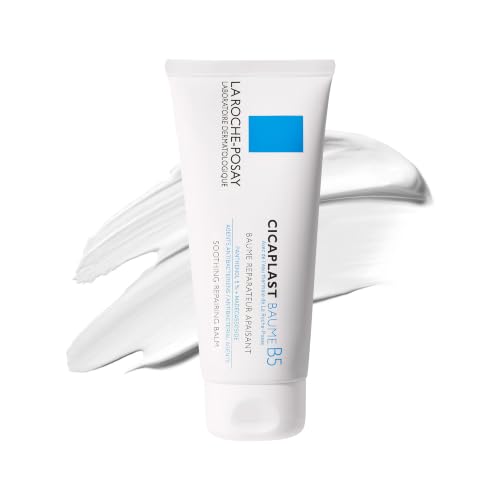
La Roche-Posay
Cicaplast Baume B5 Soothing Repair
moisturizer · 100 ml · 33 ingredients
- Fragrance-free
- No essential oils
- No drying alcohol
- No MI/MCI
- No menthol, camphor and witch hazel

Beauty of Joseon
Red Bean Water Gel
moisturizer · 99.9 ml · 58 ingredients
- Fragrance-free
- No essential oils
- No drying alcohol
- No MI/MCI
- No menthol, camphor and witch hazel
Frequently asked questions
Why do I always break out before my period — and what does the evidence say?
Pre-menstrual acne is a documented physiological phenomenon, not anecdote. A controlled study found that 44% of acne-prone women experience a consistent pre-menstrual flare, with lesion counts measurably increasing in the 7 days before menstruation. The mechanism is primarily hormonal: progesterone, which peaks in the luteal phase (days 15–28), stimulates sebaceous glands to increase sebum production (highest between days 16–20 of the cycle). Combined with progesterone's pro-inflammatory effects on the follicular epithelium, this creates ideal conditions for acne lesion formation. The androgen-sensitive distribution — jaw, chin, and lower cheeks — is characteristic.
Does the menstrual cycle affect skin sensitivity to skincare products?
Yes — measurably. The skin barrier is most robust in the follicular phase (days 1–14) when estrogen is rising; this is the optimal period for introducing or intensifying actives such as retinoids or AHAs. In the late luteal phase (days 22–28), progesterone reduces epidermal tolerance, and the same products that were well tolerated at mid-cycle may cause more redness or stinging. Dermatologists sometimes refer to this informally as 'cycle-aware skincare' — planning product use or professional treatments around the cycle's tolerance windows. If your skin always reacts badly to a product around the same time monthly, consider whether the timing is cyclical.
Does the menstrual cycle affect skin hydration and dryness?
The research on menstrual cycle effects on skin hydration is less definitive than the evidence on sebum and temperature. A scoping review found no statistically significant relationship between cycle phase and tissue hydration in studies using standard hydration meters. However, estrogen — which promotes hyaluronic acid synthesis in the dermis and epidermal lipid production — is at its lowest during menstruation, and many women report their skin feeling drier in the first few days of their period and in the late luteal phase as both estrogen and progesterone fall. The subjective experience of dryness is real even if objective measurements at the skin surface are variable, likely because the mechanism involves deeper dermal hydration rather than just surface moisture.
Is it true skin is at its best around ovulation?
There is clinical evidence supporting this. Skin elasticity increases significantly at ovulation compared to other cycle phases, driven by peak estrogen stimulating collagen and extracellular matrix support. Skin blood flow is also enhanced around ovulation from LH and estrogen-driven vasodilation. Multiple studies using objective skin measurements have found that various skin quality parameters peak mid-cycle around the ovulatory window — which aligns with subjective reports from many women that this is when they feel their skin looks most luminous and even-toned.
Should I schedule skincare treatments and procedures around my cycle?
Timing professional skincare procedures to the mid-cycle window (follicular phase days 8–14 and around ovulation) is a reasonable practical consideration, though not a clinical requirement. Skin is most tolerant, recovery is typically fastest, and the risk of reactive sensitivity is lowest during this window. Many practitioners note that procedures such as chemical peels, laser treatments, and waxing are better tolerated at mid-cycle than pre-menstrually, and some patients report that waxing during menstruation is more painful due to prostaglandin-mediated lowering of the pain threshold. For routine professional facials, timing to the follicular phase is a sensible habit if your schedule allows.
Health information, not medical advice.
Beauty Comparison is an independent editorial publication. This page is researched and sourced to the authorities listed below, but it is general information — not a diagnosis or a substitute for personalised advice from a qualified doctor, dermatologist or pharmacist. If your symptoms are severe, spreading, painful, or not improving, see a healthcare professional.Sources
- 01Physiological Changes in Women's Skin During the Menstrual Cycle: A Scoping Review — PubMed Central / PMC11703644, 2024-12-01. Skin elasticity significantly increases at ovulation versus follicular phase; statistically significant increase in skin blood flow during mid-luteal phase versus follicular phase; increased sweating rate in luteal phase; basal skin temperature higher in luteal phase by 0.3–0.6°C; sebum lipids greatest between days 16–20 of the cycle.
- 02The Effect of the Menstrual Cycle on Acne — PubMed / Journal of the American Academy of Dermatology, 2001-12-01. 44% of women with acne experience a consistent pre-menstrual acne flare; lesion counts measurably increase in the 7 days before menstruation and improve after menstruation begins; pre-menstrual acne flares are driven by progesterone-mediated sebum increase and hormonal shifts.
- 03Physiological Differences in Sebum Composition in Regularly Menstruating Healthy Women — PubMed Central / PMC12592595, 2025-01-01. Sex hormones regulating the menstrual cycle influence sebaceous gland lipogenesis; sebum composition differs across ovulation, early luteal, follicular, and late luteal phases; oily-skin types show more sebum variation across the cycle.
- 04Menopause, Menstrual Cycle, and Skin Barrier Function — PubMed Central / PMC12206585, 2025-01-01. More functional epidermal barrier during the ovulatory phase (higher TEWL, lower SH in some measures); no significant TEWL difference across all cycle phases in all studies; skin hydration significantly higher during ovulatory phase versus postmenopausal groups; limited number of studies describe menstrual cycle impact on skin barrier.
- 05Menopause and the Skin: Old Favorites and New Innovations in Cosmeceuticals for Estrogen-Deficient Skin — PubMed Central / Dermatology and Therapy (PMC7859014), 2021-01-01. Estrogen receptors in keratinocytes, fibroblasts, melanocytes, hair follicles, and sebaceous glands; progesterone supports extracellular matrix formation and dermal water retention; hormonal fluctuations during perimenopause affect skin barrier, collagen, and sebum in ways that parallel intra-cycle changes.