Laser Skin Resurfacing: Types, Costs & Who It's For
The short answer
Laser skin resurfacing removes or heats damaged skin to stimulate collagen, reducing wrinkles, scars.
What Is Laser Skin Resurfacing?
Laser skin resurfacing uses focused light energy to either vaporize (ablate) or thermally injure the outer layers of skin without removing them. Both approaches trigger the body's wound-healing cascade — stimulating fibroblast activity, increasing collagen and elastin synthesis, and revealing fresher skin as old cells are cleared. The result, when successful, is visibly smoother texture, reduced wrinkles, improved tone, and more even pigmentation.
It is one of the most rigorously studied cosmetic procedures in dermatology, with a substantial body of peer-reviewed clinical data going back decades. It is also one of the more demanding in terms of patient selection, pre-procedure preparation, and post-procedure care. Understanding the differences between laser types — and which one is appropriate for your skin — is the most important decision to make before booking a consultation.
The Three Categories of Laser Resurfacing
1. Ablative Lasers — Maximum Impact, Maximum Downtime
Ablative lasers vaporize the epidermis and superficial dermis. The two main ablative wavelengths are:
CO2 laser (10,600 nm) The gold standard for dramatic photoaging reversal. Modern CO2 devices deliver energy in short ultrapulsed bursts or in scanning patterns that achieve 20–60 µm of tissue vaporization per pass with 100–150 µm of surrounding thermal damage. Clinical studies report wrinkle improvement of up to 90% with full-field CO2 ablation.
- Downtime: 14–21 days (full field); 4–10 days (fractional CO2)
- Best for: Deep wrinkles, significant photoaging, severe acne scars in fair skin
- Main risks: Persistent erythema (up to 1 year), post-inflammatory hyperpigmentation, hypopigmentation in darker skin types
Er:YAG laser (2,940 nm) Erbium lasers absorb water approximately 16 times more efficiently than CO2, delivering precise 3–5 µm ablation per pass with only 10–40 µm of collateral thermal injury. This precision means less dermal heat — faster healing, less risk of pigment changes, and often adequate topical anesthetic rather than sedation. A comparative trial with CO2 demonstrated equivalent efficacy with a trend toward more rapid recovery.
- Downtime: 3–8 days (full field); 1–3 days (fractional Er:YAG)
- Best for: Superficial to moderate photoaging, darker skin tones (Fitzpatrick III–IV)
- Main risks: Less thermal stimulation than CO2 may mean less collagen remodeling for deep wrinkles
2. Non-Ablative Lasers — Minimal Downtime, Gradual Results
Non-ablative resurfacing delivers heat to the dermis while leaving the epidermal surface intact. There is no open wound, no scabbing, and recovery is typically measured in hours to a day of redness rather than weeks.
The tradeoff is results: non-ablative lasers produce mild to moderate improvements and typically require 4–6 sessions to approach what a single ablative treatment achieves. Common non-ablative devices include the 1,064 nm Nd:YAG and 1,320 nm Nd:YAG, as well as the 1,450 nm diode.
- Downtime: Hours to 1 day
- Best for: Mild photoaging, patients who cannot afford extended downtime, maintenance treatments
- Results: Gradual; multiple sessions required
3. Fractional Lasers — The Middle Path
Fractional photothermolysis (coined in 2004) changed the field by delivering laser energy not as a contiguous beam across the entire skin surface but as thousands of microscopic treatment zones separated by columns of unaffected skin. These microscopic zones function like pixels on a screen — the untreated skin surrounding each column accelerates healing of the treated zones.
The result is meaningfully faster recovery than full-field ablative resurfacing, with results that sit between non-ablative and traditional ablative in magnitude. Fractional CO2 studies show approximately 40–72% measurable improvement in volunteers. Fractional versions of both CO2 and Er:YAG devices exist, as do non-ablative fractional lasers (e.g., the 1,550 nm Fraxel Restore, which is FDA-cleared for photoaging, wrinkles, and acne scars).
Laser Types at a Glance
| Type | Wavelength | Mechanism | Downtime | Results | Best For |
|---|---|---|---|---|---|
| CO2 full-field | 10,600 nm | Ablative, epidermis removed | 14–21 days | Dramatic | Severe photoaging, fair skin |
| CO2 fractional | 10,600 nm | Ablative in columns | 4–10 days | Moderate–high | Moderate–severe photoaging, acne scars |
| Er:YAG full-field | 2,940 nm | Ablative, minimal heat spread | 3–8 days | Moderate | Superficial lines, darker skin tones |
| Er:YAG fractional | 2,940 nm | Ablative in columns | 1–3 days | Mild–moderate | Pigmentation, mild laxity |
| Non-ablative fractional (1,550 nm) | 1,550 nm | Heats dermis, intact epidermis | 3–5 days | Mild–moderate | Texture, mild lines, PIH |
| Non-ablative (Nd:YAG) | 1,064 nm | Dermal heating, no surface injury | Hours–1 day | Mild | Maintenance, very sensitive skin |
What Conditions Laser Resurfacing Treats
Laser resurfacing has the strongest evidence for:
- Photoaging — fine lines, wrinkles (perioral, periorbital, forehead), and skin laxity caused by UV exposure
- Acne scars — atrophic scars (icepick, boxcar, rolling) respond particularly well to fractional CO2 and Er:YAG; a dedicated guide to laser acne scar treatment covers this in depth
- Sun spots and lentigines — ablative and fractional resurfacing clears epidermal pigmentation effectively
- Uneven skin tone and texture — generalized photoaging-related roughness and dyschromia
- Actinic keratoses — ablative resurfacing is an established field-treatment method for widespread sun-precancerous lesions
- Surgical and traumatic scars — fractional CO2 has a strong evidence base for scar remodeling
It is NOT an appropriate primary treatment for:
- Active acne with open inflammatory lesions
- Melasma (laser can worsen melasma; IPL or chemical peels are often preferred — see IPL treatment guide)
- Deep rhytides or significant skin laxity (better addressed by injectables or surgical lifting)
- Port-wine stains and vascular birthmarks (pulsed dye laser is preferred)
Who Is a Good Candidate?
Ideal candidates share several characteristics:
- Fitzpatrick skin types I–III for ablative non-fractional treatment; types IV–VI can consider fractional Er:YAG or non-ablative fractional approaches with experienced providers
- Realistic expectations — laser resurfacing improves, it does not eliminate; severe wrinkles or scars will be noticeably reduced, not invisible
- No active herpes simplex lesions (prophylactic antivirals are required even for asymptomatic patients with a history of cold sores)
- Willingness to commit to post-procedure care — consistent cleansing, barrier protection, SPF, and sun avoidance for weeks after the procedure
Absolute and Strong Relative Contraindications
| Contraindication | Reason |
|---|---|
| Recent isotretinoin use (within 6–12 months) | Impairs pilosebaceous unit; increases scarring risk |
| Active herpes simplex infection | Risk of widespread viral dissemination |
| History of keloid scarring | High risk of hypertrophic scarring post-procedure |
| Prior radiation therapy to the treatment area | Impaired wound healing and vascular supply |
| Fitzpatrick types V–VI (non-fractional ablative) | Very high hypopigmentation and pigmentation risk |
| Active inflammatory acne | Open wounds increase infection risk |
| Pregnancy | Avoid elective procedures; systemic absorption concerns |
What to Expect: The Procedure
Laser resurfacing is performed as an outpatient procedure. For a partial face treatment, expect 30–45 minutes; a full face typically takes 1.5–2 hours. Topical anesthetic cream is applied 30–60 minutes before the procedure. For more aggressive full-field CO2 treatment, oral sedation or local nerve blocks are common.
During the procedure, a trained provider passes the laser handpiece systematically over the treatment area. Patients report a warming or snapping sensation with non-ablative devices; ablative procedures under anesthetic are not painful during the session but have a meaningful post-procedural discomfort window.
Pre-Procedure Preparation
Your dermatologist or plastic surgeon will typically advise:
- Antiviral prophylaxis — starting 1–2 days before any ablative procedure; continued for 7–10 days post-treatment
- Hydroquinone pre-treatment — for patients with Fitzpatrick types III–IV or any history of post-inflammatory hyperpigmentation, a hydroquinone course of 4–6 weeks pre-procedure is often prescribed to reduce pigment risk
- Discontinue retinoids — stop prescription tretinoin 1–2 weeks before the procedure; OTC retinol 5–7 days before
- Strict sun avoidance for 2–4 weeks before treatment
- No waxing, bleaching, or chemical peels in the 2 weeks immediately preceding
Recovery Timeline
Recovery varies substantially by laser type and aggressiveness.
Ablative Full-Field CO2
- Days 1–3: Significant swelling, oozing, and crusting. Non-stick dressings or petroleum-based ointments to keep the treated skin moist. Sleep elevated.
- Days 3–7: Crusting begins to shed; new pink/red skin is visible beneath. Cleanse gently 2–5 times daily with mild cleanser as directed.
- Days 7–14: Re-epithelialization complete for most patients; skin remains bright red and sensitive.
- Weeks 2–6: Erythema gradually fades; SPF 30+ is non-negotiable from the moment the skin is re-epithelialized.
- Months 2–3: Most erythema resolved; collagen remodeling continues for 3–6 months. Results continue improving throughout.
- Up to 1 year: Residual redness can persist in some patients.
Fractional CO2 or Er:YAG
- Days 1–3: Redness, mild swelling, pinpoint oozing at treatment zones. Significantly less intense than full-field.
- Days 3–7: Micro-scabs shed. Bronzed or rough texture as old skin clears.
- Day 7: Most patients are socially acceptable for return to work with makeup.
- Weeks 2–8: Continued collagen remodeling; gradual improvement in texture and tone.
Side Effects and Risks
Common, expected:
- Redness (erythema) — universal; duration varies from days (non-ablative) to months (full-field CO2)
- Swelling — prominent first 2–3 days post-ablative treatment
- Dryness, peeling, and flaking — normal during re-epithelialization
- Milia (small keratin cysts) — can develop in the weeks after ablative resurfacing; treated with gentle extraction
Potentially serious:
- Post-inflammatory hyperpigmentation (PIH) — particularly in Fitzpatrick types III–VI; managed with pre-treatment hydroquinone, diligent SPF, and sometimes topical retinoids during healing
- Hypopigmentation — permanent depigmentation; more common with aggressive full-field CO2, especially in darker skin
- Herpes simplex reactivation — can occur even with prophylaxis; requires prompt antiviral treatment if blisters appear
- Bacterial infection — if wound care protocols are not followed
- Scarring — rare with experienced providers; risk increases with inappropriate settings, inadequate wound care, or use in contraindicated patients
- Ectropion — lower eyelid pulling downward; rare, associated with over-aggressive periorbital treatment
How Long Do Results Last?
Laser resurfacing does not stop the aging process. The collagen and elastin stimulated by the procedure will continue to degrade with time and UV exposure. Most patients enjoy results for:
- Non-ablative fractional: 1–2 years of noticeable improvement; annual maintenance sessions are common
- Ablative fractional: 2–5 years; single sessions often sufficient until significant new photoaging develops
- Full-field ablative CO2: 5–10+ years in many patients, though aging continues; some patients return for touch-up procedures
The single most important longevity factor is daily broad-spectrum SPF 30+ use. UV exposure is the primary driver of the photoaging that resurfacing reverses; resuming unprotected sun exposure will erode results.
Cost Overview
Laser skin resurfacing costs depend on the type of device, geographic location, provider expertise, and extent of treatment area. General reference ranges based on published reports:
- Non-ablative fractional: $800–$2,500 per session (multiple sessions typically needed)
- Ablative fractional CO2: $1,500–$4,000 per session
- Full-field ablative CO2: $2,000–$6,000+ per full face session
These procedures are classified as cosmetic and are not covered by health insurance in most cases. Exceptions may apply when treating pre-cancerous actinic keratoses or medically significant scars — verify with your insurer.
How to Choose a Provider
Laser resurfacing is a medical procedure, not a beauty treatment. Device settings, technique, pre-procedural assessment, and post-procedural care all significantly affect outcomes. Look for:
- A board-certified dermatologist or plastic surgeon with documented experience in the specific device to be used
- A provider who performs a thorough Fitzpatrick type assessment and discusses your scar history, recent medication history (especially isotretinoin), and herpes simplex history before any procedure
- A practice that provides detailed written aftercare instructions and a point of contact for post-procedure concerns
Medspa or salon environments that offer laser resurfacing without physician oversight carry meaningfully higher complication risks — particularly for hyperpigmentation in darker skin tones and for herpes reactivation.
Products that fit: sensitive skin
Picked by code from each product's full ingredient list.

Anua
3 Ceramide Panthenol Moisture Barrier Cream
moisturizer · 100 ml · 63 ingredients
- Fragrance-free
- No essential oils
- No drying alcohol
- No MI/MCI
- No menthol, camphor and witch hazel

Naturium
Marshmallow Root Barrier Balm
moisturizer · 50 g · 58 ingredients
- Fragrance-free
- No essential oils
- No drying alcohol
- No MI/MCI
- No menthol, camphor and witch hazel
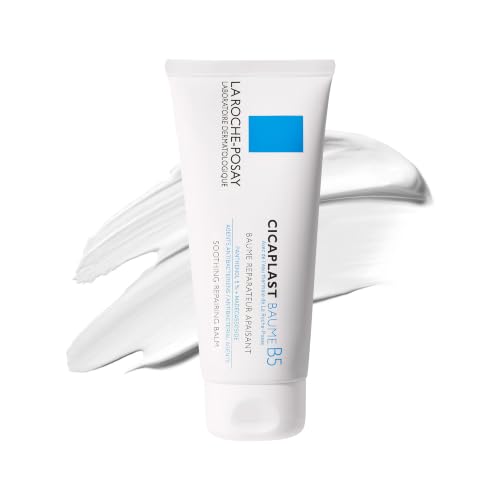
La Roche-Posay
Cicaplast Baume B5 Soothing Repair
moisturizer · 100 ml · 33 ingredients
- Fragrance-free
- No essential oils
- No drying alcohol
- No MI/MCI
- No menthol, camphor and witch hazel

Beauty of Joseon
Red Bean Water Gel
moisturizer · 99.9 ml · 58 ingredients
- Fragrance-free
- No essential oils
- No drying alcohol
- No MI/MCI
- No menthol, camphor and witch hazel
Frequently asked questions
Is laser skin resurfacing worth it in 2026?
For appropriate candidates — particularly those with moderate to severe photoaging, acne scars, or uneven pigmentation — ablative and fractional laser resurfacing has a robust, decades-long evidence base supporting measurable, long-lasting results. Full-field CO2 ablation remains among the most effective single-session interventions for facial photoaging. Non-ablative fractional options have expanded the eligible population to those who cannot tolerate extended downtime. The procedure is best viewed as a significant investment with meaningful clinical benefit, not a routine treatment — appropriate candidate selection and an experienced provider are the critical determinants of a good outcome.
How many laser resurfacing sessions are needed?
Full-field ablative CO2 resurfacing is typically a single procedure (though occasional touch-up sessions may follow years later). Ablative fractional CO2 for acne scars or photoaging usually requires 3–5 sessions at 4–8 week intervals. Non-ablative fractional laser for mild-moderate concerns typically requires 4–6 sessions. Non-ablative devices for maintenance may be used as ongoing annual or biannual treatments. Your provider will recommend a protocol based on the device, your specific concern, skin type, and initial response.
Can laser resurfacing be done on dark skin?
Yes, but the laser type and settings must be carefully chosen. Fitzpatrick skin types IV–VI carry substantially higher risk of post-inflammatory hyperpigmentation and permanent hypopigmentation with non-fractional ablative CO2 lasers. Evidence supports non-ablative fractional devices (1,550 nm) and fractional Er:YAG as safer options for deeper skin tones, often combined with pre-treatment hydroquinone. Choose a provider with documented experience treating your Fitzpatrick type — this is where provider expertise matters most.
How long after isotretinoin (Accutane) can I have laser resurfacing?
The conventional recommendation is to wait at least 6 months after stopping isotretinoin before any ablative laser resurfacing. Some providers extend this to 12 months. Isotretinoin suppresses sebaceous gland function and alters the pilosebaceous unit, impairing the skin's normal re-epithelialization mechanism. Ablative procedures during or shortly after isotretinoin use carry significantly elevated risk of abnormal scarring and poor wound healing. Always disclose isotretinoin history — including historical use — to your provider before any laser consultation.
What is the difference between fractional and full laser resurfacing?
Full (non-fractional) ablative resurfacing treats the entire surface of the skin in the treated area — every square millimeter is vaporized. This delivers the most dramatic results but requires 2–3 weeks of downtime and carries the highest risk profile. Fractional resurfacing treats only a percentage of the skin (the fraction) in thousands of tiny microscopic columns, leaving the skin between columns intact. The surrounding intact skin accelerates healing of the treated columns, reducing downtime to 4–10 days for fractional ablative devices. Results are meaningful — 40–72% improvement in clinical studies — but typically require multiple sessions to approach full-field outcomes.
What should I avoid after laser skin resurfacing?
During the healing window (approximately 1–2 weeks for fractional, up to 3 weeks for full-field ablative): avoid direct sun exposure entirely, use only the gentle cleanser and barrier products your provider recommends, do not pick or peel forming scabs (infection and scarring risk), and avoid swimming pools, saunas, and strenuous exercise. Once re-epithelialized, daily broad-spectrum SPF 30+ is non-negotiable — UV exposure is the primary driver of the photoaging that resurfacing addresses, and new collagen is especially photosensitive. Avoid active ingredients (retinoids, exfoliating acids) until your provider clears you, typically 4–6 weeks post-procedure.
Health information, not medical advice.
Beauty Comparison is an independent editorial publication. This page is researched and sourced to the authorities listed below, but it is general information — not a diagnosis or a substitute for personalised advice from a qualified doctor, dermatologist or pharmacist. If your symptoms are severe, spreading, painful, or not improving, see a healthcare professional.Sources
- 01Ablative Laser Resurfacing — StatPearls — NCBI Bookshelf / StatPearls (National Library of Medicine). CO2 laser (10,600 nm) vaporizes 20–60 µm per pass with 100–150 µm thermal damage; Er:YAG (2,940 nm) 3–5 µm per pass with 10–40 µm damage; wrinkle improvement up to 90% with CO2 ablation; recovery: CO2 full-field 14–21 days, fractional 4–10 days, Er:YAG full-field 3–8 days; contraindications include recent isotretinoin (6–12 months), keloid history, active HSV, prior radiation; Fitzpatrick IV–VI not recommended for non-fractional CO2.
- 02Current Laser Resurfacing Technologies: A Review — PubMed Central / Seminars in Plastic Surgery, 2013-03-01. Er:YAG absorbs water 16× more than CO2; fractional CO2 achieved 72% of volunteers showing improvement (average 40%); fractional photothermolysis described as microscopic treatment zones like pixels; ablative vs non-ablative results and downtime comparison established.
- 03Laser Skin Resurfacing — Cleveland Clinic — Cleveland Clinic. Ideal candidates have fine lines, acne scars, pigmentation irregularities; poor candidates include those with active acne or very dark skin; redness can persist 2–3 months to 1 year; topical and sedative anesthesia used; cleansing 2–5 times daily post-procedure; SPF 30+ required.
- 04Laser Erbium-YAG Resurfacing — StatPearls — NCBI Bookshelf / StatPearls (National Library of Medicine). Er:YAG FDA approved 1996; comparative trial showed equal efficacy to CO2 with trend toward more rapid recovery; isotretinoin use within 6 months and keloid history are contraindications; Fitzpatrick V–VI should avoid Er:YAG due to dyspigmentation risk.
- 05Safety and Tolerability of the 1440- and 1927-nm Non-Ablative Fractional Diode Laser for Skin Resurfacing — PubMed Central / Journal of Cosmetic Dermatology. Non-ablative fractional lasers leave epidermis intact while heating dermis; suitable for patients seeking gradual improvement with minimal recovery; 3–5 days downtime typical for non-ablative fractional; multiple sessions (4–6) needed for results comparable to ablative.
- 06The Spectrum of Laser Skin Resurfacing: Nonablative, Fractional, and Ablative — PubMed / Journal of the American Academy of Dermatology, 2008-01-01. Comprehensive classification of laser resurfacing spectrum; fractional photothermolysis creates microscopic thermal zones in regularly spaced arrays; nonablative lasers produce dermal thermal injury while preserving epidermis; ablative achieves most dramatic results with highest risk profile.