Ketoconazole Shampoo for Dandruff: How It Works & How to Use It
The short answer
Ketoconazole shampoo kills Malassezia fungus on the scalp.
What Is Ketoconazole Shampoo?
Ketoconazole is a synthetic imidazole antifungal that has been used clinically since the 1970s. In shampoo form, it directly targets Malassezia yeast — the primary driver of both dandruff and seborrheic dermatitis — at the scalp surface.
It is available in two concentrations:
- 1% ketoconazole shampoo: Available over the counter (e.g., Nizoral A-D in the US, Dandrazol). Appropriate for mild-to-moderate dandruff and maintenance after treatment.
- 2% ketoconazole shampoo: Prescription only in the US (brand: Nizoral 2%). The higher concentration with significantly stronger evidence — appropriate for moderate-to-severe dandruff, seborrheic dermatitis, and cases that relapse rapidly on 1% OTC.
How Ketoconazole Works
Antifungal Mechanism
Ketoconazole inhibits fungal sterol synthesis by blocking lanosterol 14α-demethylase — a cytochrome P450-dependent enzyme that fungi require to convert lanosterol into ergosterol. Ergosterol is an essential structural component of the fungal cell membrane. Without it:
- The Malassezia cell membrane loses integrity and permeability regulation
- Fungal growth and reproduction are inhibited (fungistatic action)
- At higher concentrations, direct cell killing occurs (fungicidal)
This precise mechanism is why ketoconazole does not affect human cells at topical doses — human cells use cholesterol, not ergosterol, in their membranes, and lack the target enzyme.
Secondary Mechanisms Relevant to the Scalp
Beyond direct antifungal action, ketoconazole shampoo has two additional effects that contribute to its clinical efficacy:
- Alters scalp lipid composition: By reducing Malassezia populations, ketoconazole reduces the lipase activity that converts sebum triglycerides into irritating oleic acid — addressing the inflammatory stimulus alongside the yeast itself.
- Anti-inflammatory properties: Some evidence suggests ketoconazole has mild direct anti-inflammatory effects independent of its antifungal activity, potentially via inhibition of pro-inflammatory cytokine pathways.
Clinical Evidence
The evidence base for ketoconazole shampoo in dandruff and seborrheic dermatitis is the strongest of any available anti-dandruff agent.
Versus Placebo
In a double-masked clinical trial — the gold standard study design:
- 89% of patients using ketoconazole achieved improvement or complete lesion clearance
- 44% of placebo patients improved (nearly half the rate)
- This represents a highly clinically meaningful treatment effect
Versus Zinc Pyrithione
In a comparative head-to-head trial:
- Ketoconazole: 73% improvement in dandruff severity score
- Zinc pyrithione: 67% improvement
- Relapse rates: Ketoconazole produced significantly fewer relapses during follow-up
2% vs. 1% Concentration
A randomised open parallel-group trial comparing the two concentrations:
- Ketoconazole 2% was significantly superior over 1% at weeks 2 and 4 (p<0.001) for reducing flakiness and Malassezia density
- 2% also showed a trend toward fewer relapses in the follow-up period
- The 11 double-blind trials referenced in the FDA label (264 patients) confirmed the 2% formulation's strong efficacy and safety profile
Overview of Systematic Review Rankings
Systematic reviews of scalp seborrheic dermatitis treatments consistently place ketoconazole at the top alongside ciclopirox as the two best-evidenced interventions. Both are rated at moderate certainty of evidence for symptom reduction — the highest rating awarded to any anti-dandruff shampoo class in rigorous evidence analyses.
How to Use Ketoconazole Shampoo
Active Treatment Protocol (4 Weeks)
- Wet hair and scalp thoroughly
- Apply shampoo directly to the scalp — not just the hair length; the active ingredient needs scalp contact
- Work into a lather with your fingertips, massaging gently into the scalp
- Leave on for 2–5 minutes — this step is critical and frequently missed; immediate rinse dramatically reduces antifungal contact time and efficacy
- Rinse thoroughly
- Frequency: Twice per week for 4 weeks
- A regular gentle shampoo can be used on non-treatment days if desired
Maintenance Protocol (After Clearing)
Once active flaking and itch have resolved:
- Step down to once weekly — ketoconazole 1% OTC is appropriate for most people
- Some people with frequent relapse benefit from continuing twice-weekly ketoconazole 2% for a further 2–4 weeks before stepping down
- Alternatively, transition to a zinc pyrithione or ciclopirox shampoo once weekly for maintenance
Why maintenance matters: Dandruff and seborrheic dermatitis are chronic relapsing conditions. Malassezia is a permanent resident of human skin — treatment reduces its population but does not eliminate it. Most adults experience relapse within 4–8 weeks of stopping all treatment. Ongoing maintenance is not a sign of treatment failure; it is the appropriate management strategy.
Ketoconazole vs. Other Anti-Dandruff Shampoos
| Agent | Efficacy vs. Placebo | Head-to-Head Evidence | Availability | Best For |
|---|---|---|---|---|
| Ketoconazole 2% | 73–89% improvement | Superior to ZPT; comparable to ciclopirox | Rx (US) | Moderate-severe dandruff; SD |
| Ketoconazole 1% | Strong | Good; slightly less than 2% | OTC | Mild dandruff; maintenance |
| Ciclopirox 1% | Comparable to KCZ | Best relapse prevention (14.7% vs 35.5% at 12 weeks) | Rx (US) | Patients prone to rapid relapse |
| Selenium sulfide 2.5% | 67% vs 45% placebo | Equivalent to KCZ 2% in 2024 RCT | Rx at 2.5%; OTC at 1% | Heavy flaking; cytostatic benefit |
| Zinc pyrithione 1–2% | Moderate | 67% vs KCZ 73%; higher relapse | OTC | Maintenance; mild dandruff |
| Salicylic acid | Keratolytic only | Not an antifungal comparator | OTC | Adjunct for scale loosening |
Side Effects and Safety
Common (Mild, Usually Temporary)
- Scalp irritation, dryness, or stinging — particularly in the first 1–2 weeks; typically resolves with continued use or reduced frequency
- Temporary hair texture change — some users report altered hair feel, usually reversible
- Scalp oiliness or dryness — reported in some users, as with any shampoo
Rare
- Contact dermatitis — true allergic reaction to ketoconazole or a shampoo excipient; presents as worsening redness and itch rather than improvement; stop use and see a dermatologist
- Alopecia — rarely reported; not established as causally linked at topical shampoo doses
- Hypersensitivity reactions — very rare; anaphylaxis has not been reported with topical formulations
Systemic Safety
Topical ketoconazole shampoo at 1–2% does not carry the hepatotoxicity risk associated with oral ketoconazole tablets. Systemic absorption from shampoo applied to the scalp for 2–5 minutes is negligible. The FDA withdrew approval for oral ketoconazole as a first-line antifungal in 2013 due to liver toxicity concerns — this does not apply to topical shampoo formulations.
Who Should Be Cautious
- Prior hypersensitivity to ketoconazole or other imidazoles (miconazole, clotrimazole): avoid
- Broken, inflamed, or infected skin: use with caution; absorption may be higher through compromised barrier
- Pregnancy and breastfeeding: Limited data exists on topical ketoconazole shampoo in pregnancy. Systemic absorption is very low, but discuss use with your healthcare provider. Oral ketoconazole is contraindicated in pregnancy; this does not automatically extend to topical formulations, but caution is appropriate
Common Questions About Ketoconazole Shampoo
Can I use ketoconazole shampoo on colored hair?
Ketoconazole shampoo is generally considered safe for colored and chemically treated hair. Unlike selenium sulfide, it does not carry a significant risk of hair discoloration. Some users with very bleached or porous hair report minor color changes; doing a strand test before full application is prudent.
Does ketoconazole shampoo work for scalp psoriasis?
Ketoconazole is approved for seborrheic dermatitis and dandruff, not psoriasis. Scalp psoriasis has a different pathogenesis (immune-mediated, not primarily fungal) and responds to different treatments — coal tar, topical corticosteroids, vitamin D analogues, salicylic acid, and for severe cases, biologics. However, SD and psoriasis can coexist on the same scalp ("sebopsoriasis"), and ketoconazole may be included as one component of a combination regimen.
How is ketoconazole shampoo different from ketoconazole cream?
Ketoconazole is also available as a 2% topical cream for treating fungal skin infections including tinea versicolor and some presentations of seborrheic dermatitis on the face. The cream formulation is applied and left on rather than rinsed off, and is used for body and face — not the scalp. The shampoo formulation is designed for scalp application with rinse-off use.
Getting the Most from Ketoconazole Shampoo
The three most important factors in ketoconazole shampoo efficacy — based on the clinical evidence:
- Contact time: 2–5 minutes on the scalp, every application. This is where most patients underperform.
- Consistency: Twice weekly for the full 4-week course, not stopping early when flakes diminish.
- Maintenance: Stepping down to once-weekly use after clearing — not stopping entirely — to prevent relapse.
Everything else (which brand, whether to use conditioner afterwards, the water temperature) is secondary to these three variables.
Products that fit: itchy, sensitive scalp
Picked by code from each product's full ingredient list.
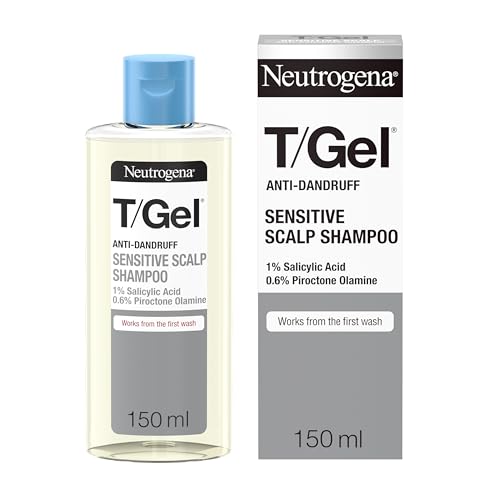
Neutrogena
T/Gel Anti Dandruff Shampoo
shampoo · 150 ml · 15 ingredients
- Fragrance-free
- No essential oils
- No MI/MCI
- With piroctone olamine
- With salicylic acid
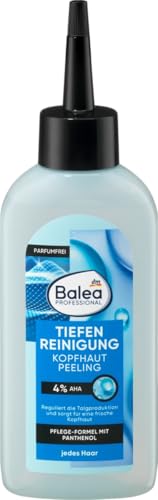
Balea
Professional Scalp Scrub Deep Cleansing
scalp treatment · 150 ml · 10 ingredients
- Fragrance-free
- No essential oils
- No MI/MCI
- With panthenol

OGX
ProGrowth + Peptide Scalp Serum
scalp treatment · 10 ml · 16 ingredients
- Fragrance-free
- No essential oils
- No MI/MCI
- With panthenol

Eucerin
Dermo Capillaire Anti-dandruff Shampoo
shampoo · 250 ml · 15 ingredients
- Fragrance-free
- No essential oils
- No MI/MCI
- With panthenol
Frequently asked questions
Is ketoconazole shampoo still the recommended treatment in 2026?
Yes. Ketoconazole 1% and 2% shampoo remain among the best-evidenced and most recommended treatments for dandruff and seborrheic dermatitis as of current clinical guidelines and systematic reviews. A 2024 narrative review published in Skin Health and Disease (PMC11416180) confirmed ketoconazole's standing as the reference antifungal agent for scalp SD, with 89% response rates in double-masked trials. No new OTC agent has surpassed it. Ciclopirox 1% is a comparable prescription alternative, particularly valued for relapse prevention. The treatment landscape has not fundamentally changed, though emerging therapies (JAK inhibitors, IL-17 biologics) are being studied for severe refractory cases.
What is the difference between ketoconazole 1% OTC and 2% prescription?
Both concentrations work by the same mechanism (ergosterol synthesis inhibition), but the 2% concentration is significantly more effective. A randomised trial found ketoconazole 2% superior to 1% at reducing flakiness and Malassezia density at weeks 2 and 4 (p<0.001), with better relapse prevention. The 1% OTC version is appropriate for mild dandruff and maintenance after clearing; the 2% prescription formulation is the choice for moderate-to-severe dandruff, seborrheic dermatitis, or frequent relapse on 1%.
Why is my dandruff coming back after ketoconazole shampoo worked?
Dandruff relapse after stopping ketoconazole is normal and expected — it does not mean the shampoo failed. Malassezia is a permanent resident of the scalp; ketoconazole reduces its population but does not eliminate it. Once treatment stops, the yeast repopulates and flaking returns within weeks in most people. The solution is maintenance therapy: after clearing active dandruff with twice-weekly ketoconazole for 4 weeks, step down to once-weekly use (1% OTC is sufficient for maintenance in most cases) rather than stopping entirely.
Can ketoconazole shampoo cause hair loss?
Alopecia has been rarely reported in association with ketoconazole shampoo, but it has not been established as causally linked at topical doses. If anything, limited evidence suggests ketoconazole may have a mild beneficial effect on androgenetic hair loss via scalp anti-androgenic properties, though this is not an approved indication. If you notice increased hair shedding while using ketoconazole shampoo, consult a dermatologist — the shedding may be unrelated (or related to the underlying scalp inflammation rather than the treatment).
Is ketoconazole shampoo safe during pregnancy?
Topical ketoconazole shampoo has very low systemic absorption and is different from oral ketoconazole (which is contraindicated in pregnancy). Limited safety data exists specifically for ketoconazole shampoo in pregnancy. Given the negligible systemic exposure and the common clinical practice of using it, many clinicians consider brief topical use acceptable, but the formal recommendation is to discuss with your healthcare provider before using it during pregnancy. The concern is primarily precautionary given limited evidence rather than established teratogenicity.
Can I use ketoconazole shampoo on my face for seborrheic dermatitis?
Ketoconazole 2% cream (not shampoo) is the appropriate form for facial seborrheic dermatitis. The shampoo is designed for scalp use with rinse-off application; the cream is formulated to be applied and left on the skin. Some clinicians advise using the shampoo as a brief-contact face wash for facial SD, but the cream is the standard evidence-based approach for nasolabial folds, eyebrows, and ears. Avoid contact with eyes regardless of formulation.
Health information, not medical advice.
Beauty Comparison is an independent editorial publication. This page is researched and sourced to the authorities listed below, but it is general information — not a diagnosis or a substitute for personalised advice from a qualified doctor, dermatologist or pharmacist. If your symptoms are severe, spreading, painful, or not improving, see a healthcare professional.Sources
- 01Ketoconazole Shampoo for Seborrheic Dermatitis of the Scalp: A Narrative Review — PubMed Central / Skin Health and Disease, 2024-09-01. Ketoconazole mechanism of action (lanosterol 14α-demethylase inhibition, ergosterol biosynthesis disruption); 89% vs 44% response in double-masked trial; 73% vs 67% improvement over zinc pyrithione; 2% superior to 1% (p<0.001); twice weekly for 4 weeks standard protocol; adverse events under 1%; safety profile; comparison with ciclopirox and alternatives.
- 02Seborrheic Dermatitis of the Scalp (Evidence-Based Review) — PubMed Central / Evidence-Based Dermatology, 2015-05-01. Ketoconazole and ciclopirox rated moderate-quality evidence as first-line; 73–89% response rates vs 29–44% placebo; relapse rate data; ciclopirox 14.7% vs 35.5% at 12 weeks; systematic review ranking of all anti-dandruff agents.
- 03Seborrheic Dermatitis and Dandruff: A Comprehensive Review — PubMed Central / International Journal of Trichology, 2015-11-01. Ketoconazole mechanism and protocol (twice weekly 4 weeks then maintenance); antifungal effect on Malassezia load; comparison with other agents; scalp lipid composition altered by ketoconazole treatment; safety profile confirmed across trials.
- 04Nizoral (Ketoconazole) 2% Shampoo — FDA Drug Label — U.S. Food and Drug Administration (FDA), 2013-01-01. FDA-approved indications: dandruff and seborrheic dermatitis; 11 double-blind trials in 264 patients confirming safety (adverse events <1% including hair texture change, scalp irritation); absence of systemic absorption concerns at topical dose; prophylactic use for recurrence prevention.
- 05Seborrheic Dermatitis: Exploring the Complex Interplay with Malassezia — PubMed Central / Journal of Fungi, 2025-03-01. Malassezia restricta and M. globosa pathogenic mechanisms; NLRP3 inflammasome activation; sebum lipid composition as fungal substrate; antifungal treatment reduces Malassezia load with correlated clinical improvement — confirming antifungal mechanism as primary treatment rationale.