How to Do a Cat Eye for Your Eye Shape
The short answer
Draw your lash-line liner first, then extend the wing toward the tail of your brow.
What Is a Cat Eye?
A cat eye — also called winged liner — is an eyeliner look where the line extends beyond the outer corner of the eye and kicks upward in a pointed flick. At its most subtle it's a millimetre of upswept liner; at its most dramatic it can extend a centimetre or more with a thick line and bold fill.
The look has been a standard of professional makeup for decades, appearing in virtually every editorial and red-carpet context. Its appeal is consistent: the upward flick optically lifts the outer corner of the eye, creating an awake, defined appearance.
The foundational technique is the same for everyone. What changes is the angle, thickness, and starting point — all determined by your eye shape.
The Core Technique
The Wing Angle Rule
The most common mistake in cat-eye application is using a fixed, arbitrary wing angle. The correct approach: extend your lower lash line upward and outward — the wing should follow that trajectory. Your lower lash line's natural angle is anatomically matched to your eye. Diverging from it too dramatically creates a wing that looks stuck on rather than integrated.
To find this angle precisely: hold a straight object (the handle of a makeup brush works perfectly) against the outer corner of your lower lash line, extending outward and slightly upward. The angle it naturally rests at is your ideal wing direction.
The Tape Shortcut
A 1-2 cm piece of tape angled from the outer corner of the eye toward the tail of the brow creates a clean straight edge to draw against and removes the precision requirement of the wing edge entirely. Masking tape, painter's tape, or medical tape are gentler on the eyelid skin than regular tape.
Apply the tape, draw your wing against it, let dry, peel. The result: a mathematically straight wing edge. This is the single fastest path to a clean wing for beginners.
The Construct-Then-Fill Method
Professional makeup artists generally:
- Mark the wing endpoint (a dot beyond the outer corner)
- Draw the upper wing edge line (from endpoint back toward the outer corner)
- Draw the lash-line liner (from inner area toward the outer corner, meeting the wing base)
- Fill the triangle
This separation of steps means each element is drawn independently — easier than attempting the entire wing in one fluid stroke.
Cat Eye by Eye Shape
Almond Eyes
Almond eyes are the most symmetrical eye shape and the most adaptable — most cat-eye styles work. The corners taper slightly and the inner corner is lower than the outer.
Approach: Follow the lower lash line extension for the wing angle. The line can be as thin or thick as desired. For maximum definition, keep the liner thin and precise at the inner two-thirds and widen it slightly toward the outer corner before the wing flick.
Hooded Eyes
In hooded eyes, a fold of skin (the hooding) partially or fully covers the mobile lid when the eye is open. This is the shape that requires the most adjustment.
The key rule: Draw your cat eye with your eyes open and looking straight ahead. Drawing with the eye closed or looking down will place the liner in a position that disappears under the fold when the eye opens. The line should be visible above the fold when both eyes are fully open — which means drawing higher than seems natural.
Practical approach:
- Open both eyes and look straight ahead into the mirror
- With your non-drawing hand, hold a lash curler, pencil, or your finger at the crease where the lid folds — this simulates the fold when your eye is open
- Draw your liner above that mark
- The "batwing" technique works well: draw the liner so it dips slightly at the center of the lid and rises at the inner and outer corners — when the eye is open, the center dip disappears behind the fold and only the defining corners show
Monolid Eyes
Monolid eyes have minimal or no visible crease. The entire lid is visible when the eye is open, giving maximum canvas for liner.
Approach: Thick liner works beautifully on monolids because the full lid is visible. Start with a bolder base line (2–3 mm at the outer two-thirds) and angle the wing steeply upward — a more vertical wing creates lift. Waterproof formula is essential; without a crease to "set" the liner, transfer to the upper brow area can occur.
Round Eyes
Round eyes have a visible iris with white showing above or below, and they appear wide open. The goal of a cat eye on round eyes is to elongate rather than widen.
Approach: Extend the wing outward (toward the temple) rather than sharply upward. A long, relatively flat wing creates horizontal elongation that complements the round shape. Avoid thick liner at the inner corner, which further rounds and closes the eye. Keep the inner third of the liner very thin or skip it entirely.
Downturned Eyes
Downturned eyes angle lower at the outer corners than at the inner corners, which can make the eye look tired. A cat eye on downturned eyes should optically counteract that downward pull.
Approach: Angle the wing more steeply upward than the lower lash line extension suggests. The wing flick essentially opposes gravity — a steeper angle than "natural" is correct here. Avoid any liner on the outer lower lash line (this reinforces the downward angle); instead, keep the lower lash line bare or lined only at the inner third.
Wing Variations
Classic Wing
The foundational cat eye: a thin or medium liner along the upper lash line with a triangular flick at the outer corner. Universally flattering, appropriate for most occasions.
Graphic/Bold Wing
A thicker liner base (3–5 mm) with a large wing fill. Best for dramatic occasions, editorial looks, or anyone who wants a high-impact statement.
Negative Space Wing
The wing outline is drawn but left partially unfilled, with skin visible inside the triangle. Creates a modern, graphic effect without the heaviness of a fully filled wing.
Double Wing
Two parallel wing lines — typically one following the upper lash line and a second line following the lower lash line, both extending outward. Best executed with a ruler or stencil; creates a highly graphic, editorial look.
Tools That Help
Eyeshadow primer: Essential for hooded eyes; significantly improves longevity for all shapes. Apply before liner.
Tape: The fastest path to a straight wing edge. Angle it from the outer corner to the brow tail.
Business card or liner shield: Reusable equivalent of tape; held against the skin as a straight edge.
Fine cotton swab + micellar water: The correction tool. Have one at hand before you start.
Spoolie or Q-tip for smudging: If you want a softer cat eye, a dry cotton swab run along the wing's lower edge immediately after application softens it into a smoky flick.
Correcting and Removing a Cat Eye
Liquid liner corrects far more easily than people expect:
- Immediately after drawing: clean with a dry cotton swab while liner is still tacky
- After drying: dip a fine cotton swab in micellar water and use the precision tip to refine edges
- Wing too long? Shorten it from the tip inward — micellar water on a swab removes just the tip
- Wing angle wrong? Remove the outer portion and redraw
For full removal, waterproof formulas require an oil-based remover. Press against the closed lid for 15–20 seconds to dissolve the formula, then wipe gently rather than rubbing.
For the step-by-step technique for applying liquid liner — including hand stabilisation and the dot-connect method — see how to apply liquid eyeliner. For an overview of all eyeliner types and formulas, see eyeliner types guide.
Step by step
- 1
Identify your eye shape
Before drawing, determine whether your eyes are almond, round, hooded, monolid, or downturned — the wing angle and liner thickness changes for each. Almond eyes have a visible crease and slight taper at the outer corner. Round eyes have a visible iris with white showing above or below. Hooded eyes have a fold of skin that covers part or all of the mobile lid when open. Monolid eyes have minimal or no visible crease. Downturned eyes angle downward at the outer corners.
- 2
Prime and prep the lid
Apply a thin layer of eyeshadow primer to the entire lid up to the brow bone. This prevents the liner from creasing into the fold (critical for hooded eyes) and keeps the wing intact for the full day. Dust a light translucent powder over the primer once set.
- 3
Draw the wing direction line
Before touching the lash line, mark where your wing will end. The classic guide: hold a straight object (brush handle, business card, or tape strip) against the outer corner of your eye, angled toward the tail of your eyebrow. The angle this line makes is your wing direction. Mark a small dot or dash at the wing's endpoint, slightly beyond the outer corner.
- 4
Draw the upper wing edge
From the wing endpoint dot, draw a line back toward the outer corner of your eye — this is the upper edge of the wing triangle. Keep this line thin and sharp; it defines the wing's silhouette.
- 5
Line the lash line
Starting about one-third in from the inner corner, draw your liner along the upper lash base toward the outer corner, using the dot-and-connect method (place dots at lash roots, then connect with short strokes). As you approach the outer corner, guide the line to meet the base of your wing edge line.
- 6
Fill the triangle
Fill in the open triangle between the wing edge line and the outer lash line. Use the tip of the liner for clean edges. The filled triangle should be solid with no gaps or thin patches.
- 7
Refine and sharpen
Once dry (20–30 seconds), use a fine pointed cotton swab dipped in micellar water to sharpen the lower edge of the wing into a clean, precise line. This single correction step transforms a good wing into a great one — even professional makeup artists rely on it.
Products that fit this guide
Picked by code from each product's full ingredient list.

Artdeco
Sensitive Fine Liner No.1 Deep Black
eyeliner · 1 ml · 13 ingredients
- Fragrance-free
- No essential oils

Catrice
Brow Fix Shaping Wax
brow product · 1 g · 11 ingredients
- Fragrance-free
- No essential oils

Catrice
Drunk'n Diamonds Eyeshadow Stick
eyeshadow · 2.5 g · 17 ingredients
- Fragrance-free
- No essential oils
- With titanium dioxide
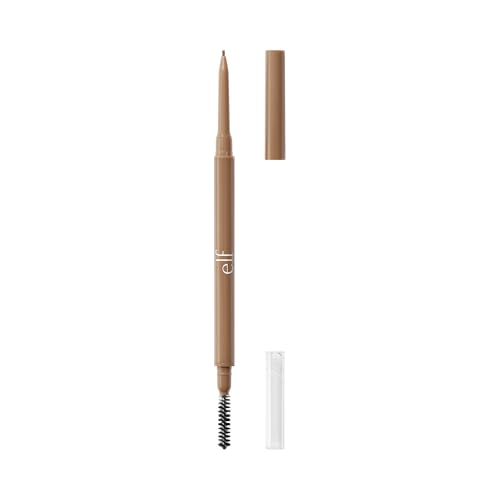
e.l.f.
Micro-Fine Brow Pencil
brow product · 0.03 g · 16 ingredients
- Fragrance-free
- No essential oils
- With vitamin e
Frequently asked questions
What is the best eyeliner type for a cat eye?
Liquid liner (either felt-tip or brush applicator) gives the sharpest, most defined wing — ideal for a classic cat eye. A felt-tip liner is recommended for beginners and intermediate users because the firm nib provides consistent resistance. Brush-applicator liquid liner gives slightly more precision for custom line weights once you've developed hand steadiness. Gel liner applied with an angled brush is the makeup artist's alternative — intensely pigmented, long-wearing, and very controllable, though it requires a separate brush.
How do I do a cat eye with hooded eyes?
The critical rule: draw with your eyes open, not closed. Liner drawn on a closed hooded eye disappears under the fold when the eye opens. Keep your eyes open and looking forward, hold something at your crease to simulate the fold, and draw your liner above that point. The 'batwing' technique — where the liner dips at the center and rises at both ends — ensures that only the defining corners show when the eye is fully open. Also draw the wing upward more steeply than usual to ensure it's visible above the fold.
Why does my wing always look different on each eye?
Wing asymmetry is nearly universal, especially in the early stages of learning. The most effective fix: use the tape guide method (tape angled from outer corner to brow tail) on both eyes to lock in the same angle mechanically. Also, draw the harder eye (usually the non-dominant hand side) first, then match it. Step back from the mirror and assess both eyes at a normal viewing distance — tiny differences at close range disappear at arm's length, and you can see whether the overall look is balanced.
How long should a cat-eye wing be?
Wing length is proportional to eye size and the intensity of the look you want. A general guideline: the wing extension should not exceed the length of the lash line itself. For subtle everyday looks, 2–5 mm of extension past the outer corner is typical. For dramatic looks, 8–15 mm is common. For the most flattering result, err shorter — a wing that is too long looks costume-like on most eye shapes, while a shorter wing reads as polished and intentional.
Can I do a cat eye with sensitive eyes?
Yes, with formula precautions. Choose liquid or gel liners labeled ophthalmologist-tested and fragrance-free to minimize irritation risk. Apply along the outer lash-line skin rather than the inner waterline — inner-waterline application increases tear-film contamination. Always remove liner fully at night; sleeping in eyeliner is a documented contributor to meibomian gland dysfunction over time. If you wear contact lenses, insert them before applying liner and remove them before removing makeup.
Sources
- 01Eyeliner for Different Eye Shapes: Maybelline Makeup Tips — Maybelline (professional makeup educator resource). Eye-shape–specific eyeliner guidance including hooded eyes (draw above the fold with eyes open), round eyes (elongate outward with a flat wing), and monolid eyes (thick liner with steep wing).
- 02Eye Cosmetic Safety — U.S. Food and Drug Administration (FDA). FDA guidance on safe eye cosmetic use: use only eye-approved products on the eye area, remove makeup nightly, don't share applicators, replace products regularly.
- 03TFOS Lifestyle: Impact of cosmetics on the ocular surface — PubMed Central / Tear Film and Ocular Surface Society. Eye liner application is associated with changes in tear film break-up time and ocular surface disruption; sleeping in eye cosmetics contributes to meibomian gland dysfunction.
- 04Effect of eyeliner and mascara use on tear film and meibomian glands — PubMed Central / PMC, 2022-08-01. Regular eyeliner use associated with higher meiboscores (meibomian gland dysfunction) in study of healthy female volunteers; contact lens wearers applying liner should take additional precautions.